
Your cat’s bowl empties in a blur. Colder evenings are coming; meal habits can shift health, stress and weight.
Many owners read speed-eating as cheeky appetite. That everyday dash often signals unmet needs and brings preventable gut trouble for indoor cats.
Why your cat eats too fast
Speed at the bowl rarely comes from greed alone. Domestic cats still carry the instincts of solitary hunters. They guard resources and swallow quickly when they feel watched. A rival does not need to exist; the sensation of being interrupted can be enough.
Past scarcity can hardwire urgency. Cats that once lacked food can bolt meals as a safety strategy. Boredom and low stimulation also play a role. Long afternoons inside, especially in autumn, nudge some cats to treat eating as their main activity.
Rushing food taxes the gut. Dry kibble swells in the stomach. Air goes down with each mouthful. Many cats then regurgitate shortly after eating or develop wind and loose stools. Weight can creep up when rapid eating delays satiety signals.
Fast eating often turns a 300-second meal into 60 seconds. Stretching mealtime back to 8–10 minutes can calm the gut.
The slow-feeder fix that changes mealtime
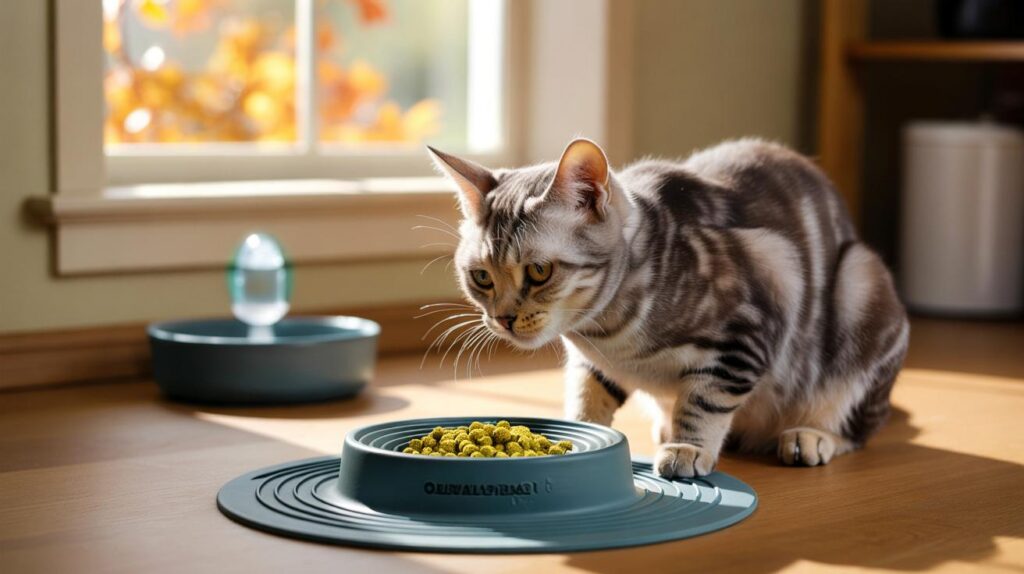
A simple slow-feeder bowl uses ridges, spirals or raised pegs to space out the bites. Your cat must work around obstacles and pick up fewer kibbles per mouthful. The pace drops without arguments, timers or scolding.
The effect is practical and visible. Food stays in the stomach long enough to mix with saliva and acid. Burping and post-meal “scarf-and-barf” incidents reduce. Satiety lands closer to the right time. Indoor cats often maintain weight more easily when mealtimes last longer.
How to choose and use a slow-feeder
- Pick the right size: a 14–18 cm inner diameter suits most adult cats.
- Mind ridge height: 0.8–1.2 cm slows eating without scraping whiskers.
- Choose safe materials: BPA-free plastic or glazed ceramic; look for dishwasher-safe models.
- Add grip: a non-slip base stops chasing the bowl round the kitchen.
- Start easy: select a simple pattern, then rotate designs to keep interest.
- Target meal length: aim for 8–10 minutes, not 30–90 seconds.
- Price guide: expect £8–£20; many owners report strong gains with a £12 model.
Set two or three smaller meals per day. Smaller portions pass more gently through a cat’s narrow oesophagus.
Turn feeding time into a routine your cat enjoys
Pre-meal play burns energy and reduces frantic eating. Five minutes of wand-toy hunting raises pulse and primes calm, focused feeding. Place the bowl in a quiet corner away from footfall, appliances and the litter tray.
Scatter a small portion of kibble across a mat, a tray or several shallow dishes. That recreates a simple “search and find” pattern without frustration. Rotate feeding spots between two safe rooms to prevent guarding behaviour near doorways.
What to avoid when slowing a fast eater
- Do not cut calories to make meals last; manage pace with tools and structure.
- Avoid bowls with sharp edges or deep channels that trap whiskers.
- Skip complex locks or lids; friction, not puzzles, should slow eating at first.
- Separate cats at mealtimes if competition appears; feed behind doors or at different heights.
- Keep water available well away from food; many cats drink better from a second station or a fountain.
Simple tools: when to use each one
| Scenario | Best tool | Tip |
|---|---|---|
| Bolts dry kibble in under a minute | Slow-feeder bowl | Start with shallow ridges; time the meal and adjust pattern. |
| Needs mental work on rainy days | Puzzle feeder toy | Use part of the daily ration; keep difficulty low at first. |
| Multi-cat tension at meals | Separate feeding stations | Feed on different floors or rooms; add a microchip feeder if needed. |
| Greedy night-time snacking | Timed dispenser | Schedule a late mini-portion to smooth early-morning hunger. |
Signs that point to a health check
Speed-eating responds quickly to the right setup. Some signs warrant a vet visit. Frequent vomiting not tied to fur, visible weight loss, diarrhoea, straining, swollen abdomen, drooling, bad breath, or painful chewing all need assessment. Senior cats that eat fast and lose weight may carry thyroid disease. Young adults with ravenous appetite and big thirst may need checks for diabetes or gut parasites.
If vomiting continues after you slow meals for two weeks, call your vet. Rapid change in appetite is a clinical sign.
Small changes that amplify the benefits
Blend textures across the day. Wet food adds moisture and can slow the pace when served as pâté or chunks spread thinly on a lick mat. Alternate with measured dry portions in a slow-feeder to support dental abrasion and satiety. Weigh food once, note the gram weight for your scoop, and stick to that figure.
Mind kibble size and shape. Very small pellets slip through obstacles and defeat the point. Mid-size pieces suit most slow-feeders. If your cat swallows large pieces whole, switch to a slightly smaller kibble or a softer texture for the evening meal.
Make pace visible and track progress
- Use your phone timer. Log duration for a week; aim for steady 8–10 minute meals.
- Note incidents. Mark any regurgitation, wind or stool changes to spot triggers.
- Adjust complexity. If meals exceed 15 minutes and frustration rises, simplify the pattern.
Autumn specifics: indoor days without cabin fever
Shorter daylight can squeeze exercise and raise tension around scarce “fun”. Add two micro play sessions tied to meals. Ten tosses of a soft ball before breakfast, then a feather chase before dinner, can flatten the spike of hunger and reduce inhaling the first mouthfuls.
Keep bowls off cold floors. A non-slip mat reduces vibration noise that startles sensitive cats. Warm the room slightly during meals. A calmer setting cuts the drive to “grab and go”.
Extra notes for households with more than one cat
Feed in parallel, not face-to-face. Use room dividers or door stoppers. Give each cat its own slow-feeder pattern to avoid swapping. Add one extra station beyond the number of cats to ease pressure. If one cat steals food, a microchip-activated bowl limits access without arguments.



I swapped to a shallow spiral feeder and my little hoover went from 38s to 8 minutes—no more scarf-and-barf. Honestly didn’t expect such a quick change, so thank you!