
A driver clocked at 71mph on the M4 ended up with a hefty fine and a short driving ban. On a motorway signed at 70, that sounds absurd. It isn’t. This is the story of how a single mile an hour becomes a courtroom moment — and why more of us are getting caught out.
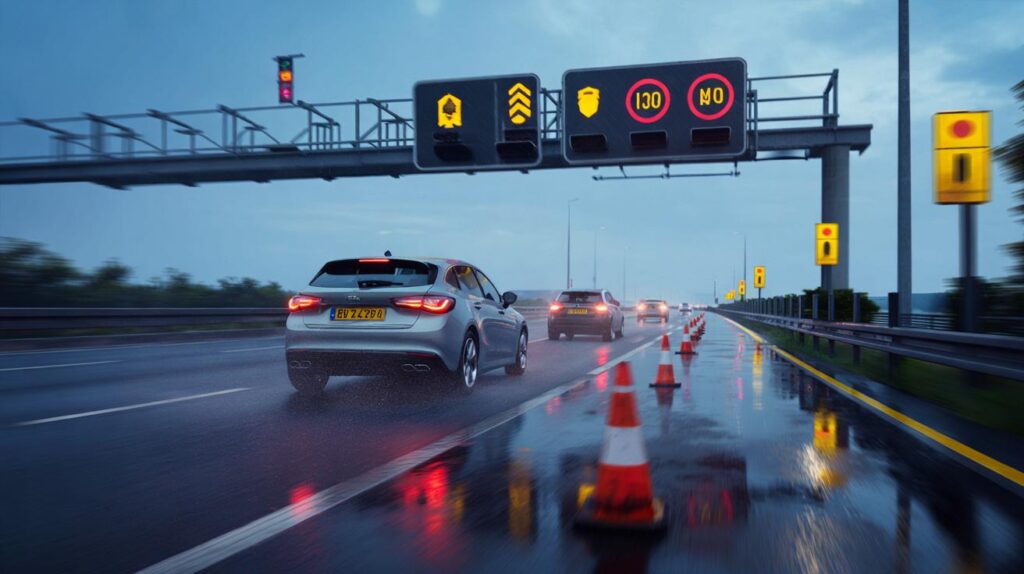
The wipers were fighting a spring drizzle, the kind that makes the gantry lights look smudged at the edges. Traffic flowed cleanly past the services, a silver hatchback holding steady as the road opened out. Overhead, the big square signs rolled down to 50, then 40 for a stretch where cones pinched the inside lane.
The car didn’t lift. The average-speed cameras watched. When the notice arrived, the headline number was 71mph and the driver’s jaw hit the floor. *It doesn’t add up.*
Why 71mph on a 70 road can still cost your licence
On the M4, the number on the sign isn’t always 70. Smart motorway sections and long-standing pinch points — like around Port Talbot or through works near Reading and Swindon — can drop the limit to 60 or 50 in a heartbeat. Those red circles aren’t suggestions, and the tiny grey camera boxes don’t blink.
That’s how 71 becomes a problem. It’s not 1mph over the motorway maximum. It’s 21mph over a temporary 50, or worse if a 40 was running under a red X. The driver sees “national” in their head. The court sees the live limit on the gantry.
Ask any motorway regular and you’ll hear the same chorus: the limit changes when you least expect it. One Wiltshire commuter told me he was “just keeping up” through a 50 stretch and only realised the cameras were average, not spot, when the letter landed. Home Office figures show millions of speeding offences logged in England and Wales each year, and a rising share from automated enforcement on big roads.
We’ve all had that moment when the number on the dash creeps up and you tell yourself it’s fine, just this once. Average-speed systems don’t care about that whispered deal with yourself. They measure you between camera A and camera B, not at a single flashpoint, and they’re ruthlessly fair about it.
Here’s the cold bit. Sentencing for speeding is pegged to the limit that applied, not what the road usually is. 71 in a 50 sits in Band C for many benches: a fine typically 150% of weekly income and either six points or a short disqualification, often 7–28 days. The magistrates look at your record, the conditions, and whether roadworks or a lane closure were in force. **The myth of “10% + 2” as a free pass only survives in pub chat.**
Enforcement tolerances exist, but they’re operational, not rights. In variable limits and average-speed zones, the kit tends to be set tight because the aim is compliance, not surprises. You find that out the hard way when the paperwork turns up with a court date.
How to stay legal — and what to do if you’re flashed
Think in zones, not bursts. If you pass a 50 sign, treat the next few miles as a 50 corridor and set your limiter or cruise at 50–52 to build a margin you can actually hold. Check the gantry as you pass underneath, not from half a mile away, and re-check at the next one because the limit can change mid-stretch. **Smart motorways remember your average, not your excuses.**
If you’re unsure whether cameras are live, assume they are. A quiet road and no traffic officer in sight doesn’t mean the system is asleep. Use lane guidance to your advantage: steady in lane two or three often beats the brake-and-surge dance in lane four. Let’s be honest: nobody does that every day.
Common pitfalls are painfully human. You’re late, the podcast’s good, the sign’s half-hidden by spray, and your right foot just settles. Or you lift when you see the first camera, then creep back up and forget there’s a second one measuring the same run. **Fines scale with income**, so that “little” creep can sting differently for different wallets.
If a Notice of Intended Prosecution lands, read it carefully. You’ll usually be asked to name the driver within 28 days; ignoring that is a separate offence with harsher penalties. If the limit was variable, ask for the photo and the log of the set limit — you’re entitled to understand what you’re being accused of before entering a plea. A solicitor isn’t mandatory, but a short phone consult can help you avoid unforced errors.
“Variable limits aren’t optional decor,” a motorway traffic officer told me last year. “They’re there to protect people — the ones in the cones and the ones in the cars.”
- Use your car’s speed limiter in average-speed zones.
- Read the gantry you’re passing, then the next one. Limits can step down twice.
- If you’re flashed, respond to the notice on time and keep copies of everything.
- Consider a speed awareness course if offered; it keeps points off and refreshes your habits.
The ban that rattles — and the bigger conversation it nudges
There’s a certain sting to being told you’re off the road, even for two weeks. We build our lives around the car in Britain, especially away from city cores. The loss of movement feels bigger than the fine. It forces a pause you didn’t choose.
I keep thinking about the letter on the hall table and the quiet admission inside it. The cameras didn’t catch a joyrider. They caught a normal driver on a normal day, who missed a sign and carried on. That’s awkward, because it’s uncomfortably close to most of us.
There’s space here for better signage, clearer comms, and for us to adapt our habits to the roads we’ve actually got. Average-speed zones aren’t going anywhere; nor is the human drift of attention. The trick is building small, repeatable guardrails: a limiter tap, a fresh glance at the gantry, a slower lane that keeps you honest.
None of this is glamorous. It is, though, the difference between a forgettable commute and a summons. The driver who lost their licence at 71mph didn’t set out to be a headline. They hit the gap between what the road was asking and what they were doing. That gap is where the trouble lives.
| Key points | Details | Interest for reader |
|---|---|---|
| 71mph can be a ban on the M4 | In a live 50 or 40 limit, it triggers Band C sentencing | Explains how a “normal” speed becomes a court case |
| Average-speed cameras rule | They measure you between gantries, not in a single flash | Practical insight to avoid accidental speeding |
| What to do after a notice | Identify the driver, check the limit log, consider a course | Actionable steps that can reduce stress and penalties |
FAQ :
- Was the driver really banned for just 71mph?Yes, because the live limit wasn’t 70. Courts sentence based on the limit in force, not the permanent maximum.
- Is the “10% + 2mph” rule real?It’s guidance for enforcement, not a right. In variable and average-speed zones, tolerances can be minimal.
- Do average-speed cameras work at night and in rain?They do. They’re designed to operate in poor visibility, which is when compliance matters most.
- Can I argue I didn’t see the sign?You can explain, but not seeing a clear, lawful sign rarely succeeds as a defence. Evidence of obscured signage is different.
- Will a speed awareness course stop points?If offered and you’re eligible, completing it normally replaces points for lower-level offences. Higher excesses go to court.



A ban for 71mph? It sounds absurd—until you clock that it was a 50. Fair enough, but are these average camers independently audited? Would love to see error margins published, not just hinted at.