
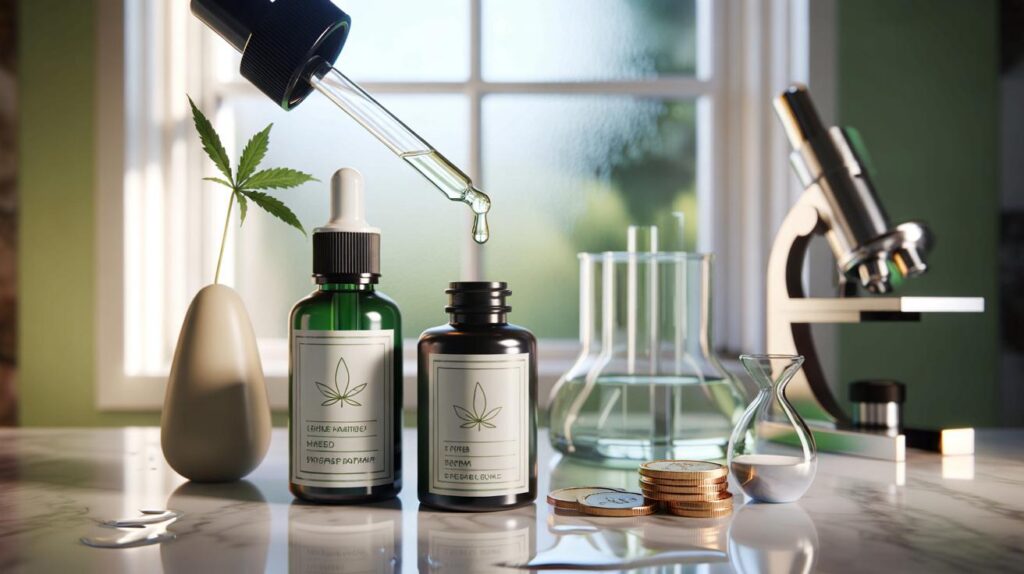
Glossy jars promise calm skin, but behind them lies a tug-of-war over science, price and what regulators permit this year.
European shelves brim with CBD face oils, night creams and balms, pushed by word-of-mouth and clever branding. A thriving niche has formed, yet questions about efficacy, legality and value still shadow the trend.
Where CBD is turning up in your routine
CBD now appears in face oils, light gels, hydrating creams, targeted balms and concentrated serums. Brands often blend cannabidiol with hemp seed oil rich in essential fatty acids, then add CBD as an isolate or broad-spectrum extract. Labels commonly cite 100–1000 mg of CBD per bottle. Ranges focus on redness, dryness and early lines, with soothing and antioxidant claims.
Across Europe, the CBD cosmetics market passed €580 million in 2022, according to Grand View Research. France remains smaller but active, with roughly €80 million across hemp-derived products in 2023. Sales skew online and through natural beauty retailers, while mainstream chains still test the waters.
€580 million in 2022 across Europe, strong online traction, and fast-growing launches signal momentum beyond a fad.
The rules that shape what brands can say
What EU and France permit
Since 2020, the European Commission permits CBD in cosmetics when sourced from authorised hemp varieties and formulated with no detectable THC. In France, the ANSM keeps a close watch. Companies must notify products via the CPNP, document ingredient traceability and confirm the absence of regulated cannabinoids. These steps raise compliance costs and complicate sourcing, but they also underpin consumer safety.
How brands react
Many labels publish batch-level lab reports and stress certified organic origins. Others sidestep the term “CBD” altogether, choosing “hemp extract” or “cannabinoids” to avoid recreational cannabis associations. Large beauty groups monitor demand but delay large investments while regulation and science mature. Packaging trends lean towards minimal designs, recycled materials and plain-language claims.
What people want and what they pay
Price and purity dominate decisions. A Statista survey in 2023 found 67% of European consumers interested in CBD skincare prioritise organic seals and short ingredient lists. A 30 ml serum often sits between €35 and €80, roughly two to three times a conventional plant-active moisturiser. Costs reflect CBD extraction, quality controls and a premium positioning.
67% prioritise organic certification and concise INCI lists, but shoppers still scrutinise price per dose and proof of effect.
Distribution remains patchy. Specialty e-commerce and independent boutiques carry the depth, while supermarkets and high-street chemists list only a handful of SKUs. Sporadic stockouts on hero products point to supply-chain strains and cautious forecasting.
| Product type | Typical CBD per 30 ml | Price range (€) | Who buys |
|---|---|---|---|
| Face serum | 300–600 mg | 35–80 | Urban, ingredient-focused shoppers seeking calm and glow |
| Day/night cream | 100–400 mg | 30–70 | Dry or redness-prone skin, eco-minded buyers |
| Targeted balm | 200–1000 mg | 25–60 | Sports recovery, localised discomfort, winter dryness |
| Hair oil | 100–300 mg | 20–50 | Scalp care and frizz control seekers |
Evidence under the microscope
What studies say
Dermatology journals flag promise but demand stronger trials. A 2022 meta-analysis in the Journal of Dermatological Science reported no clear consensus on topical CBD efficacy. In 2023, dermatologists polled by the French Society of Dermatology cited a shortage of robust, randomised, double-blind studies. Mechanistic work suggests interactions with the cutaneous endocannabinoid system, which may influence inflammation and barrier function, yet dose, formulation and delivery remain open questions.
Claims versus what’s proven
- Hydration: likely driven by emollients such as hemp seed oil, glycerin and squalane, not CBD alone.
- Redness and comfort: early signals exist, but clinicians want controlled trials with standardised endpoints.
- Antioxidant activity: plausible, though real-world benefit depends on concentration, stability and packaging.
- Anti-ageing: limited direct evidence; pairing with retinoids or vitamin C targets this space more convincingly.
Barriers that still slow growth
Trust, stigma and supply risk
Confusion between CBD and recreational cannabis persists. Some travellers worry about carrying CBD creams, despite the absence of psychotropic effects. Testing regimes that confirm non-detectable THC add cost but ease anxiety. Fragmented supply chains raise the risk of inconsistent batches, which can undermine repeat purchase.
Price and availability
Premium positioning narrows reach. Many shoppers compare CBD creams with high-performing non-CBD options that cost less. Limited listings in mass retail and pharmacies restrict visibility. Stock disruptions on popular SKUs signal cautious production and tight ingredient pipelines.
Where innovation may tip the balance
Formulators increasingly combine CBD with proven actives. Pairings with hyaluronic acid target hydration; with vitamin C, brightness; with retinol, texture. Sports-focused balms push higher CBD loads for post-exercise comfort. A few brands add CBG, another non-psychotropic cannabinoid, to differentiate. Mintel data point to a 42% rise in European CBD cosmetic launches between 2021 and 2023. Hair care joins the movement with scalp oils and leave-ins. Eco-designed packaging and plain claims help build credibility.
Clear rules, transparent labels and reproducible results will decide whether CBD breaks out of the niche.
For you: quick checks before you buy
- Scan the label for total CBD mg and the volume. Convert to mg per ml to compare like-for-like.
- Look for “no detectable THC” and a recent lab report tied to the batch number.
- Keep the INCI list short if your skin reacts easily. Fragrance-free suits redness-prone faces.
- Favour opaque, air-limited packaging for serums that pair CBD with antioxidants.
- Patch test on the jawline for 48 hours. Stop at the first sign of irritation.
- Time actives: use retinoids at night, vitamin C in the morning, and introduce CBD calmly alongside.
- Check the return policy; early reactions often show within two weeks.
A quick value exercise you can run at home
Take two serums: A has 300 mg CBD in 30 ml for €60; B has 500 mg in 30 ml for €75. The cost per 100 mg is €20 for A and €15 for B. If both feel comfortable and suit your skin, B stretches your budget further. Balance this with the base formula: if A hydrates better due to glycerin and ceramides, your skin may prefer the pricier dose ratio.
Be mindful of active clashes. If you already use strong retinoids, start CBD low and on alternate nights to watch for dryness. Those who are pregnant or breastfeeding should consult a healthcare professional before adding new actives. Avoid applying CBD balms to broken skin. Store products away from heat and sunlight to preserve stability.
The signals to watch through 2025
Expect tighter guidance on claims and testing as EU and national agencies refine oversight. Large groups may scale once labelling rules and THC thresholds feel predictable across borders. If new randomised trials report consistent outcomes on redness or barrier support, mid-market chains could expand listings. France’s €80 million hemp-derived segment hints at headroom if prices step down and distribution widens.
For now, the case for CBD in skincare rests on careful formulation, transparent analytics and sensible pricing. The moment robust clinical data arrive, the category can either secure a routine slot in your bathroom cabinet or cede ground to cheaper, well-studied actives. The next 12 months will tell.



€80 for a 30 ml serum with no robust RCTs yet? Feels like we’re paying for vibes + packaging. Please show mg/ml, recent batch COAs, and a fair comparitor vs non‑CBD emollients.