
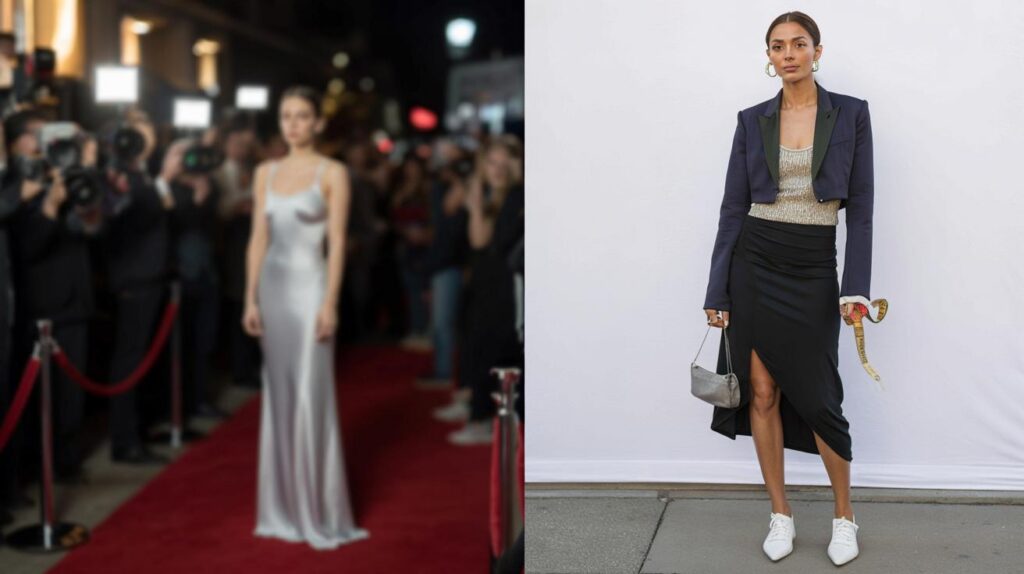
The red carpet is a masterclass in fantasy, but the best style lessons it teaches are surprisingly practical—and they can live in your wardrobe without emptying your wallet.
The room was small, the telly loud, and our WhatsApp pinged like popcorn. We were crammed on a sofa watching an awards show, hushing each other every time a dress took the air out of the room. Sequins, satin, tuxes cut so sharp they looked drawn on with a ruler.
My friend Jade paused the screen and said, “I don’t want the dress. I want that feeling.” She meant the posture, the quiet drama, the sense that everything fit on purpose. On the coffee table: a tape measure, a lint roller, and a bag from the high street. Ideas started to look cheaper by the minute.
We thought we were just spectating. We weren’t. The hacks were hiding in plain sight.
Turning red carpet magic into real-life maths
Strip a red carpet look to its bone structure and you’ll find a formula: silhouette, texture, focal point. The runway budget just makes the maths louder. If you copy the equation, not the label, you can get 80% of the impact for 20% of the price.
That’s how a column silhouette becomes a rib-knit midi in petrol blue, or a couture tux morphs into a cropped blazer with neat trousers and loafers. Watching the arrivals isn’t about envy; it’s pattern recognition. Look for the shape first, then the fabric story, then the single detail that does the heavy lifting.
Style rarely starts with the price tag; it starts with proportion. Once you clock the architecture—where the waist is, how the hem lands, how the shoulder sits—you can translate it with high-street pieces that speak the same language. Shape is your Rosetta Stone.
A friend tested this the week after the BAFTAs. She loved a liquid silver gown on the carpet, but she had a birthday dinner at a noisy bistro, not a gala. She chose a slinky metallic top from COS, a black bias-cut skirt from a vintage rail, and £12 hoops. Under the table, pristine trainers. She didn’t look like the celebrity; she looked like herself, with that same easy shimmer.
Search data always spikes after award nights, but what people end up buying is rarely the exact dress. They go for the digest: silver pieces, column skirts, soft suiting. **It’s proof that we crave the mood more than the museum piece.** When you hunt the mood, you dodge the trap of bad knock-offs and land in the sweet spot of wearable drama.
Think of textures as volume knobs. Sequins at 100% are red carpet; lamé or satin at 60% is date night; a subtle metallic thread in a knit is everyday sparkle with daylight manners. Same for tailoring: peak lapels scream, shawl collars purr. The better you are at dialling, the less you need to spend to be heard.
The decode, source, tweak playbook
Here’s a simple loop that works. Screenshot the look you love and zoom in on three things: silhouette line, surface texture, colour block. Say it out loud so your brain remembers: column + gloss + midnight. Then shop the equation—column skirt from Zara, satin blouse from & Other Stories, midnight tone via a navy blazer or ink-blue bag.
Next, land the focal point. Choose only one: shoulder, waist, or shoe. If the carpet look uses a dramatic shoulder, keep waist and shoe quiet. If it’s a waist-sculpting moment, drop the shoulder pads and go sleek on footwear. Final step is tweak: add a minor disruption (a chunky watch with a gown-ish top, a beaded bag with suiting) so the outfit feels lived-in, not costume.
Let’s be honest: nobody really does that every day. That’s why preparation beats panic. Save a folder of three “go-to moods”—silver slink, soft tux, jewel-tone column—and keep a tiny kit: lint roller, hem tape, a mini steamer. **A £15 alteration beats a £150 mistake nine times out of ten.** Spend where the fabric meets the body: waist nips, sleeve trims, trouser hems. That’s where cheap turns chic.
Common misfires happen when we chase the label or the exact dress. Copies look tired fast. Fit fatigue is another culprit: buying the right size and not tailoring it because you’re over it by Tuesday. Go slower. Try two sizes and sit down in both. Walk. Take a mirror selfie in daylight, not shop lighting.
Shoes tell on you more than anything. If a heel looks high-end but wobbles, the whole outfit reads nervous. Swap stilettos for block heels or chic flats that hold your posture steady. And don’t drown yourself in sparkle. One brilliant glint is impact; five are a craft project. You’re not making a chandelier.
When nerves creep in, change the texture, not the outfit. If the red carpet muse wore silk, you can use viscose or a smooth knit and keep the line. A satin scarf in place of a gown fabric will still sing. **Confidence is a textile too; it has a way of catching the light.**
“Style isn’t money; it’s editing. Red carpet looks are just clean edits under bright lights.” — a London stylist I trust
- Swap sequins for a metallic knit when the dress code says “smart, not shiny”.
- Trade a couture cape for a fluid duster in the same colour family.
- Try ribbon belts to mimic corset waists without the ribcage rebellion.
- Use rental for the statement piece; buy the base layers you’ll re-wear.
- Prioritise shoe comfort; a grounded stance reads expensive.
Where to hunt, what to keep, when to spend
We’ve all had that moment when an outfit feels right before the mirror agrees. That is the bar. To get there on a real budget, build a small bench of heavy lifters: a bias-cut skirt, a cropped blazer that hugs your shoulder line, a clean strappy heel or sleek flat, a satin blouse that doesn’t gape, and a great coat that behaves like a cape when draped.
Then feed in seasonal sparks. Right now, liquid metallics are still having a renaissance; you can nod to it with a silver belt or a pewter bag instead of committing to a full dress. High-street wins: Arket for clean lines, COS for sculptural tops, M&S for underpinnings that behave, ASOS for breadth, River Island for statement accessories. Charity shops and vintage rails are gold for silk blouses and men’s tux jackets ripe for alteration.
Rentals pull weight for TV moments: HURR, By Rotation, even a local boutique with loan rails. Try midweek to snag gems. Then tailor your own pieces little by little so they stack with rentals seamlessly. Your wardrobe should be a supporting cast that lets a borrowed lead take the bow.
Buying strategy works best when you ask three questions: Will this improve three outfits I already own? Can it solve a recurring problem (gaping blouse, scratchy lining, too-long sleeves)? Does it photograph well in both daylight and lamplight? If the answers land, spend comfortably; if not, walk away. The red carpet is ruthless about lighting—copy that ruthlessness and you’ll cut your misses in half.
Fabric translation matters. Velvet can smother in daylight; move it to accessories: a bow in your hair, a ribbon belt, a clutch. Sequins read party after dark but noisy at brunch; switch to satin or a micro-pleat that catches sun without strobing. Menswear-inspired suiting needs softness to avoid the boardroom; add a silk cami or a sheer sock and a playful earring. Budget style is 80% editing, 20% shopping.
If you love a celebrity’s custom colour—a bruised plum, a green so deep it’s almost black—hunt shades, not exact codes. UK high street often labels them poetically: forest, bottle, aubergine, ink. That’s your map. When you find the right tone, duplicate it across textures: wool coat, satin skirt, leather belt. The eye reads coherence as “expensive”. Your bank balance reads: relief.
Here’s the fun bit: once you start translating, you stop apologising for not owning the real thing. You realise the red carpet is a team sport, and you’re borrowing plays, not identities. Share your wins with friends; swap pieces for a weekend; run mini fittings in front of that same loud telly while the kettle hums. Someone will suggest a tiny tweak that changes everything.
Red carpet moments don’t promise a new life. They offer a clear line to draw on your own body. If you want the midnight tux mood for a work event, maybe that’s a navy knit polo, a sharp trouser, and a glossier-than-usual shoe. If you’re craving the column dress serenity for a gallery date, maybe it’s a straight skirt with a fluid tee and a strict bun. Start where you are, take the one detail that thrills you, and let the maths add up slowly.
There’s grace in wearing the version you can live in. The camera phone won’t care that your silver is a knit and not a couture lamé; it only sees how the light slides. Your mates won’t remember the label; they’ll remember you arriving like you meant it. If a look makes you stand taller on a side street in Leeds, or glide through a doorway in Hackney, it’s done its job. The carpet was only ever a hint.
| Point clé | Détail | Intérêt pour le lecteur |
|---|---|---|
| Decode the formula | Silhouette + texture + focal point | Turns pricey looks into repeatable recipes |
| Dial the drama | Use fabric “volume knobs” to suit the setting | Makes bold trends wearable at work or weekends |
| Invest in fit | Small alterations, smart rentals, solid base layers | Elevates high-street finds to photo-ready polish |
FAQ :
- How do I copy a gown without buying a dress?Borrow the shape with a bias skirt and a silky top, then echo the colour and shine with accessories.
- Which pieces are worth tailoring on a budget?Trousers hems, sleeve lengths, and waist nips—small changes that transform the whole line.
- What’s the cheapest way to get “red carpet” fabric impact?Go for satin, micro-pleats, or metallic knits; they photograph beautifully and cost less than sequins or silk.
- Can flats look as dressy as heels?Yes—choose pointed toes, slim profiles, or embellished straps, and keep your hem just right.
- How do I avoid looking like a dupe?Translate the mood not the exact dress: pick the same silhouette and a cousin fabric, then add one personal twist.



The silhouette + texture + focal-point ‘maths’ finally clicked for me reading this. Loved the “volume knobs” idea—sequins at 100, lamé at 60, knit shimmer for daytime. I tried the soft tux recipe tonight: cropped blazer, bias skirt, loafers. Zero envy, same posture. Also, the ‘one focal point’ rule stopped me from piling on earrings + belt + sparkly shoes. Wild how a tiny tweak makes the outfit feel lived-in not costumey.
Honest Q: isn’t this just nudging us toward more high-street hauls? The mood-over-label mantra is ace, but copies can still feed fast-fashion churn. Any tips for doing the “equation” with what we already own—like re-cutting a old blazer or dyeing a dress—instead of buying new? Thx, not trying to be snarky.