
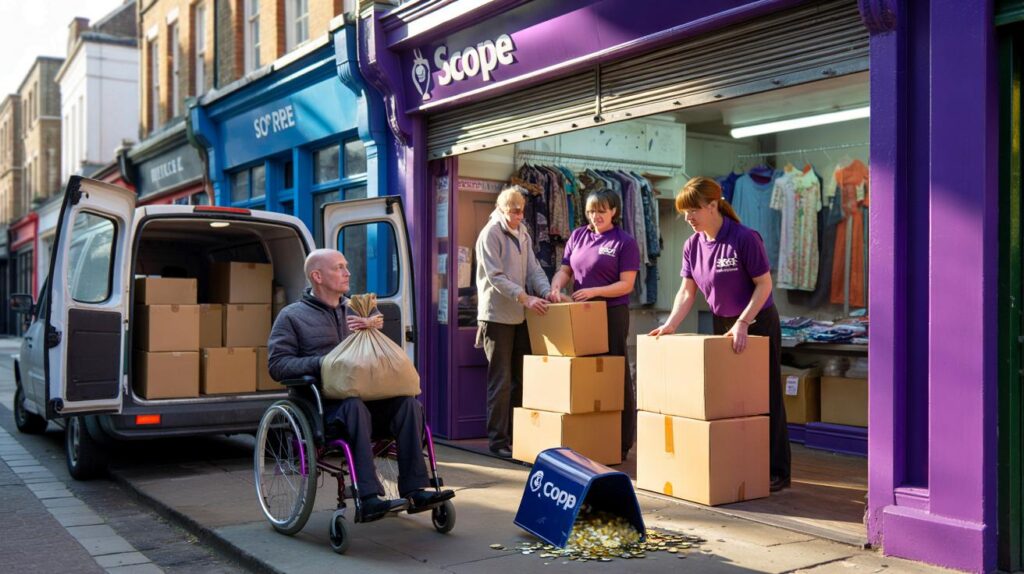
Shoppers across England and Wales face a changing high street as a familiar charity name rethinks its future plans.
Scope, the disability equality charity with more than 130 shops, has set a fresh wave of closures for September. The decisions arrive after a difficult trading year and a major review of its retail estate. Communities that rely on local stores for donations, bargains and advice now await clarity on what will remain open.
Six stores set to close within weeks
Six sites will go in quick succession between the end of August and late September. One branch, in Alton, has already shut. The next three closures fall on the same day in early September, with two more to follow before the month ends.
Dates and towns
| Date | Location |
|---|---|
| 30 August | Alton |
| 6 September | Bishop’s Stortford |
| 6 September | Huntingdon |
| 6 September | Newmarket |
| 27 September | Beverley |
| 27 September | Fleet |
Scope projects a £1.5 million retail loss this year and has placed 77 of its 138 shops under review.
These closures come after earlier exits this year across England and Wales. By the end of March, 23 shops had gone, including two in the London commuter belt. A further 11 closed in May. Fifteen more disappeared over the summer months. The latest timetable continues a programme designed to stem losses and refocus resources.
Why a charity chain is feeling the squeeze
Charity retail looks resilient on the surface, helped by rising interest in second-hand fashion and homeware. Costs have surged at the same time. Energy, rents, service charges and insurance have climbed. Wage bills have risen. Footfall has not recovered evenly across towns and smaller centres.
Scope’s latest annual figures underline the pressure. Trading activities generated £24 million in the year to March 2024. Operating and maintaining the shop network cost £24.7 million. That gap has widened this year as overheads rose faster than sales.
The charity says shop teams and volunteers remain central to its mission, yet it will exit locations that no longer cover costs.
By the numbers
- Retail estate: 138 shops across England and Wales
- Under review: 77 locations
- Already shut in 2024: 23 by March, 11 in May, 15 in summer
- Further closures scheduled: 6 by 27 September
- Latest trading year: £24m income vs £24.7m retail costs
- Forecast: £1.5m retail loss this financial year
What it means for staff, volunteers and donors
Paid staff face consultation processes and redeployment where nearby roles exist. Volunteers often move to neighbouring branches or shift to sorting centres. Where distance makes that tough, teams receive signposting to other local charities needing support.
Donors should keep giving, but check opening hours and capacity at nearby shops. When a branch shuts, the charity usually redirects stock to the closest open site. Higher-value items may move through central hubs or specialist online channels to maximise income. Gift Aid remains vital to unlock extra funds on donated goods sold by the charity on a commission basis.
Customers will still find Scope signage on many high streets. The organisation insists it has a long-term retail role, with fewer but stronger locations. Shops also serve as community touchpoints, offering advice on disability rights, equipment and support. Expect survivor stores to focus on sustainable fashion, curated ranges and donated tech, with improved backroom logistics.
How you can help on your street
People who want their local charity shop to stick around can act now. Small choices add up for branches balancing tight budgets.
- Sign up for Gift Aid on donations so the charity can claim extra income on sales.
- Donate seasonally suitable items to speed up turnover and avoid storage costs.
- Give quality clothing on hangers and pair shoes to cut sorting time.
- Shop midweek when stores are quieter and staff can help with sizes and fits.
- Ask about volunteering for a few hours; merchandising and steaming improve sales.
- Check whether nearby branches or online channels can take bulky furniture.
What is driving reviews across charity retail
Charity shops receive mandatory business rates relief of 80% in most cases, with some councils granting discretionary top-ups. Even with relief, rising occupancy costs can wipe out margins in weaker locations. Larger units carry higher service charges and energy use. Long leases complicate exits without negotiated settlements.
Donations have become more volatile. Peak stock often arrives after decluttering phases or during student moves. Quiet months leave rails thin and sales soft. High-quality branded items sell quickly, while low-quality basics linger. Many charities now run regional sorting hubs and e-commerce teams to channel the best products to where they will fetch the highest prices.
What happens to donations when a branch shuts
During a closure period, stores usually stop accepting donations a few days before the final trading day. Remaining stock is cleared to regional hubs, nearby outlets or online operations. Unsaleable items go to textile recyclers to recover value and avoid landfill. If you arrive to donate on a branch’s last day, staff typically redirect you to the next nearest shop.
Local high streets after a charity shop leaves
Vacant units can sit empty if rents are inflexible. Some landlords consider short-term lets, pop-ups or community uses to keep lights on and deter vandalism. Towns that plan actively for reuse projects, repair cafés or market-style collectives bring footfall back faster. Where a charity shop acted as an anchor, nearby cafés and discount stores may feel an immediate drop in trade.
Councils and business improvement districts sometimes support meanwhile uses to bridge gaps. Residents can push for practical steps: window animations, temporary art, shared click-and-collect hubs, and weekend markets. These low-cost measures soften the impact of one more dark shopfront.
What readers should check next
If your branch appears on the at-risk list, look for notices in the window and updates from staff. Ask which neighbouring store will take donations and whether collection services change. People with disability queries can still seek advice at remaining shops or through the charity’s helplines. Regular givers can switch to direct donations to steady income while the retail estate resets.
Households on tighter budgets can plan ahead for school uniforms, winter coats and kitchen kit by noting delivery days and new stock drops. Volunteers can broaden skills in visual merchandising, social media for shops and basic repairs, which add value to donated goods. These practical steps help keep the doors open where the numbers still work.



Do you have a link to the full list of the 77 at‑risk shops? I cant find an up‑to‑date page on Scope’s site.