
Your fridge staple does more than butter toast; it sets texture, flavour and control across bakes, sauces and quick weekday meals.
We asked four chefs which supermarket block actually earns a permanent spot in their kitchens. Their answers converged on fat percentage, salt control and consistency—and one brand kept rising to the top.
Chefs’ pick and the fat factor
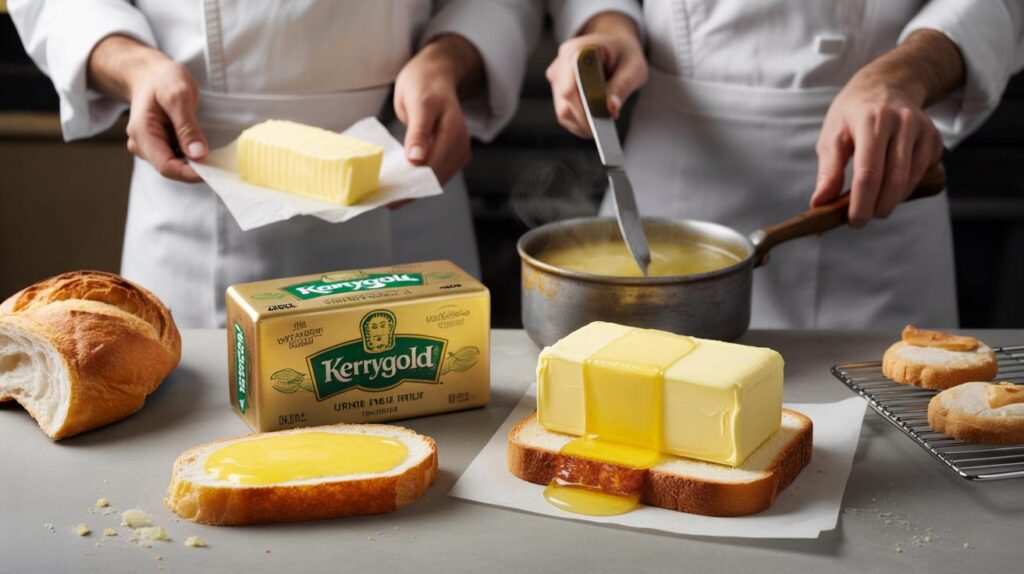
Across the board, chefs singled out Kerrygold Unsalted Pure Irish Butter as their everyday choice. The reasons were concrete: an 82% butterfat content that performs in pastry and pan sauces, an easy-to-spread texture even when cool, and a golden colour linked to grass-fed dairy. Crucially, they want unsalted. Seasoning by hand lets them control salinity across savoury and sweet cooking.
Several chefs stressed how even a single percentage point alters results. At 82%, Kerrygold sits just above the American standard of 80% and just below the richer European style that often hovers around 83%. That middle ground matters. It gives enough richness for lamination and buttercreams without tipping cakes into greasiness or dulling a pan sauce.
Pros consistently target 82–83% butterfat: rich enough to taste luxurious, balanced enough to behave in batters and pastry.
Texture also came up repeatedly. Chefs praised how Kerrygold holds its shape but softens quickly, so you can beat it into sugar, smear it across toast, or fold it through a warm glaze without oiling out. Several noted the deeper yellow hue, often associated with milk higher in beta-carotene, which brings a faintly grassy, dairy-sweet note that flatters both bread and vegetables.
Where higher-fat butter helps—and where it doesn’t
European-style butter commonly lands around 83% fat. That extra richness helps laminated doughs stay pliable while forming clean layers. But more fat also means less water, which affects steam generation in the oven. For flaky bakes like croissants, a small amount of water is a friend: it puffs layers. One chef who loves Plugrà pointed out that a touch more moisture can yield a lighter lift while still tasting rich.
A 1% shift in fat can change spread, puff and crumb—tiny numbers, visible outcomes.
If you swing higher still, specialty blocks exist. Vital Farms sells a sea-salted, pasture-raised butter enriched with avocado oil that reaches about 85% fat. That’s indulgent on warm bread, but too much fat can make some cakes dense and sauces prone to splitting. Know your recipe before you reach for the richest option.
The runners-up you can rely on
Two other brands repeatedly earned praise for everyday cooking and baking: Tillamook and Plugrà.
- Tillamook: about 81% fat, praised for an extra-creamy mouthfeel that makes it a standout on pancakes, bagels and hot toast.
- Plugrà: around 82% fat, a favourite for laminated pastries thanks to its smooth plasticity and gently sweet dairy flavour.
- Organic Valley: near the 80% U.S. baseline—solid for general cooking where you add richness but don’t need maximal fat.
- Vital Farms (sea salt & avocado oil): roughly 85% fat; a plush, spread-first option rather than a baking workhorse.
| Brand | Style | Approx. fat | Best use | Notable traits |
|---|---|---|---|---|
| Kerrygold (unsalted) | Irish/European-style | 82% | All-purpose baking, sauces, everyday cooking | Grass-fed character, golden colour, spreads well when cool |
| Kerrygold (salted) | Irish/European-style | 80% | Table butter, finishing | Seasoned; better for direct spreading than precise baking |
| Tillamook | American | 81% | Spreading, quick breakfasts, general cooking | Creamy texture, consistent flavour |
| Plugrà | European-style (US-made) | 82% | Lamination, croissants, enriched doughs | Smooth, slightly sweet dairy notes |
| Organic Valley | American | 80% | Basic baking, sautéing | Meets baseline fat level for reliability |
| Vital Farms (sea salt & avocado oil) | Speciality | 85% | Spreading, finishing vegetables and steaks | Very rich; not ideal for precise pastries |
How to choose butter for what you’re cooking
Baking
For cakes, biscuits and shortbread, aim for 82% fat and unsalted. That level creams cleanly with sugar, traps air predictably and keeps crumb tender. With laminated doughs, choose a butter that bends without cracking when cold; 82–83% usually hits that sweet spot. If your kitchen runs warm, cut butter in larger chunks and chill between folds.
Sauces and sautéing
For pan sauces and veloutés, start with unsalted to control seasoning. If you need a higher smoke point, combine butter with a splash of neutral oil or use clarified butter. The milk solids in whole butter brown quickly, which adds flavour to fish and chicken but can scorch if heat stays high.
Spreading and finishing
For warm bread, jacket potatoes and grilled corn, a salted butter shines. If you own only unsalted, sprinkle flaky salt at the table. A grass-fed butter adds a gentle pastoral note that flatters tomatoes, green beans and steamed greens.
Buy unsalted for control; add your salt on the plate. Keep one salted block for the table.
Storage, softening and price sense
Butter absorbs odours, so keep it wrapped and chilled, away from onions and cheese. For weekend baking, portion blocks into 50–60g chunks and freeze them in bags; thaw overnight in the fridge. To soften quickly, cube the butter and leave it at room temperature for 15–20 minutes, or grate it on the coarse side of a box grater.
Check unit pricing. Imported European-style blocks often cost more per 100g. If you bake weekly, a domestic 82% option like Plugrà can stretch your budget without sacrificing performance. For casual cooking where exact fat isn’t critical, an 80–81% butter keeps costs down and results steady.
What the chefs actually do at home
Pattern, not hype, explains their choices. One chef uses Kerrygold as a daily staple for home cooking because it tastes rich yet stays versatile. Another reaches for unsalted blocks for pastry and baking, then finishes dishes with salt at the end. A pastry instructor who backs Plugrà highlighted lift in croissants thanks to moisture that turns to steam in the oven. And a culinary director pointed to moderation: while richer butters exist, he prefers a level that brings flavour without feeling heavy at the table.
Try this two-minute test at home
Line up two slices of warm bread. Spread an 80% butter on one, an 82% on the other. Note spread, aroma and melt. Repeat with a quick biscuit dough: divide the batch and bake one with each butter, keeping every other variable identical. Check lift, crumb and browning. You’ll see why professionals care about a single percentage point.
Extra know-how for better cooking
If a sauce breaks, whisk in a tablespoon of cold water off the heat, then mount a small knob of butter to re-emulsify. If biscuits sprawl too much, chill the shaped dough and switch to an 82% butter next time. For steak finishing, stir softened butter with chopped herbs, lemon zest and a pinch of salt; form a rough log in baking paper and chill for easy coins.
Finally, match format to need. Many American recipes assume 113g sticks; European packs are usually 250g. Weigh rather than measure by volume for accuracy—especially in pastry—so that your chosen butter fat translates to consistent, repeatable results.



Excellent breakdown—finally understand why my 80% butter makes cookies spread. Swapped to Kerrygold unsalted (82%) and my shortbread went from greasy to tender. Also appreciate the note about water creating steam in croissants; that explains my lift issues. Quick Q: for creaming sugar, do you aim for cool but pliable, or full room temprature? Thanks for the practical, non-hype take.
Is the ‘grass-fed’ golden color really a flavor edge or just aesthetics? Anyone done a blind comparisson between Kerrygold 82% and Plugrà 82% in pound cake? At my store the price gap is big, so I’m not convinced a single percent—or beta‑carotene—beats technique.