
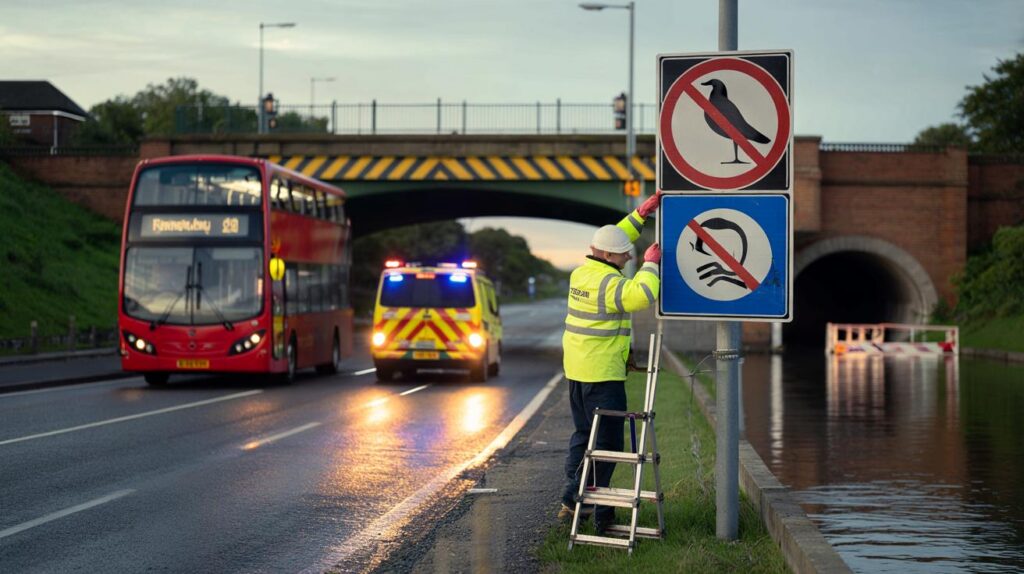
Prank signs have raised smiles across Chelmsford, yet the jokes now bump into a serious debate about safety, cost and trust.
Essex Highways has urged the anonymous creator to call time on the spoof notices. Officials say the lookalike signs risk misleading residents, confusing drivers and draining public funds through call-outs and removals.
How the joke signs spread
Over the last 18 months, a scatter of convincing, unofficial signs has appeared around Chelmsford. They mimic the colours, fonts and layout of genuine highway notices, which makes them easy to miss until you read the punchline.
The spoof campaign has produced at least six lookalike signs in 18 months. Some have gone. Others still stand.
- August 2025: a double decker bus becomes wedged beneath a railway bridge near Chelmsford station; a tongue‑in‑cheek follow‑up sign appears at the bridge.
- Recent weeks: a notice near Chelmsford Market appears to ban pigeons from gathering or landing.
- January 2025: a sign lists “restrictions” for boats at a railway viaduct after images of a £1m yacht seeming stuck went viral.
- Spring 2024: a city‑centre underpass gains a sign hinting the council will hand out flippers and snorkels for flood days.
- Two months later: another underpass receives a mock prohibition on rowing.
- November 2024: shoppers spot a new Woolworths logo at Chelmer Village Retail Park, hinting at a retail comeback that never came.
From stuck bus to bridge banter
The August bus strike under the low railway bridge delivered the most public flashpoint. Within days, a fresh sign appeared at the site, echoing official warning boards but with a teasing nod at double decker drivers. Rail bridges with tight clearances demand clear, consistent warnings. Pranks at those locations can distract the very people who most need to focus on height markers.
Retail nostalgia with a twist
At Chelmer Village Retail Park, a crisp Woolworths logo triggered a wave of nostalgia. Centre managers quickly confirmed it was bogus. The sign worked because it felt plausible. It borrowed a vanished brand that still carries emotional weight and paired it with a format shoppers instinctively trust.
When floods invite flippers
Underpasses that flood after heavy rain became another running gag. One sign joked about free snorkelling kits. Another banned rowing. Locals chuckled. Highways teams did not. Jokes in flood‑prone spots can blur what action people should take when water rises and seconds matter.
Yacht jam that wasn’t
Photos of a £1m yacht apparently lodged at a railway viaduct looked dramatic. The vessel was simply inching forward. A mock sign with “boat restrictions” followed. It captured a moment, but it also borrowed the authority of official traffic furniture to deliver a joke.
Why Essex Highways says the laughs must stop
Highways officers say the signs cross a line when they mimic official styles.
Essex Highways asked residents not to erect false signage, warning it can mislead and cause confusion across the network.
Staff have removed several items and continue to monitor hot spots. The county must prioritise clarity for road users, pedestrians and cyclists. Every ambiguous message raises the risk of error, delay or collision.
Stephen Robinson, leader of Chelmsford City Council, suggested the campaign looks like a gentle jab at county officials. He does not condone the practice. He recognises the humour, but he points to the need for clear, lawful signs that people can trust.
What the law says
British law keeps tight control over road signs. Only the highway authority, or those it authorises, may place signs that resemble official traffic signs. Formats and symbols follow national rules.
Unauthorised signs can trigger enforcement. Offenders can face removal costs and a fine up to £1,000 under the Highways Act 1980.
Councils can also recover the cost of crews sent to take down illegal signs. If a bogus sign contributes to a crash or blocks an emergency response, police may consider additional offences. The law exists to maintain one shared language on the road so that every symbol means exactly what drivers expect, in daylight and in rain.
Could spoof signs actually cause harm?
Humour softens the edges of everyday life, but signs sit at the hard core of public safety. Distraction matters. Misdirection matters. Britain records more than 1,500 bridge strikes in a typical year, many involving large vehicles. Each strike can shut roads and rail lines, rack up repair bills and delay commuters.
| Scenario | How a spoof sign could mislead | Possible outcome |
|---|---|---|
| Low bridge approach | Humorous message diverts attention from height warning boards | Vehicle strike, rail disruption, injury risk |
| Flooded underpass | Joke implies equipment or safe passage | Drivers attempt entry, vehicle damage, rescues required |
| Pedestrian zone or market | Fake restrictions confuse users | Arguments, non‑compliance, enforcement calls |
Even outside emergencies, spoof notices erode confidence. People need to know at a glance that a sign is real, current and enforceable. That trust collapses if jokes blur the boundary.
How to spot an unofficial sign
Most fakes give themselves away once you slow down and look closely. These pointers help:
- Odd fonts or spacing that do not match standard Transport fonts.
- Humorous or implausible wording that no council would issue.
- Colours or pictograms that sit slightly off official shades and shapes.
- No authority name, reference, or works notice nearby for temporary signs.
- Unusual placement, such as low mounting height, cable ties on street furniture, or flimsy backing.
- No reflective sheeting on a sign that should be visible at night.
If you spot a suspicious sign, photograph it and note the exact location. Report it to Essex Highways via the county’s reporting service. Do not attempt to remove it yourself.
What happens next
Crews have taken down several items, including the viaduct notice. More recent installations remain while inspections continue. The county will prioritise sites with the highest safety risk, such as low bridges and flood‑prone underpasses.
Officials aim to protect the joke without losing the junction: humour belongs in parks and posters, not on the road network.
Behind the scenes, officers are reviewing whether a pattern suggests a single creator or copycats. If they identify individuals, they can pursue recovery of removal costs. In the meantime, both county and city figures want residents to treat anything unofficial with caution.
Useful context for residents
Height strikes happen when drivers rely on memory, not measurements. If you operate a van, bus or lorry, check your vehicle height and keep it on a dashboard sticker. Approach low bridges at low speed, watch for advance warning boards, and never follow a vehicle just because it squeezed through.
Floods change quickly. If an underpass fills, do not attempt to drive through water that hides road depth or debris. Turn around and use marked diversions. For pedestrians and cyclists, use alternative routes until crews declare the path safe.
Residents can help by reporting damaged, obscured or missing official signs. Clean, visible and consistent signs shorten journeys, cut emissions from idling tailbacks and reduce the strain on emergency services. Jokes come and go. Clear guidance keeps everyone moving.



Interesting read. But if the signs are that convincing, doesn’t that point to a bigger design issue—shouldn’t official notices have visible authentication marks or QR codes to distinguish them quickly, even at speed? A tiny hologram, serial number, or council crest that’s standardised might help. Otherwise pranksters will keep copying fonts forever, and the public keeps guessing what’s real.
The pigeon ban sign was comedy gold, ngl.