
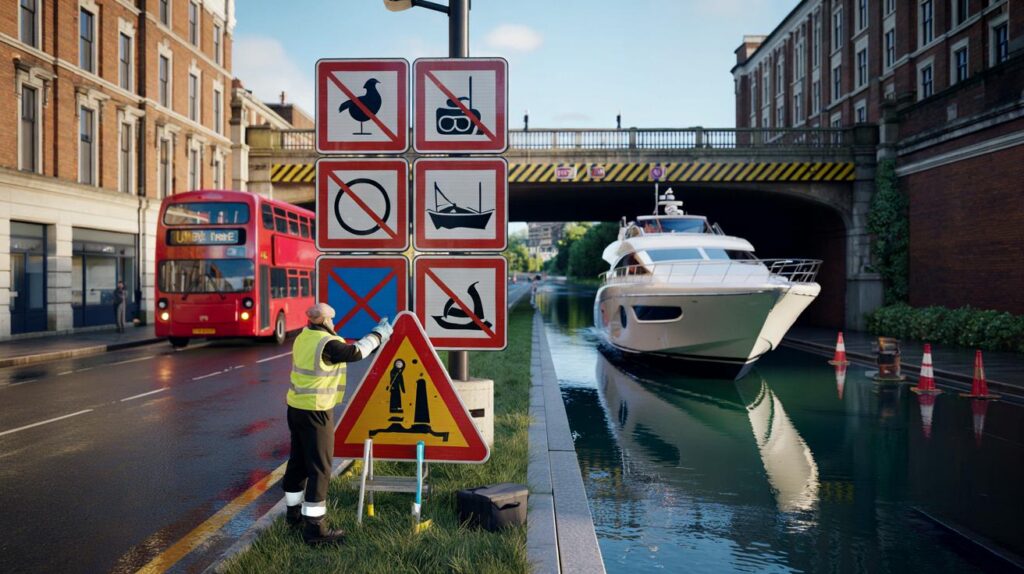
A burst of mischievous street signs has amused locals and baffled visitors. Now the debate is rolling from market stalls to council chambers.
Essex Highways has urged the unknown prankster behind a crop of official-looking signs across Chelmsford to down tools. Officials say the spoof signage, which has multiplied over the past 18 months, risks confusing drivers and pedestrians, and could nudge people into unsafe choices.
How Chelmsford became a playground for parody
The latest act of street theatre surfaced by the railway bridge next to Chelmsford station, days after a double decker bus became wedged under it in August. Commuters clocked a sign that winked at the mishap, echoing the shape and style of genuine road plates.
That was only the newest instalment. Shoppers in Chelmer Village spotted a bright Woolworths logo fixed at the retail park entrance last November, summoning memories of pick ’n’ mix and Saturday jobs. Market-goers have blinked at a notice apparently “banning” pigeons from congregating outside stalls. Early this year, a viaduct display set out mock “boat restrictions” just as photos of a £1m yacht inching beneath an arch went viral. Close to the city centre, a flooded underpass somehow “offered” snorkels, masks and flippers; later, another notice warned that rowing through a different underpass was prohibited.
Several of the spoof signs mimic the font, layout and reflective finish of real highway plates, which increases the risk of people taking them at face value.
Some installations have been removed, although a number still dot the city. Their origin remains a mystery. City council figures have suggested the campaign looks like a wry jab at the county’s transport authorities, even as they discourage the practice.
Why fake road signs are a problem
Confusion, delays and safety risks
Look-alike road signs don’t just raise a smirk. They can distract drivers at junctions, sow doubt about restrictions, and slow emergency responses. After the recent bridge strike by the station, patience is thin. Network Rail warns of hundreds of bridge strikes across Britain each year, with disruption costs running into tens of millions of pounds. Misdirection or hesitation at height-restricted bridges adds to that risk.
Pedestrians can be thrown too. A spoof “no landing” notice for pigeons is harmless on the face of it, but a similar format applied to diversions or closures could send people the wrong way during flooding or roadworks. That matters when underpasses fill quickly in heavy rain and signage guides people to safer routes.
Essex Highways says lookalike plates can mislead residents and cause confusion. The authority wants them taken down, and is asking anyone tempted to add more to think again.
The law and possible penalties
Unauthorised signs on the public highway are not a grey area. Under the Highways Act 1980, it can be an offence to affix posters or signs to street furniture without consent, with fines that can reach level 3 on the standard scale. The Road Traffic Regulation Act 1984 restricts the placing of traffic signs to the highway authority or organisations acting with its approval. Councils can also recover removal costs.
- Placing a lookalike traffic sign can lead to removal and a fine.
- Obstructing or distracting road users can attract separate penalties.
- Businesses risk action if promotional boards imitate official plates.
How to tell a real sign from a spoof
Many of Chelmsford’s prank signs ape the Transport typeface and standard shapes, which clouds the picture. These pointers help residents spot the differences.
| Feature | Official sign | Likely spoof |
|---|---|---|
| Authority | Placed by Essex Highways or its contractors | No authorising body; appears overnight |
| Materials | High-grade reflective sheeting, engineered fixings | Non-standard reflectivity, improvised mounts |
| Content | Matches national diagrams and wording | Humorous wording, unusual icons |
| Location | Consistent with live restrictions and road layout | Targets topical events or pop culture |
| Condition | Logged on council asset lists | Unrecorded, may move or vanish quickly |
When in doubt, follow the standard plates you know: black-on-white regulatory signs, red-bordered warnings, and the familiar brown, blue and green wayfinding colours set out in national rules.
What Essex Highways wants residents to do
Report, don’t remove
Officials ask residents to report suspicious signs so contractors can remove them safely. Don’t try to pull them down yourself. Street furniture can be wired to electricity or fixed to load‑bearing structures.
- Note the exact location and nearest junction.
- Describe the wording, colours and symbols.
- Share a photo if you can do so safely from the pavement.
- Use the council reporting portal or ring the highways contact centre.
For businesses, the advice is simple: keep promotions well away from highway land and never imitate statutory signage. Pavement boards need permission and must not resemble regulatory plates.
The cultural wink—and its limits
There is no denying the craft involved. The Woolworths plate tapped a seam of nostalgia. The snorkel notice landed a sharp joke about drainage. The pigeon ban raised a grin at the market. This is street comedy tailored to local life. Yet the line between playful commentary and public safety sits firmly with the authorities, and Essex Highways wants the series to end before a driver or pedestrian acts on the wrong cue.
The bigger picture on bridge strikes and flooding
Bridge strikes remain a stubborn problem across Britain. Drivers of tall vehicles should check height plates and conversions: 14ft 6in equals about 4.4m, and older bridges can be lower. Bus and HGV operators train drivers on route planning, but distraction at the wrong moment can undo that preparation. Sat navs set for cars may not warn about height limits, so professional settings matter.
Flood-prone underpasses around Chelmsford have improved in recent years, yet intense downpours still overwhelm drains. Genuine signs and barriers go up fast when water levels rise. That is when spoof messages become more than a joke. Clear, trusted instructions keep people away from fast‑moving water, hidden kerbs and trip hazards.
If you see water at an underpass, turn back. Do not try to wade through. Depth changes quickly and cold water shocks the body.
Practical tips you can use today
- Set your sat nav to an HGV or bus profile if you drive a tall vehicle.
- Learn common UK sign shapes and colours; it speeds decision‑making.
- During heavy rain, plan walking routes that avoid low underpasses.
- Treat novelty wording as entertainment, not instruction.
Residents who enjoy creative public art have other routes. Community noticeboards, licensed murals and temporary exhibitions allow satire without touching safety infrastructure. Those channels also credit artists without risking fines or damage to council assets.
For anyone curious about the mechanics, official signs follow the Traffic Signs Regulations and General Directions 2016. Designs use the Transport or Clearview typefaces, specific colour codes and standard diagrams. That consistency lets you process information in an instant. It only works if every plate in the wild pulls in the same direction.



As a driver of a 4.4m box van, this stuff isn’t just banter—bridge heights are split‑second calls. After that bus got stuck, the last thing we need is spoof plates near the station. Please, channel the wit into murals instead.
The ‘snorkels available’ underpass sign had me wheezing. But yeah, maybe keep the comedy off the highways and onto billboards? Safety first, giggles second 🙂