
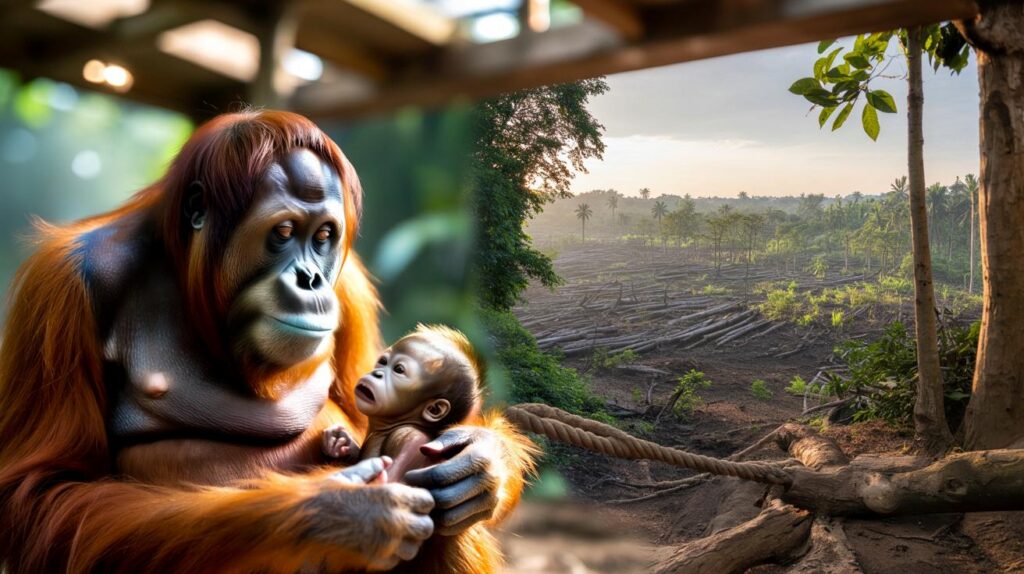
Before sunrise in Cheshire, a hush fell over the primate house as keepers watched a fragile life take hold.
In that quiet moment, a new Bornean orangutan came into the world at Chester Zoo, a birth that ties local joy to global stakes. The infant arrived to experienced mother Leia after an eight-and-a-half month pregnancy, and both are doing well, according to the zoo’s team.
A ‘tiny’ primate with big implications
The baby was born in the early hours of Tuesday 7 October. Keepers describe the newcomer as small and vigorous, nursing often and clinging tightly to Leia’s chest. Staff have not yet confirmed the sex. For now, the focus remains on maternal bonding and steady weight gain.
Critically endangered and clinging to survival, Bornean orangutans need every birth to count.
Conservationists view each infant as a living investment in the species’ future. The International Union for Conservation of Nature lists Bornean orangutans as critically endangered, the highest category before extinction in the wild. That status reflects rapid habitat loss, illegal killing and pressure from expanding agriculture.
What the first days looked like
Leia stayed close to the infant through the first days, maintaining near-constant contact. Successful great ape mums set the rhythm. They hold, feed and shield their young nonstop in the opening weeks, building trust and a pattern of care that can last for years. Chester’s primate team report frequent feeds, a strong latch and attentive behaviour from Leia.
| Detail | Information |
|---|---|
| Species | Bornean orangutan (Pongo pygmaeus) |
| Birth | Early hours, Tuesday 7 October |
| Mother | Leia |
| Pregnancy length | Approximately 8.5 months |
| Infant sex | Not yet determined |
| Conservation status | Critically endangered (IUCN) |
Why this birth matters
Only three orangutan species exist: Bornean, Sumatran and Tapanuli. All face steep declines. Chester Zoo holds both Bornean and Sumatran orangutans, a rarity in the UK. That places the zoo within a network of carefully managed breeding programmes designed to preserve genetic diversity, maintain healthy family lines and support future reintroduction plans where feasible.
More than 40% of Borneo’s forests have been lost since 2000, much of it linked to unsustainable palm oil and logging.
That statistic sets the backdrop to Leia’s infant. Orangutans rely on complex rainforest canopies. Fragmented forests cut access to food and shelter. Roads and plantations pull apes into conflict with people. Poaching adds pressure. Against that reality, zoos and field partners now pair breeding with long-term habitat work.
Beyond the enclosure: the Borneo picture
Chester Zoo has backed conservation in Borneo for more than two decades. The work focuses on protecting intact habitat, reconnecting fragments with wildlife corridors and reducing conflict between communities and apes. In the Kinabatangan region, those efforts have helped secure recognition as a UNESCO Biosphere Reserve, a status that signals a commitment to balancing people, nature and development.
Rainforests need more than fencing and patrols. They need local livelihoods that make standing forest valuable. Projects in agroforestry, sustainable commodities and ecotourism can shift incentives. Education programmes reduce the harm from snares and retaliatory killing. Science-led monitoring tracks ape movements and guides where to restore canopy links.
The palm oil knot
Palm oil shows up in biscuits, spreads, soaps and shampoos. It yields more oil per hectare than many alternatives, so a blanket boycott risks pushing deforestation elsewhere. Certified sustainable palm oil, when properly audited, can limit new clearing, protect high conservation value areas and reduce harm to wildlife.
Choosing certified sustainable palm oil beats a simple boycott: it rewards producers who keep forests standing.
Chester Zoo campaigns for responsible sourcing across retailers, manufacturers and caterers. Clear labelling and procurement policies give shoppers and businesses a straightforward way to shift demand.
Inside the orangutan family
Orangutans are the most solitary of the great apes. Mothers carry a single infant for years, teaching foraging skills and nest building from tree to tree. That slow pace means populations recover slowly after losses. Each birth matters. Each surviving youngster carries decades of potential reproduction, culture and genetic variability.
In the wild, young orangutans nurse for up to six or seven years. They learn to recognise seasonal fruiting, navigate canopy highways and avoid risks on the ground. Captive-born infants benefit from species-specific social settings that mirror these learning stages, with keepers carefully limiting stress and encouraging natural behaviours.
What Chester Zoo brings to the table
- Managed breeding to protect genetic diversity across European and global programmes.
- Long-term field partnerships in Borneo focused on habitat restoration and community-led conservation.
- Public campaigns on sustainable palm oil to shift household purchasing habits.
- Research on primate behaviour, health and welfare to inform care and reintroduction strategies.
- Education initiatives that link local action in the UK to conservation outcomes abroad.
How you can tilt the odds
Your weekly shop can help. Look for products that specify certified sustainable palm oil. Ask brands to publish their sourcing. Favour retailers with transparent supply chains. Reduce food waste, which cuts pressure to convert new land. Support conservation charities with field programmes tied to measurable outcomes, such as hectares restored or corridors secured.
Families visiting zoos can turn interest into skill-building for children. Talk about maps of Borneo, canopy layers and why fruiting trees matter. Compare a shopping list with certification logos. Small habits at home scale up when millions participate.
What to watch for in the coming weeks
Keepers will track the infant’s weight, grip strength and feeding frequency. They will confirm the sex once handling poses minimal risk. As confidence grows, short introductions to other group members may follow, always paced by Leia’s behaviour. Public viewing usually increases once routines settle and the pair show steady progress.
Context that puts this birth in focus
Conservation breeding alone cannot save orangutans. It buys time and preserves vital genetic lines while field teams tackle the drivers of decline. The combination matters: a healthy captive population, viable habitat in Borneo and market incentives that reward forests. Remove any strand and the plan frays.
For readers who want to go deeper, two terms help. A wildlife corridor reconnects forest patches so animals move safely between feeding and nesting areas. A biosphere reserve blends core protection with buffer zones where people live and work under rules that keep nature functioning. Both ideas sit behind the work now shaping Kinabatangan’s future.



What a beautiful arrival at Chester Zoo! Congrats to Leia and the team. Every orangutan birth feels like a small victory against that 40% forest loss. Sharing this and switching my shop to certified palm oil today 🙂
Genuine question: how much does breeding in zoos actually help if habitats keep vanishing? Isn’t this just buying time while plantatons expand? We definately need policy teeth, not just cute headlines.