
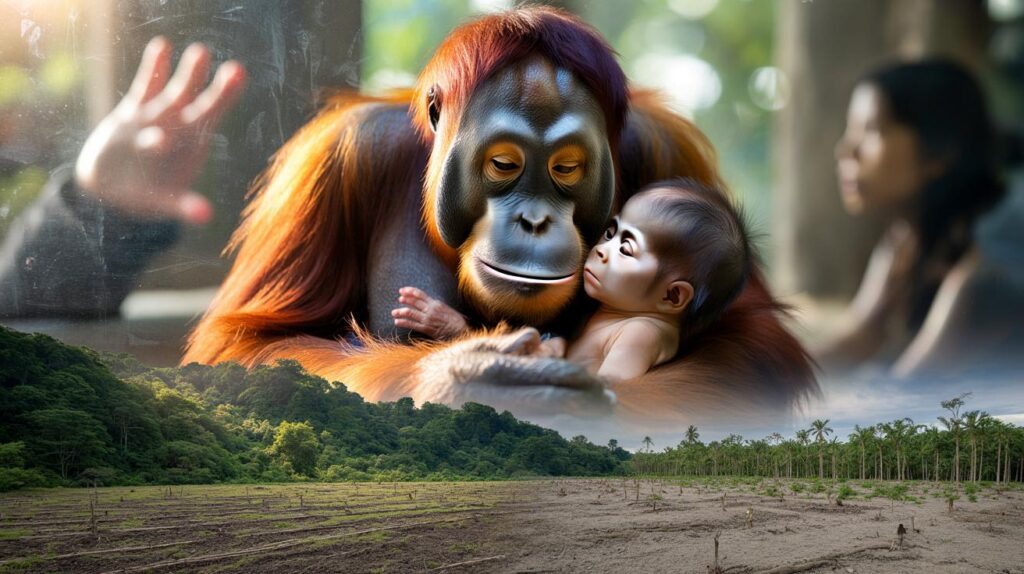
Behind the glass at a northern zoo, a newborn clung to ginger fur as keepers swapped whispers for soft smiles.
Chester Zoo has confirmed a new arrival many will cheer. A Bornean orangutan infant appeared in the small hours of Tuesday 7 October after an eight‑and‑a‑half‑month pregnancy. The mother, Leia, is attentive and calm. The baby is healthy, though the sex remains unknown.
A quiet arrival before dawn
Keepers came in to find Leia cradling the infant high in the orangutan habitat. Staff report frequent feeds, a firm grip and steady breathing. The pair have settled into a gentle rhythm. Early days focus on warmth, milk and bonding. Lighting stays soft. Noise is kept to a minimum.
Visitors may glimpse a tiny face against Leia’s chest, then only a tangle of auburn hair as she turns away. That choice is hers. Great apes manage their own space. Keeper teams step in only when necessary, and then with care.
Bornean orangutans are listed as Critically Endangered by the IUCN, placing them among the world’s highest conservation priorities.
The mother: Leia’s steady routine
Leia carries her newborn constantly in these first weeks. She eats often and rests where she feels secure. Milk demand is high, so diet matters. Keepers offer a balanced spread of fruit, leaves and browse. Every successful feed builds resilience. Every quiet hour helps.
Sexing a newborn orangutan can take time. Keepers avoid stress and wait for the right view. Health takes precedence over headlines.
Why this tiny primate matters
The Bornean orangutan lives only on the island of Borneo. Habitat change is the defining threat. Forest has been cleared and fragmented for decades. Landscapes that once formed seamless canopies now sit as scattered patches. Travel between fragments is dangerous and slow for arboreal apes.
More than 40% of Borneo’s tropical forests have disappeared since 2000, much of it linked to unsustainable palm oil, logging and agricultural expansion.
Poaching and conflict with people add pressure. Orangutans reproduce slowly, so losses hit hard. Females typically give birth only every 7–9 years. That pace cannot replace removed animals. Each birth in a conservation breeding programme becomes a long investment in the future of the species.
The International Union for Conservation of Nature classifies the species as Critically Endangered. That status reflects both population decline and ongoing risks. The label does not doom the species. It signals urgency and guides action.
Chester Zoo’s role at home and abroad
Chester Zoo cares for both Bornean and Sumatran orangutans, the only zoo in the UK to hold the two species together. The aim is more than display. The collection supports research, veterinary training and careful breeding that can safeguard genetics over decades.
The zoo also works with partners in Borneo. For more than 20 years, teams there have restored habitat and created wildlife corridors. Community initiatives reduce conflict where people and apes share land. The Kinabatangan area, where partners have focused effort, has now been recognised as a UNESCO Biosphere Reserve—an endorsement of the landscape‑scale approach. Local organisation HUTAN is central to this fieldwork, and the zoo’s long‑term backing has helped the programme persist through tough years.
Two tracks, one goal: protect forests in Borneo and build a healthy, secure population under human care.
What visitors will see in the coming weeks
Expect short, quiet views rather than long encounters. Newborn orangutans sleep often. Leia will choose shaded, higher spots that keep her infant safe. Keepers may adjust viewing areas to give the pair more room. Cameras are welcome, but staff ask for patience and low voices around the habitat.
As the infant strengthens, you may notice tiny hands reaching through Leia’s fur. Gripping improves day by day. Eyes open longer. Curiosity grows. Milestones come slowly with orangutans. That is normal and healthy.
| Species | Bornean orangutan (Pongo pygmaeus) |
| Conservation status (IUCN) | Critically Endangered |
| Birth | Early hours of Tuesday 7 October 2025 |
| Gestation | About 8.5 months |
| Infant sex | Not yet determined |
| Key threats | Deforestation, unsustainable palm oil, logging, agricultural expansion, poaching, human–wildlife conflict |
| Unique UK note | Chester Zoo houses both Bornean and Sumatran orangutans |
How you can help today
Change in the aisles shapes change in the forest. Palm oil sits inside everyday life. Shampoo, biscuits, spreads and cosmetics often contain it. Production can either drive clearance or protect existing plantations and wildlife corridors. Your choices matter.
- Choose products using certified sustainable palm oil and read company policies on sourcing.
- Ask retailers to stock brands committed to deforestation‑free supply chains.
- Cut food waste at home, which reduces pressure on agricultural land.
- Support habitat restoration projects and trusted field partners working in Borneo.
- Visit accredited zoos that invest in conservation and education; membership often funds field programmes.
- Share verified figures about forest loss and why certified palm oil offers a practical path.
Why sustainable palm oil beats a blanket boycott
Replacing palm oil wholesale can push demand toward other crops that need more land and water. Certified schemes aim to improve yields on existing plantations, protect high‑value forests and link remaining habitats with corridors. That approach reduces the need to fell new areas while keeping local livelihoods viable.
The orangutan lifecycle: slow and careful
Orangutans invest years in each offspring. Weaning can take up to eight years. Youngsters learn where to find fruit, how to build nests, and how to move safely between trees. Females mature late compared with many mammals. This slow timeline is why populations struggle to rebound when adults are lost.
Under expert care, apes receive veterinary screening, tailored diets and sophisticated habitats. Training focuses on cooperation—opening mouths for tooth checks, presenting arms for blood samples, stepping on scales—all without force. That approach keeps stress low and data reliable.
What this birth signals
Leia’s infant strengthens a safety net that spans generations. It also keeps attention on the forests where relatives still hang in the canopy. The story stretches from a nursery in Cheshire to riverine rainforest in Sabah. Action in one place affects outcomes in the other.
A single baby will not save a species. It can, though, rally people around the work that does.
For families planning a visit, time your stop for quieter periods. Early morning often suits mother and young best. Allow space at the viewing window. Bring questions for the keepers; they know the family’s habits and can point out subtle behaviours worth noticing.
For readers wanting more context, look up how biosphere reserves balance human needs with biodiversity. The Kinabatangan model blends protected cores with managed use in surrounding zones. Think of it as a layered shield that lets nature and livelihoods co‑exist. The principle is simple: connect fragments, improve plantations, and give wildlife room to move.
If you teach or run a community group, turn today’s birth into a small project. Track your household’s palm‑based products for a week. Switch two items to certified options. Calculate the change. Small numbers add up when thousands join in. That is how a quiet moment before dawn turns into momentum beyond the zoo gates.



Congratulations, Leia! After 8.5 months, a healthy newborn and attentive mum—what a lift. Thanks for calling out the 40% forest loss; I’m switching to certified palm oil starting today and sharing the info with my office. 😊
Great news, but what proportion of ticket/membership income goes directly to Borneo partners like HUTAN and corridor projects? Could you post last year’s audited figures? Without real transperancy, it risks sounding like PR.