
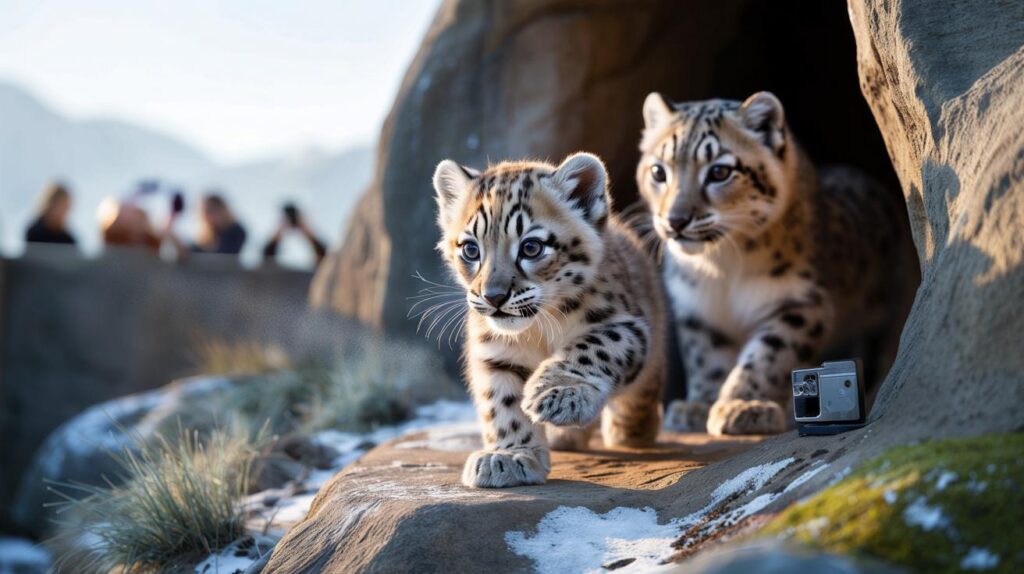
A hush fell over a stone den as a small tail flicked past a hidden camera, sending hearts racing nationwide.
Across phones and living rooms, viewers held their breath while keepers prepared carefully for a pivotal step outside. What followed was a rare look at a secretive mountain cat, a public vote with thousands of voices, and a name that nods to high, windswept peaks.
A name chosen by thousands
Chester Zoo has revealed that its newborn snow leopard cub now carries the name Bheri, a choice shaped by thousands of suggestions submitted by members of the public. The selection pays tribute to the species’ rugged home range in the high mountains of Central and South Asia, and to the river valleys that carve through that landscape.
Bheri’s name rose from thousands of public suggestions, a people-powered nod to the cub’s mountain heritage.
Keepers describe the female cub as confident, curious and already nimble on her paws. Her mother, Nubra, has ushered her gently into the outside enclosure for the first time, staying close while the youngster tested rocks, tussocks and the scent of cold air. The moment capped weeks in which the zoo’s den camera drew a mass audience, turning a quiet nest into appointment viewing.
Meet Bheri
- Species: snow leopard (Panthera uncia)
- Sex: female
- Mother: Nubra
- Name: Bheri, chosen after thousands of public suggestions
- First steps outdoors: guided by mum after weeks in the den
- Seen by: millions via the zoo’s den cam livestream
Rare cat, real risks
Snow leopards are classed as Vulnerable on the IUCN Red List. Researchers estimate that roughly 4,000 remain in the wild. Their range spans some of the toughest terrain on Earth, from the Himalayas to the Tien Shan and the Pamirs. People rarely see them, which has earned them a spectral reputation in folklore and field notes alike.
Only around 4,000 snow leopards are thought to survive in the wild, scattered across remote mountain ranges.
Pressures are mounting. Habitat is shrinking as infrastructure pushes higher into alpine pastures. Warmer winters are reshaping prey patterns and narrowing the cat’s options. Poaching persists, fuelled by demand for pelts and body parts. Most fraught is the conflict that flares when leopards take livestock from highland herders.
| Threat | Impact on snow leopards | Response on the ground |
|---|---|---|
| Habitat loss | Fewer safe corridors to hunt and find mates | Protected area planning and wildlife-friendly land use |
| Climate change | Shifting prey and shrinking alpine zones | Long-term monitoring and climate-resilient grazing plans |
| Poaching | Direct killing for pelts and illegal trade | Stronger enforcement and community-led patrols |
| Human–wildlife conflict | Retaliatory killings after livestock losses | Predator-proof corrals and fair compensation schemes |
Why the world tuned in
The den livestream turned a hidden chamber into a shared experience. The zoo says millions watched Nubra nurse, rest and reposition straw while the cub grew stronger. That audience created a rare bond with a species that usually moves like a whisper across snowfields. For keepers, the cameras also offered valuable behavioural notes without disturbing the family.
Millions watched the quiet rhythms of a den, seeing a secretive species at its most private.
That intimacy matters. People who feel connected to an animal are more likely to support the work that safeguards it. The naming process harnessed that energy, turning passive viewing into participation.
The science and care behind a cub
Bheri’s birth forms part of the European endangered species breeding programme, which coordinates zoos to protect genetic diversity and reduce the risk of inbreeding. Pairings are planned using studbook data, with animal welfare and temperament at the forefront. The goal is healthy, behaviourally competent cats that could, if ever required, support wider conservation aims.
Behind the scenes, keepers follow a precise routine. They track weight gain, feeding patterns and activity. They balance den privacy with veterinary checks. As the cub grows, they offer new textures, scents and climbing features to encourage coordination and confidence.
- Daily checks focus on appetite, hydration and energy levels.
- Quiet periods are protected so mum–cub bonding remains calm.
- First outdoor time is brief, then gradually extended.
- Enrichment mimics mountain terrain: boulders, ledges, scents.
Chester Zoo also works with the Snow Leopard Trust and communities in Kyrgyzstan, where herders and big cats share steep valleys. The partnership supports practical steps that reduce losses of livestock and, with them, the risk of retaliatory killing. It also backs habitat protection so wild cats can move safely between hunting grounds.
From a quiet den in Cheshire to high pastures in Kyrgyzstan, the same aim holds: fewer conflicts, more safe space.
What you can do now
Interest sparked by Bheri can translate into real-world gains. You can support programmes that fit local needs, from predator-proof corrals to community rangers. Back efforts that strengthen law enforcement against wildlife trafficking. Ask retailers tough questions about supply chains that push roads and mines deeper into fragile mountains. School clubs and workplaces can adopt projects that fund camera traps, education or veterinary support for guard dogs.
Small shifts add up. Reducing your fashion footprint lowers demand for materials linked to high-altitude habitat loss. Responsible travel choices respect sensitive areas and avoid disturbance during calving seasons for wild prey.
Why names and numbers matter
Names create attention; numbers guide action. Bheri gives a face to a global story. The figure of 4,000 concentrates minds on what remains and what could yet be rebuilt. When thousands of people weigh in, a cub becomes a cause, not a passing clip on a phone screen.
Human–wildlife conflict sits at the heart of that cause. The term describes situations where people and animals compete for space or resources, leading to damage or danger. In upland villages, a leopard that takes goats can push a family to the brink. A secure night-time corral, backed by fair compensation for losses, can cool tempers and save cats. Picture a valley with 100 households: if each loses one goat a year, a modest fund that pays for sturdy fencing and makes families whole can stop a cycle of retaliation before it begins. That blend of fairness and prevention is what long-term coexistence looks like.
For families following Bheri’s story at home, there are hands-on ways to get children involved. Keep a wildlife diary, log local sightings, or build a simple “track box” in a schoolyard using damp sand to show pawprints of neighbourhood mammals. That curiosity—the same curiosity that filled a den livestream with millions of views—plants the seed for the next generation of scientists, keepers and community leaders who will shape the future of high mountain wildlife.



Bheri is such a perfect name—thanks to everyone who voted! Watching Nubra guide her outside on the den cam was pure magic 🙂