
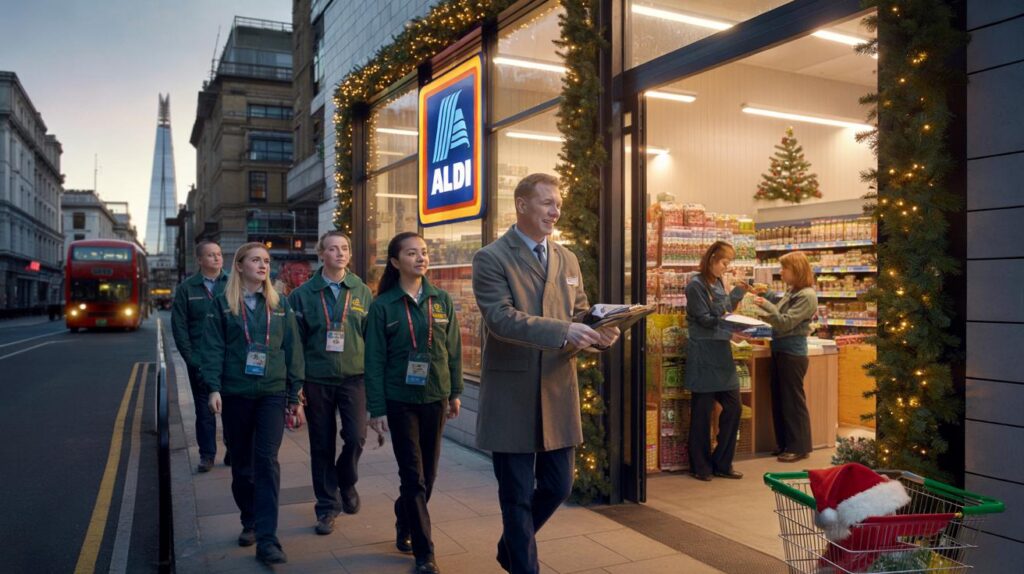
Shoppers face a festive season reshaped by higher shop‑floor pay, new hires and unusual opening hours at a budget favourite.
Aldi has nudged the supermarket pay race into new territory ahead of December. The discounter is raising hourly rates in London beyond £14, hiring thousands of colleagues and setting out a trading plan built around rest days for staff.
What the £14 rule means for you
The grocer says store colleagues within the M25 will earn at least £14 per hour, with a stated starting rate of £14.35. Across the rest of the country, Store Assistants begin on £13.02. The company also pays for breaks, which it values at more than £1,425 a year for the average colleague.
The headline numbers: £14.35 an hour within the M25, £13.02 nationally, and paid breaks worth over £1,425 a year.
For customers, higher pay is designed to bring steadier staffing, quicker queues and tidier shelves during the peak shopping weeks. For workers, it signals that the pre‑Christmas rush will be supported with extra hands and guaranteed paid downtime.
Where and when the new rates apply
The £14‑plus rate applies to Aldi stores in London and those inside the M25. The uplift is positioned for the run‑in to Christmas but feeds into a longer expansion plan. Nationwide starting rates remain above £13, with the London weighting differentiating stores in the capital’s commuter belt.
4,500 roles up for grabs before Christmas
Aldi is recruiting 4,500 permanent store colleagues as it prepares for a sharp rise in footfall. The roles focus on replenishment, tills and customer support, with opportunities for supervisory posts and cleaning staff.
- Store Assistants for checkouts, replenishment and customer support
- Deputy and store management roles
- Cleaning and store presentation positions
The supermarket says the new colleagues will help maintain service standards through the festive period and into 2026. Permanent contracts aim to retain staff after the seasonal peak, reducing churn and training costs.
Pay at a glance
| Location | Starting hourly rate |
|---|---|
| Within the M25 (including London) | £14.35 |
| Rest of the UK | £13.02 |
| Paid breaks (annual value) | Over £1,425 |
The paid breaks policy sets Aldi apart from most big rivals, which typically do not pay for rest time. That policy can add the equivalent of roughly £27 per week to take‑home pay for an average colleague based on the annual figure provided.
Festive trading: three closure days confirmed
Aldi will shut stores on Christmas Day and Boxing Day, then trade as usual from Saturday 27 December through to New Year’s Eve. Doors will close again on New Year’s Day, with trading resuming on Friday 2 January 2026.
Closed: 25 December, 26 December and 1 January. Open as normal: 27–31 December. Reopens: 2 January 2026.
| Date | Status |
|---|---|
| Thu 25 Dec (Christmas Day) | Closed |
| Fri 26 Dec (Boxing Day) | Closed |
| Sat 27 Dec – Wed 31 Dec | Open as normal |
| Thu 1 Jan (New Year’s Day) | Closed |
| Fri 2 Jan 2026 | Open as normal |
The closures mirror recent years, with the retailer emphasising rest time for colleagues. Shoppers planning large family shops should consider the 27–31 December window, when stores return to standard hours.
Expansion continues: a new store every week
The hiring spree forms part of a wider growth drive. Aldi plans to open about one store per week until year‑end, pushing towards a long‑term goal of 1,500 UK sites. New openings typically cluster around fast‑growing towns and commuter areas, where value lines pull in budget‑conscious families.
More sites mean more local hiring, fresh logistics routes and pressure on competitors to respond on price, range and pay. The expansion also underpins the retailer’s ability to redeploy trained staff across nearby stores during peak weeks.
What this move signals for the supermarket price war
Labour costs are rising across retail, but Aldi is betting that higher hourly pay will reduce turnover and training gaps. That can improve availability on shelves and keep tills moving at pace in the busiest aisles.
Rivals face a choice: match the rate, lean on short‑term bonuses, or risk losing experienced staff as holiday trading nears. The outcome shapes queue times and stock levels as much as it shapes individual pay packets.
Will prices rise?
Shoppers often worry that wage increases creep into prices. Aldi argues that tight cost control, lean stores and scale savings keep basket totals low while funding better pay. If service improves and waste falls, the higher hourly rate may be offset by smoother operations. The coming weeks will test that claim under real festive pressure.
What a shift could be worth
To put the new rates into context, an eight‑hour shift within the M25 at £14.35 would gross about £114.80 before any supplements. Outside the M25, the same shift at £13.02 comes to roughly £104.16. On top of that, paid breaks account for a meaningful sum across the year, estimated by Aldi at more than £1,425 for the average store colleague.
Spread across 52 weeks, that annual breaks figure equates to just over £27 a week. For many colleagues, that covers a weekly travel card upgrade or a portion of rising household bills during winter.
What shoppers should expect in December
More colleagues on shift means fuller shelves earlier in the morning, extra hands on self‑checkouts during the evening rush and quicker stock recovery after weekend surges. Expect busier car parks on the last trading days before Christmas, followed by quieter stores from 27 December as households switch to top‑ups and party food runs.
Plan big baskets early in the final week before Christmas. Check store notices for local opening times between 27 and 31 December, and remember that 1 January is a full closure day.
Extra context that helps you plan
Pay differentials between London and the rest of the UK reflect higher transport and housing costs in the capital. If you work part‑time near the M25 boundary, compare your commute against the London rate to see whether a small change of store could lift your hourly pay.
Families budgeting for the festive food shop may want to spread purchases over several trips. Essentials often arrive in waves in December. Fresh deliveries after 27 December can be a smart time for party platters, bakery restocks and last‑minute top‑ups, avoiding the pre‑Christmas crush.



Paid breaks and £14+ in London? Finally a supermarket doing the right thing. Thank you Aldi 🙂