
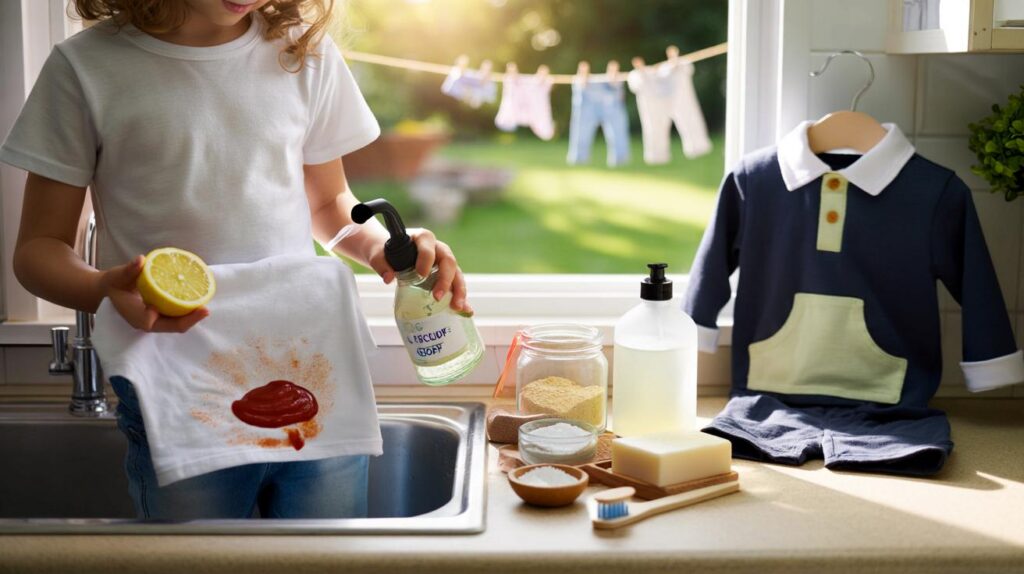
The school run had already gone off-piste when a yogurt pot exploded across a navy jumper, a grass slide etched itself into PE shorts, and a blob of ketchup found the only white T‑shirt in the house. I watched the washing machine hum like a tired bee, thinking about how much we spend trying to erase the day from our kids’ clothes, and how the bottles under the sink grow taller with every new promise on the label. A neighbour waved, held up a lemon like a little sun, and shouted, “Try this before you buy anything.” I laughed, then tried it. The stain gave up. The trick was already in the cupboard.
Why small stains cost big — and how to flip the script
Here’s the hidden bill for stains: not just the detergent, but the extra rinses, the rewashes, the impulse tops bought in a panic on a wet Wednesday. Those costs nibble at a family budget, while bright liquids we pour away can nudge colour into our rivers and add micro-irritants to little skin. **Start cold, then go clever.** A few pantry staples change the physics of laundry, so you clean with timing and touch instead of throwing money at the drum.
I met a dad in Leeds who keeps a jam jar kit by the sink: white vinegar, bicarbonate of soda, a tiny bottle of eco washing‑up liquid, a lemon, and an old toothbrush. He reckons it cut his laundry spend by about £20 a month, because fewer rewashes and less detergent add up fast, and his wash mostly sits at 30°C which trims electricity use by around a third compared with hotter cycles. *A tiny kit beats a towering bottle parade.* The best bit, he said, is that the kit never runs out at bedtime.
Natural ingredients work because stains are chemistry in disguise: acids like vinegar or lemon loosen plant pigments and dairy films, alkaline bicarb lifts oils and odours, and salt pulls liquid out of fibres before it can settle deep. Sunlight finishes the job by gently bleaching and deodorising, while water temperature chooses sides — cool for proteins like blood and milk, warm later for oils once they’re loosened. Think of it as matching the stain’s character with the right counter‑move, then letting time and a light scrub do the heavy lifting.
The pantry playbook: stain‑by‑stain moves
Build a simple sequence and repeat it without fuss: tap, treat, then wash. Blot fresh spills with cold water, never rub at first, because friction can push dye deeper into the weave, then sprinkle bicarb or table salt to drink up liquid and smells. Rinse again, make a quick paste of bicarb and water, spread it on the spot for ten minutes, mist with vinegar to fizz the fibres awake, and rub with a plain soap bar or a drop of eco washing‑up liquid using an old toothbrush. Finish at 30°C with your usual powder, and let sunshine be your quiet assistant on the washing line.
Match common stains to simple pairs: grass loves a pre‑rub with vinegar and soap, berries mellow with lemon juice then a long line‑dry, mud should dry hard before you brush it off outside, and grease yields to cornflour or chalk before a soap massage. Let’s be honest: nobody does that every day. Pick two moves you’ll remember and keep the kit where you actually spill things — by the sink, not in a high cupboard — because speed beats strength nine times out of ten.
Some pitfalls are easy to dodge if you know them. Hot water bakes protein stains like blood and baby milk, scrubbing wet mud makes a swamp, vinegar every wash can tire elastics, and mixing vinegar with chlorine bleach releases nasty fumes, so keep those apart like sworn enemies.
“Old‑school laundry is just low‑tech chemistry with a kinder footprint,” my gran used to say, tapping a soap bar like a wand.
- Grass on knees: dab vinegar, soap bar rub, cool rinse, 30°C wash.
- Berry bursts: lemon juice, rinse, line‑dry in sun to lighten naturally.
- Mud slides: let it dry, brush off, bicarb paste, gentle wash.
- Oil splats: cornflour soak 20 minutes, scrape, a drop of washing‑up liquid, rinse, wash.
- Ink from a biro: overnight milk soak, rinse, repeat, then wash; patience wins.
Small rituals, lighter footprint
We’ve all had that moment when a school jumper looks “done for” and the bin bag hovers, then a tiny tweak saves it and a child bounces off happy because their favourite thing got another day. Natural stain moves don’t feel heroic; they feel like a pause, a breath, a brief bit of care that hands clothes back to the week instead of to landfill. **Sunlight is the quiet bleach you already own.** Cold water first, cupboard staples second, a wash at 30°C third — and if a mark lingers, call it a story rather than a failure, because childhood wears its map on its sleeves. **Small habits beat big detergents.** Share the wins, shrug the misses, keep the kit ready by the tap, and watch the laundry calm down as your bills and bottle count do the same.
| Point clé | Détail | Intérêt pour le lecteur |
|---|---|---|
| Cold‑first rule | Blot, rinse, and hold back heat for proteins; warmth later for oils | Fewer set‑in stains, fewer rewashes, lower energy |
| Pantry toolkit | White vinegar, bicarbonate of soda, lemon, salt, plain soap, old toothbrush | Cheap, available, kinder to skin and waterways |
| Line‑dry power | Sunlight lifts odour and fades natural dyes gently | Free stain‑lightening, less tumble‑dryer use |
FAQ :
- Do natural methods actually work on school‑uniform stains?Yes for most of the daily messes: grass, mud, food, milk, and many inks. The key is speed, cold water first, then the right pairing from the toolkit.
- Is vinegar safe on colours and elastics?In small, diluted doses it’s fine on most colourfast cottons, but go gentle on elastics and avoid daily soaks. Spot‑test inside a hem if you’re unsure.
- What about tough grass on football kits?Pre‑rub with white vinegar, add a soap‑bar scrub, rinse, then wash at 30°C. Repeat once rather than scrubbing like mad, and finish with a sunny line‑dry.
- Can I use lemon on dark fabrics?Lemon is a mild bleach, so keep it for whites and pale colours. For darks, try bicarb paste and soap, then a cool wash and shade‑dry.
- How do I stop odours in sports kits?Soak in cool water with a spoon of bicarb for 20 minutes, then wash at 30°C and line‑dry. A short vinegar rinse helps, but skip it for elastics every time.



Brilliant guide! The cold‑first rule and 30°C cycles have already cut my rewash habit. I set up a tiny jar kit by the sink—vinegar, bicarb, old toothbrush—and it actually makes me less panicky when ketchup strikes. Thanks! It has definately saved us rewashes.
Does lemon on berry stains leave bleachy rings on off‑white tees? I’ve ruined a shirt before, so I’m a bit wary.