
Abrupt heat. Bare soil cracking like old paint. Lettuce doing a runner by mid-June. Across Britain’s kitchens and community plots, growers are quietly swapping seed packets and habits, rethinking what a summer salad even looks like. Climate change has moved from headline to habit, and the garden has noticed.
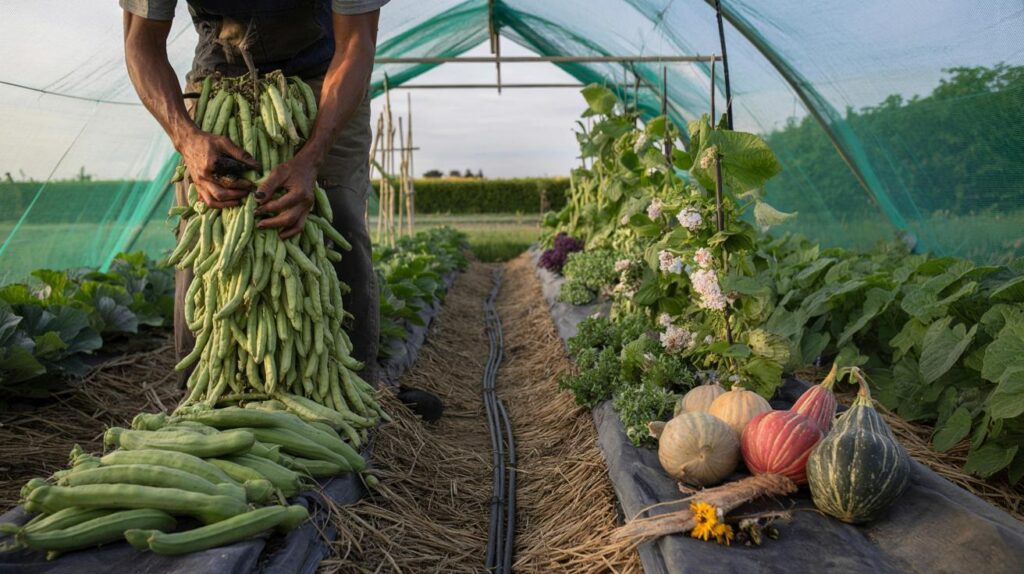
Dawn at a small organic market garden near Bristol. The polytunnel hums with sleepy bees while a shade net sags like a sail after rain, and trays on the bench read “Cowpea 2026”, “Amaranth – grain”, “Okra trial”. The grower moves a hand through sweet potato vines, then glances at a lettuce bed bolted to javelins overnight, a familiar heartbreak since 2022’s 40.3°C spike. **Heat is no longer an outlier; it’s the brief we plan to.** The future tastes different.
What’s thriving as summers scorch
Walk any forward-looking organic plot and the palette has shifted: amaranth where spinach sulked, yardlong beans instead of French beans, Malabar spinach curling up trellis and loving it. Okra pods click from plants that once seemed exotic, while cowpeas knit a living carpet, fixing nitrogen and shrugging at dry spells. In the squash lanes, moschata types like Butternut and Musquée de Provence are stealing the stage from fussier courgettes, their deeper roots drinking from a different story.
On a south-facing slope in Kent, a CSA trialled yardlong beans in a simple tunnel last summer and picked little harvests every other morning, the sort that add up without a fuss. They ran a row of cowpeas outdoors too, and found they needed half the fussing of their climbing French beans on the next line. On the hottest week, the new beans kept setting pods while tomatoes paused, proving that heat-friendly crops aren’t a fad, they’re insurance.
There’s biology behind the new seed lists. Tomato pollen often fails above the low 30s, and lettuces sense long days plus warm nights as a “bolt now” memo. Beans from the Phaseolus clan can blink in dry heat, while Vigna cousins (yardlongs, cowpeas) keep their cool. Deep-rooted cucurbits in the moschata group handle warm soils and mildew pressure with more grace than the pepo crowd. This isn’t heroism, it’s matching plant physiology to a climate nudge that won’t nudge back.
How organic growers are planting for 2026
Start heat-lovers earlier, under warmth, then harden into filtered light. Sow cowpeas and yardlongs when the soil nudges 18–20°C, and pre-soak stubborn seeds like okra for a few hours to wake them. Slide 30–40% shade netting over tunnels in July, drop irrigation deep and infrequent, and lay a fat 7–10 cm mulch to keep surface roots calm. *Planting for heat can feel like learning a new language.* The alphabet is soil temperature, wind, and night-time lows.
Don’t pamper seedlings to death with daily sprinkles; teach roots to chase moisture. Give lettuce a siesta in light shade and pick its replacements: chard, celtuce, Malabar spinach. Space tomatoes a breath wider so air moves under shade cloth, and choose heat-set types like Solar Fire or Floradade for August fruit. We’ve all had that moment when the forecast says 29°C and the seedlings quietly collapse after lunch. Let’s be honest: nobody really does that every day.
“We stopped fighting July,” says Sara Khan, head grower at a no-dig farm outside Leeds. “Once we seeded cowpeas and amaranth, the garden stopped shouting and started giving.”
- Yardlong bean (Vigna unguiculata subsp. sesquipedalis): ‘Red Noodle’, ‘Gita’, thrives in tunnels.
- Cowpea/Black-eyed pea: bush types for open beds; dual-use as pod and dry bean.
- Amaranth: ‘Red Callaloo’ for leaves, ‘Golden Giant’ for grain and show.
- Okra: ‘Clemson Spineless’, ‘Burgundy’; happiest in protected heat.
- Malabar spinach: vining, succulent leaves all summer when spinach quits.
- Squash moschata: Butternut, ‘Tromboncino’, ‘Musquée de Provence’ for heat and mildew.
- Sweet potato: grow for leaves and tubers; vines shade soil naturally.
- Heat-set tomatoes: ‘Solar Fire’, ‘Heatmaster’, ‘Floradade’ for August pollen.
A hotter harvest, a different table
The shift isn’t just agronomy; it’s culture. Cowpea salads with lemon and herbs where once sat new potatoes, grilled okra with a pinch of smoked salt, amaranth greens wilted with garlic over sourdough. These plates say something about who we are in a warming Britain, making room for vegetables that will meet us where the weather is going. **Shade is not surrender; it’s strategy.**
Seed merchants are already hinting at it with new ranges, and allotment gates carry whispers: someone’s growing yardlongs behind the dahlias; someone’s swapped a bed of spinach for callaloo and it won’t stop. There’s no single fix. There is a rhythm that values soil cover, measured water, and crops that don’t panic at 31°C. The garden, ever the pragmatist, answers in the language of pods and leaves.
What we plant in 2026 will teach our children a different summer alphabet. It might taste brighter, more fragrant, a little more southern on the tongue. The work is real, the wins are humble, and the path is shared across hedges and WhatsApp groups. **The climate has already edited our seed catalogues.** The rest is up to our hands.
| Key points | Details | Interest for reader |
|---|---|---|
| Heat-ready crops | Yardlong beans, cowpeas, amaranth, okra, moschata squash, sweet potato greens | Swap to varieties that produce during hot spells |
| Simple microclimate tools | 30–40% shade net, deep mulch, wider spacing, early sowings into warm soil | Actionable steps for steadier yields |
| Seed choices for 2026 | Heat-set tomatoes like Solar Fire; leafy stand-ins like Malabar spinach, chard, celtuce | Build a shopping list that fits future summers |
FAQ :
- Will heat-friendly crops work outside a polytunnel in the UK?Many will in the South and sheltered spots: cowpeas, amaranth, moschata squash, chard. Okra and yardlongs prefer a tunnel or warm wall.
- Do heat-set tomatoes still taste good?They’re bred for reliable fruit set in heat, not blandness. Pair a heat-set workhorse with a flavour star under light shade for the best of both.
- What replaces lettuce in midsummer?Malabar spinach, New Zealand spinach, chard, celtuce, and even sweet potato leaves. Pick little and often for tender texture.
- How much shade cloth should I use?30–40% is the sweet spot for UK summers. Drape over hoops or tunnel roofs from late June and lift on cool, breezy days.
- Is this still “organic” if I change the crops?Yes. Organic is about soil-first methods and ecology. Choosing crops that suit the climate makes the system more resilient.



Brilliant piece. Swapped my midsummer salads to Malabar spinach and chard last year and actually ate greens in August. Going to trial yardlong beans (‘Gita’) and cowpeas with 30–40% shade net this time. Any tips on spacing under shade cloth for airflow vs. moisture stress? Also curious if sweet potato leaves cook down like spinach or more like callaloo. Thanks for making “heat planning” feel normal, not defeat.