
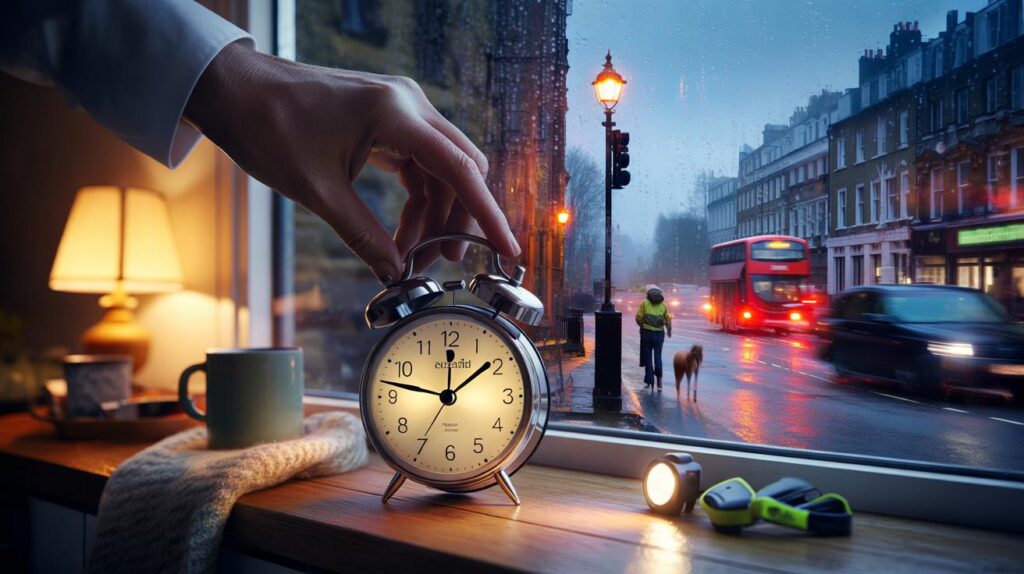
That last golden hour is slipping away, and the evenings are about to tighten their grip. Your routine may notice first.
As autumn deepens, the UK prepares to slide from British Summer Time to Greenwich Mean Time. The shift brings earlier sunsets, a short-lived lift in morning light and plenty of small adjustments that can catch people out.
What date do the clocks go back in 2025?
The clocks go back by one hour on the last Sunday of October. In 2025 that is Sunday 26 October.
What time do the clocks go back?
The change happens overnight at 2am British Summer Time. When the hands move back, 2am becomes 1am, and the UK returns to GMT.
Clocks change at 2am BST on Sunday 26 October 2025, jumping back to 1am GMT. You gain one hour in bed.
What changes when the clocks go back?
Moving to GMT brings darker evenings immediately. The sun will set before 5pm across much of the country, which means rush-hour commutes in the gloom and an earlier end to daylight leisure time.
Mornings feel brighter at first, which can help early starts. That benefit fades over the next few weeks as days shorten towards December.
What this means for your day
- School run and commuting: lower light and wet roads increase braking distances; reflective clothing and bike lights matter.
- Dogs and outdoor exercise: plan routes with street lighting or carry a head torch.
- Sleep and mood: an hour’s change can unsettle body clocks; keep wake and meal times steady for a few days.
- Home energy: lights go on earlier; switching to LEDs and using timers can trim bills.
- Diary management: check appointments and alarms on Monday morning to avoid timing mix-ups.
Sunset times on the day the clocks change
Expect a step-change on Sunday 26 October 2025. Here are indicative sunset times for several major UK cities that evening.
| City | Sunset on 26 Oct |
|---|---|
| London | 4.44pm |
| Edinburgh | 4.45pm |
| Cardiff | 4.56pm |
| Belfast | 5.00pm |
| Birmingham | 4.49pm |
| Manchester | 4.48pm |
| Glasgow | 4.50pm |
Expect lights on before five, busier twilight on the roads and colder evenings drawing people indoors earlier.
Why does the UK change the clocks?
The UK adopted seasonal time changes in 1916 during the First World War to make better use of daylight and reduce fuel use. The summer shift is known as British Summer Time, and the winter baseline is Greenwich Mean Time.
The idea dates back even earlier, with proposals to align waking hours to natural light and make evenings feel longer in summer.
What is Greenwich Mean Time?
GMT is the time based on the mean solar time at the Prime Meridian in Greenwich, London. The UK runs on GMT from late October to late March, then on BST for the summer half of the year.
Will the UK stop changing the clocks?
There are no government plans to end daylight saving in Britain. Polling has shown opinion is split, with a near-even divide between keeping and scrapping the seasonal switch. Arguments range from road safety and health to business and international coordination.
When do the clocks go forward again?
The next move is back to BST on Sunday 29 March 2026, when clocks spring forward by one hour.
Do you need to change anything yourself?
Most connected devices update automatically. A few stubborn timekeepers still need a manual nudge.
- Usually automatic: smartphones, tablets, laptops, smart speakers, smart TVs, most modern cars.
- Check and adjust: oven clocks, microwave displays, bedside alarm clocks, wall clocks, heating timers, older car dashboards.
Before bed on Saturday, set manual clocks back one hour and confirm alarms. On Sunday morning, check the oven, boiler and car.
Travel, work and tech: avoiding timing traps
Flights and trains run on local time; tickets already account for the change. Overnight services may pause or adjust; check departure boards if you are travelling in the early hours.
Calendar apps usually handle DST correctly. A quick glance at Monday’s meetings in your diary prevents surprises, especially if you join colleagues abroad who may change on different dates.
For shift workers, payroll systems should record the extra hour on overnight shifts. Clarify with managers in advance if you are rostered 1am–2am.
Health, safety and simple ways to adjust
- Go to bed 15–20 minutes earlier for two nights before the change to smooth the transition.
- Get outside in the morning light on Sunday and Monday; daylight anchors your body clock.
- Keep caffeine to earlier hours and avoid heavy late meals to protect sleep quality.
- If you cycle, charge lights and add reflectors; for drivers, clean windscreens and check bulbs.
- Parents can shift bath and story time slightly earlier over a couple of evenings.
Where else changes clocks, and where does not?
More than 70 countries, largely in Europe and North America, observe daylight saving. Some territories change only in parts, including the United States, Canada and Australia. Large regions do not switch at all, such as most of Africa and much of Asia.
If you have international calls next week, confirm time zones. Colleagues in places that do not shift may be an hour out of sync with you after Sunday.
What to expect over the next week
The first working week after the change often feels different. Energy use ticks up in the early evening. Gym visits and outdoor runs move earlier or head indoors. Road traffic in twilight rises, and police forces typically increase visibility campaigns.
Plan a short daylight break if you can. A brisk lunchtime walk helps mood and sleep. If you rely on daylight for wellbeing, consider a light box for dark mornings and keep an eye on vitamin D intake as days shorten.
Handy mini-checklist
- Change manual clocks before bed on Saturday 25 October.
- Charge bike and running lights; lay out reflective kit.
- Confirm Monday morning meetings and alarms.
- Nudge bedtime slightly earlier for a couple of nights.
- Set heating and hot water timers to the correct time.
One small turn of the dial changes how the country moves. With a few checks, you’ll bank the extra hour, stay on time and keep evenings snug without unwanted surprises.



4.44pm? Ouch.