
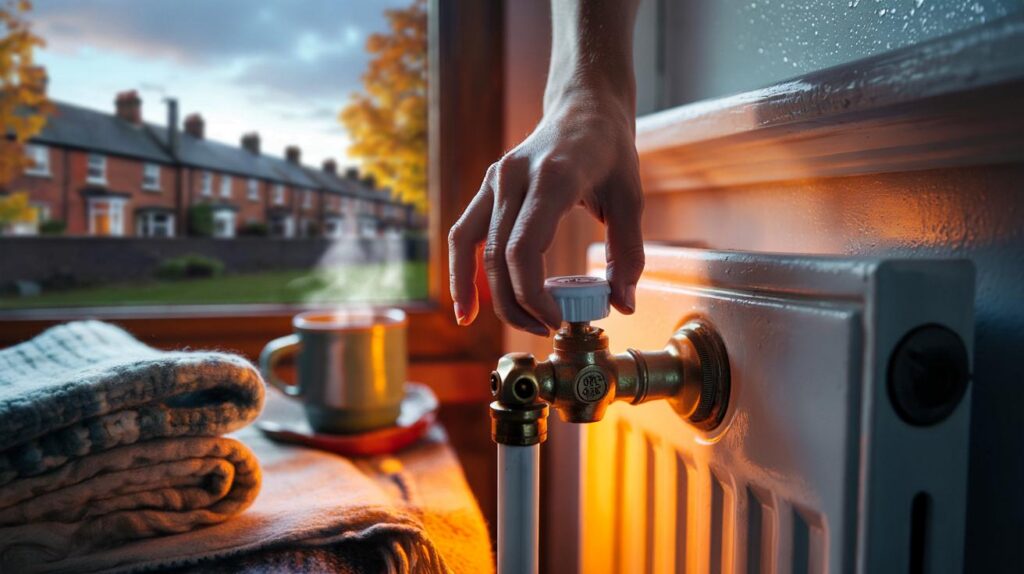
The arguments start long before the frost. As days shorten, your comfort, your health and your boiler all face a test.
Analysts have mapped the dates when daytime temperatures in major cities typically drop below 15C, the trigger many experts use to start heating.
When should you switch on?
Autumn often lulls us into delay. One mild weekend keeps radiators off, then a cold snap bites. The NHS warns that rooms below 15C raise health risks for older people, babies and anyone with heart or respiratory conditions. Energy specialists also point to a practical rule: once daytime highs no longer reach 15C for several days in a row, it’s time to warm the house.
Use 15C as your switch-on signal. If rooms can’t reach that during the day, you risk both your health and your boiler.
Construction Megastore analysed Met Office records and near-term forecasts to estimate when each big UK city will cross that line. They say a set date can ease household rows, while accepting that insulation, altitude and coastal breezes can shift the right moment street by street.
The dates for 19 major UK cities
These suggested “big switch-on” dates reflect the first point in autumn when daytime temperatures usually fail to reach 15C. Treat them as a planning guide, not a hard rule.
| City | Suggested switch-on date |
|---|---|
| Glasgow | 23 September |
| Edinburgh | 10 October |
| Newcastle | 7 October |
| Leeds | 10 October |
| Bradford | 11 October |
| Sheffield | 11 October |
| Manchester | 15 October |
| Liverpool | 15 October |
| Hull | 9 October |
| Nottingham | 9 October |
| Stoke | 9 October |
| Birmingham | 15 October |
| Leicester | 19 October |
| Coventry | 19 October |
| Bristol | 19 October |
| Cardiff | 6 October |
| Plymouth | 9 October |
| Southampton | 10 October |
| London | 20 October |
How to read these dates
They blend long-term climate patterns with short-term outlooks. A sheltered flat with modern insulation may feel fine a week longer. A breezy, older semi might need heat earlier. If your home fails to reach 15C indoors by mid-afternoon, switch on. For vulnerable people, heating sooner makes sense.
Aim for at least 18C indoors if you’re older, ill, pregnant or caring for a baby. Treat 15C as the red line.
Cut the cost without feeling colder
You can start the heating and still protect your wallet. Target heat loss and control the system carefully.
- Seal draughts around windows, doors and skirting. A tube of caulk or weatherstripping costs a few pounds and stops warm air leaking away for months.
- Drop the thermostat by 1C. Many households can save up to 10% on heating. On a £1,800 yearly bill, that’s up to £180 without much loss of comfort.
- Use curtains like insulation. Open wide on sunny days, then close before dusk to trap warmth. Line thin curtains or add a thermal layer where you can.
- Bleed and balance radiators. Let trapped air out and adjust lockshield valves so every room heats evenly. Cold spots waste gas.
- Service the boiler annually. A clean, tuned boiler burns less and lasts longer. Fit a carbon monoxide alarm for safety.
- Zone your heating. Turn valves down in unused rooms and shut doors. Heat the spaces you live in, not the whole house.
- Time, don’t blast. Programme heat to start 20–30 minutes before you get up or arrive home. Avoid overheating, then opening windows.
- Reflect and insulate. Radiator foil on external walls, loft insulation to recommended depth, and pipe lagging all pay back quickly.
Lowering your thermostat by just 1C can trim a meaningful chunk off winter bills without sacrificing comfort.
Protect your boiler as temperatures fall
Boilers dislike long periods of inactivity. Run the heating for 10–15 minutes once a week through early autumn. That keeps pumps moving and valves free. Check pressure on the gauge: most systems sit around 1.0–1.5 bar when cold. Top up if needed, following the manual.
Watch the condensate pipe when frosts arrive. Insulate it outside and know how to safely thaw it with warm (not boiling) water if it freezes. If your system has a “frost” or “anti-frost” setting, use it in very cold spells to prevent damage.
Set a household plan
Pick a switch-on date now, then agree thermostat limits and timer schedules. If you have smart controls, set separate profiles for weekdays and weekends. A family pact helps avoid expensive spur-of-the-moment changes.
What if your home heats up slowly?
Slow heat-up often means poor flow or poor insulation. Start with the free fixes: bleed radiators, fully open radiator valves in target rooms, and clear furniture away from panels. If radiators stay lukewarm while the boiler runs hard, a heating engineer can flush sludge from the system. That simple job often restores output.
Insulation remains the cheapest “new radiator” you can buy. Loft rolls, cavity wall fill where suitable, and draught-proofing cut heat loss sharply. Many local councils list grants or low-cost schemes for eligible households.
Health-first rules for colder months
Elderly relatives and those with long-term conditions need extra margin. Keep bedrooms at comfortable levels, not just living rooms. Warm layers help, but do not rely on blankets alone if room air stays cold and damp. If cost worries bite, ask your energy supplier about the Priority Services Register and payment plans that spread winter use.
Two quick checks before your date arrives
Run every radiator and feel for cold tops or uneven heat. Bleed where needed and consider balancing. Then test your programmer and room thermostat: does the boiler fire, and does it stop when the set point is reached? Fixing glitches now beats a mid-October breakdown.
Working example for your area
Say you live in Manchester with a suggested date of 15 October. In the week before, spend one evening sealing obvious draughts. The next day, bleed radiators and confirm boiler pressure. On the day itself, set 18–19C for occupied hours, 16–17C when asleep, and valves low in unused rooms. Review the first bill and nudge temperatures down by 0.5–1C if you stayed comfortable.



Really useful breakdown—linking the 15C switch-on to NHS guidance makes sense. The city dates might actually end our annual thermostat row. Thanks for the practical tips on bleeding and balancing radiators too.