
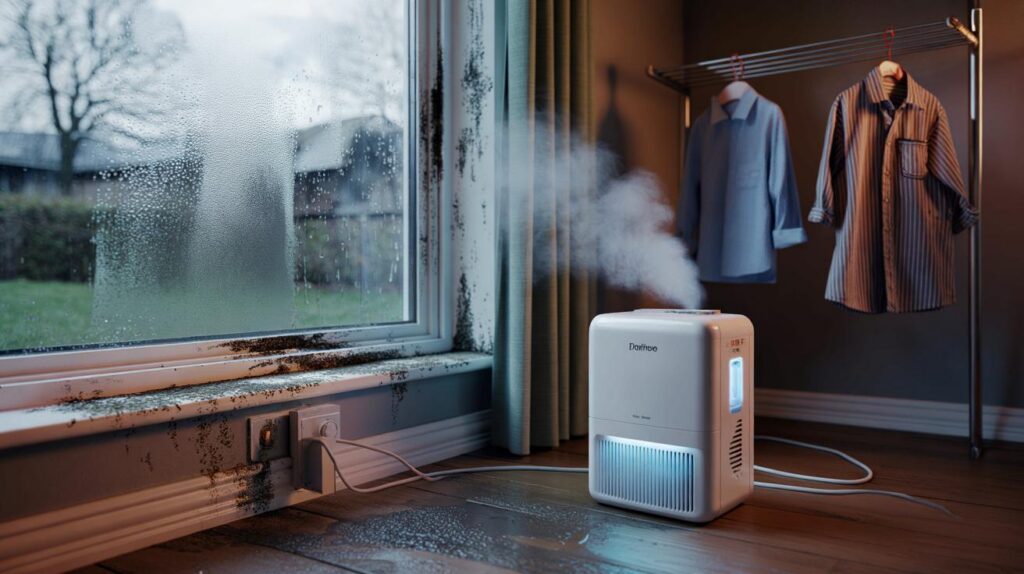
Cold radiators, wet laundry and misty panes return. Households hunt a cheap fix before black spots creep across corners.
Across the UK, families are bracing for steamed-up mornings and slow-drying school kit. A low-cost gadget now sits at the centre of that struggle: a one-litre compact dehumidifier sold for £34.99, pitched as small, quiet, and capable of easing condensation before it becomes mould.
What changes when you tame indoor humidity
Moisture builds fast when heating comes on and windows stay shut. Clothes dry indoors. Showers and cooking add more water to the air. Surfaces cool at night and water beads on glass and frames. That cycle breeds stale odours and black spores on sealant and paint.
Aim for 40–60% relative humidity. Below this band, rooms feel comfortable and mould struggles to take hold.
Lowering humidity cuts the fuel that mould needs. It also speeds laundry, reduces dust mites, and keeps rooms feeling warmer at the same thermostat setting. That is why compact dehumidifiers are popular as soon as temperatures dip.
The £34.99 compact dehumidifier people are buying
Lakeland’s 1 Litre Compact Dehumidifier targets tight spaces, damp-prone corners and laundry days. The brand lists a collection capacity of up to one litre per 24 hours, which suits bedrooms, small utility areas and north-facing rooms. Buyers describe a sharp drop in window condensation on cold mornings and say the unit runs quietly beside daily life.
Under £35, up to 1 litre collected per day, near-silent operation and a footprint small enough to move from room to room.
The device draws moisture from air, channels it into a removable tank, and signals when full. Families report fresher air, fewer wipe-downs and faster drying racks. A 1.8 m cable helps with placement. Some users like the optional soft blue or green light; others switch it off and forget it’s there.
What owners report
- Less morning condensation on kitchen and bedroom windows, especially in north-facing spaces.
- Laundry dries faster on racks without cranking up radiators.
- Low noise makes overnight use feasible in hallways or spare rooms.
- Simple daily routine: set it near the problem area, shut doors, empty the tank.
Strengths and small niggles
Buyers rate the unit around 4 out of 5. The balance of size, price and ease dominates feedback. A few mention a fiddly power button. The white-only finish won’t match every room. The tank needs regular emptying in very damp spaces, which is typical for compact models. None of these gripes overshadow the core job: steady moisture removal.
The autumn problem in numbers
Moisture from a family of four can exceed several litres a day in cool weather. Cooking, showers and laundry all contribute. A compact one-litre device will not dry a whole flat, but it can target the worst hot-spots and prevent the daily build-up that leads to mould patches.
Think targeted control: dry the bathroom after showers, the laundry zone on wash days, and the bedroom overnight.
How to get the most from a small dehumidifier
- Place it near the source of damp, with at least a hand’s breadth of space around the intake.
- Shut doors and windows in the target room to concentrate moisture removal.
- Run it after showers and while laundry hangs. Stop when humidity sits near 50%.
- Lift curtains a little so air can circulate against cold glass.
- Empty the tank daily during the first week; you’ll learn the rhythm of your home.
- Wipe the intake grille regularly to keep airflow strong.
Costs, savings and real-world expectations
Compact units like this usually draw far less power than a tumble dryer or a full-size dehumidifier. They complement drying racks and reduce the need for long radiator sessions, which can push bills up and add more moisture to the air.
Typical compact draw: around 20–40 W. At 30p/kWh, that’s roughly 0.6–1.2 p per hour, or 6–12 p for a long evening.
That makes targeted dehumidifying a low-cost habit compared with reheating full rooms, running a dryer, or opening windows for hours and losing heat. The impact shows up in fewer fogged panes, quicker laundry turnarounds and interiors that feel less clammy at the same thermostat setting.
Where it fits in your damp-control plan
| Method | Upfront cost | Typical running cost | Moisture removal | Best for |
|---|---|---|---|---|
| £34.99 compact dehumidifier (1 L/day) | Low | Pennies per evening | Targeted rooms, steady | Bedrooms, laundry corners, window sills |
| Moisture trap (salt tub) | Very low | None | Slow, passive | Cupboards, caravans, tiny spaces |
| Open window burst airing | None | Heat loss depends | Fast exchange | Bathrooms after showers, kitchens after cooking |
| Full-size dehumidifier (10–12 L/day) | High | Higher than compact | Whole-flat capacity | Persistent damp, large rooms |
Practical placement ideas
Put the unit on a flat surface near the wettest point, not on thick carpet. For windows that stream, place it one or two metres away, curtains open a little. For laundry, position it next to the rack and close the door. For a musty bedroom, run it on a timer before bedtime and again in the morning while the room remains closed.
What about mould that’s already there?
Reduce humidity first, then treat affected areas. Clean small patches with a purpose-made mould remover or diluted bleach, following label advice. Dry the area well. If staining persists, consider stain-blocking primer and a mould-resistant topcoat once surfaces stay dry. Large or recurring outbreaks can signal ventilation faults or water ingress; seek professional assessment if patches keep returning.
Simple habits that stack with a dehumidifier
- Use cooker lids and an extractor when boiling or frying.
- Shower with the bathroom fan on, and leave it running for 20 minutes after.
- Space furniture a few centimetres from external walls to allow airflow.
- Wipe window frames and sills so spores don’t gain a foothold.
- Keep trickle vents open where fitted.
What buyers liked and what to weigh up
Feedback points to a few standouts: portability, near-silent running, a long cord and that sub-£35 price. Families also note quicker drying for PE kits and school uniforms when doors remain shut. Minor downsides include a firm power button and the white finish that may not suit all rooms. For heavy damp or whole-flat needs, a bigger compressor model makes sense; for targeted trouble spots, this one-litre unit slots neatly into daily routines.
Extra context you can use today
Measure humidity if you can. A simple digital hygrometer often costs under a tenner and guides your settings. Aim for around 50% RH in lived-in rooms, 55–60% where you dry laundry. In very cold snaps, adjust so windows don’t drip each morning. If your bathroom fan is weak, clean the grille and check for a backdraft flap that sticks; airflow matters as much as dehumidifying.
Finally, think seasonally. Run the compact unit hard for a week to stabilise your space, then drop to maintenance bursts around showers, cooking and laundry. Track what the tank collects. As those volumes fall, you’ll know the balance is right: less wiping, drier cuffs, and no grey spots lurking behind the sofa.



Tried a similar 1L unit last winter—cut the morning drip on our sash windows by half within two days. At £34.99 this looks like a no-brainer for bedrooms and laundry corners. The trick is closing doors, aiming for ~50% RH, and lifting curtains a touch. Near-silent is great if true.