
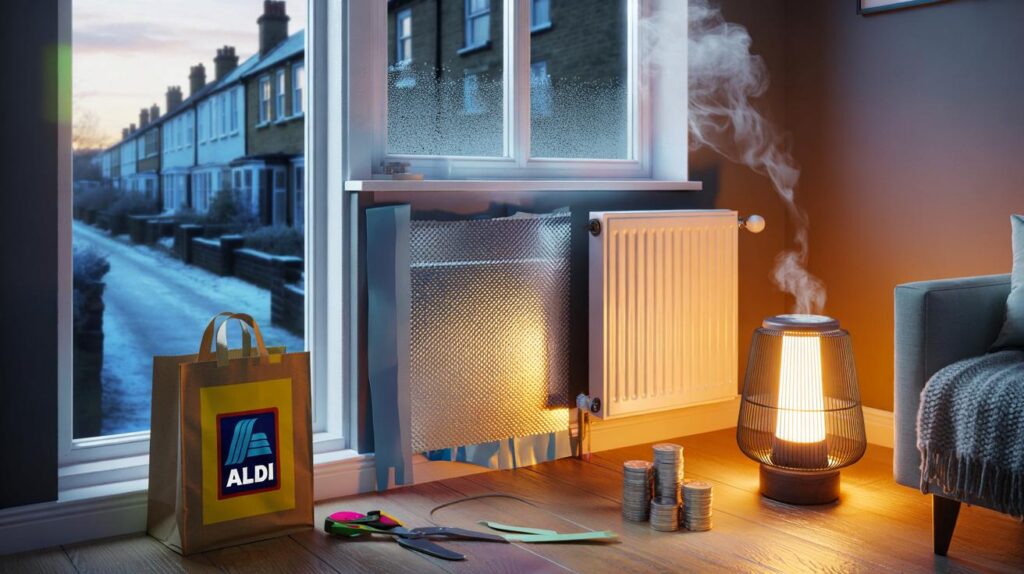
With the mercury sliding and budgets stretched, shoppers are hunting low-cost ways to stay warm without cranking the boiler.
That search now turns to the aisles of Aldi, where seasonal Specialbuys return with gadgets aimed at warming you, not just your rooms. One £9.99 item stands out because money guru Martin Lewis has long urged households to try its simple physics.
The £9.99 radiator fix shoppers keep talking about
Aldi will stock radiator reflectors in UK stores from Thursday 23 October, priced at £9.99 for a multi‑panel pack. The sheets sit behind your radiators to bounce warmth back into the room, rather than letting it seep into cold external walls. Aldi says the material uses a high‑emissivity surface that reflects up to 86% of infrared heat into the space you actually occupy.
The kit includes self‑adhesive strips, so you can fit it without removing radiators, and foam bubble layers to slow heat loss. There’s enough to cover up to three standard radiators, so many homes can sort the chilliest spots in less than an hour.
£9.99, in stores from 23 October: a pack that lines up to three radiators and reflects heat back into the room.
You’ll notice the biggest gain on radiators that sit against outside walls. Internal walls usually leak less heat, so prioritise the coldest rooms first. The aim is simple: keep warmth circulating indoors for longer so the boiler runs less often.
What Martin Lewis has been saying
Martin Lewis does not push a particular brand, but he often highlights reflective panels as a smart autumn buy. His guidance is straightforward: fit them behind radiators on external walls to redirect heat back into the room. If money is tight, he notes that kitchen foil can do a similar job in a pinch, though purpose‑made panels work better and look tidier.
Target external wall radiators first. Redirecting heat back into the room reduces waste and can trim gas use.
When and where you can buy
Aldi sells these under its Specialbuys banner. That means limited batches and in‑store availability only. Expect brisk demand as temperatures fall. Staff often put stock out early on launch day, so plan a morning visit if this sits top of your list.
| Available date | Product | Price | Notes |
|---|---|---|---|
| 23 October | Radiator reflector pack | £9.99 | Covers up to 3 radiators; adhesive strips included |
| 23 October | Multi‑purpose insulation wrap | £9.99 | Three‑layer bubble foil for cupboards, loft hatches, vans |
| 23 October | Oscillating ceramic tower heater | £24.99 | Stated running cost around 53p per hour |
| 23 October | Ceramic personal heater | £14.99 | Stated running cost around 32p per hour |
| 23 October | Dehumidifier (2L tank) | £39.99 | For rooms up to 15 m² |
| 26 October | Heating blanket | £24.99 | Four colours; digital hand controller; machine washable |
| 26 October | Heated mattress pad (single/double/king) | From £14.99 | Dual zones on double and king; three heat settings |
| 26 October | Heated airers (upright/winged) | £79.99 / £34.99 | Indoor drying for damp days |
| 26 October | Premium hot water bottle | £6.99 | Long cushion or body wrap designs |
How much could you save?
Savings vary by home, wall construction and radiator placement. Panels help most where a radiator sits on a cold external wall and you run the heating for long stretches. If reflective sheets trim your gas use by even 3% across winter, and your annual heating spend lands around £1,000, you’d be about £30 better off. That covers three £9.99 packs if you need to line multiple rooms.
The maths shifts further if you typically overheat a space to feel warm. Better heat retention lets you drop the thermostat by 1°C, which often shaves roughly 5–10% from heating demand. Combine that with reflectors and you start to notice gentler bills and fewer cold spots.
Line the worst offenders first: living room, bedrooms and any radiator you can touch on an external wall that feels cool behind it.
A quick install guide
- Measure the radiator width and height you want to cover, keeping clear of valves and brackets.
- Cut the reflective sheet to size. Leave a small margin so air can circulate freely.
- Stick the self‑adhesive pads to the wall, not the radiator. Aim for the top corners and a couple along the sides.
- Press the sheet onto the pads so it sits flat against the wall, shiny side facing the radiator.
- Check airflow: do not block vents or touch hot pipes. Keep clearance from skirting heaters and sockets.
Other ways to keep heat where you need it
Aldi’s line‑up also leans into the “heat the human” approach. Direct warmth lets you run the boiler for shorter bursts or at a lower set‑point.
- Heating blanket: warms the body, not the whole room. Use a timer for bedtime, then let the duvet hold the heat.
- Heated mattress pads: pre‑heat the bed for 30–60 minutes, then switch off or drop to low.
- Ceramic personal heater: aim it at your seating area for quick comfort in small rooms.
- Dehumidifier: lower humidity can make a room feel warmer at the same temperature and helps combat mould.
- Insulation wrap: seal draughty loft hatches, under‑sink cupboards on external walls, or behind fridges against outside walls.
Running costs at a glance
Electric heaters cost what your tariff charges per kilowatt hour. Aldi lists indicative figures:
- Oscillating ceramic tower heater: about 53p per hour.
- Ceramic personal heater: about 32p per hour.
These numbers assume typical tariffs and full‑power use. Cut costs by using lower settings, aiming heat at people, and running devices for short bursts.
Buyer tips and safety checks
Bring a tape measure. Tall skirting boards or pipes behind radiators reduce the usable area for reflective sheets. If you need more than one pack, consider which rooms give the best payback: lounge, main bedroom, or a home office used daily. Keep some reflector offcuts for small nooks, like behind towel rails on outside walls.
Safety matters with any plug‑in heater. Keep a clear metre around heaters, never cover them, and place them on flat, stable floors away from curtains. Use an extension reel only if it’s fully unwound and rated for the load. Check the plug for warmth after first use and bin any damaged leads.
What to expect after fitting
Rooms usually feel warmer at the same thermostat setting because more heat stays indoors. Radiators may heat the air faster, so the boiler cycles down sooner. You can test the impact by lowering the thermostat by 1°C the next day and seeing if comfort holds. If it does, that saving will repeat every hour you heat the home.
Pair the panels with basic draught‑proofing around doors, letterboxes and window frames. Thermal curtains pulled at dusk can add another layer of protection. Small changes stack, and the combined effect often beats one expensive upgrade.



Just grabbed two packs for my draughty lounge—if this lets me drop the stat by 1°C, my toes will finally forgive me 🙂
“20% for hours”? That phrasing is confusing. Are we talking 20% off total winter usage or just shorter boiler cycles on external‑wall rads? Any links to independet tests?