
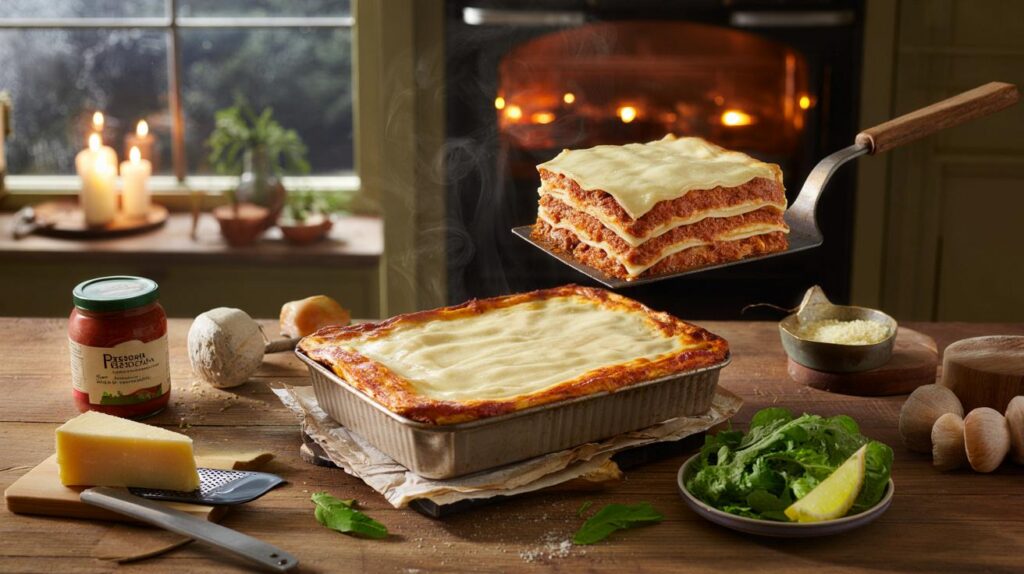
As the clocks wind back and evenings draw in, Britain’s kitchens switch on the oven for something slow, rich and shared.
Families want heat, thrift and a guaranteed crowd-pleaser. That points to Italian-style lasagne: soft sheets, slow sauce, and a browned top that signals dinner is ready. Grocers report brisk sales of passata, mozzarella and baking dishes, while home cooks trade tips for getting that molten centre without a soggy base.
Autumn cravings meet budget reality
Lasagne answers three needs at once. It warms the room. It feeds many at once. It makes financial sense when every pound counts. A single deep tray can yield six to eight generous portions. Leftovers pack neatly for next-day lunches.
Price matters. A typical beef-and-béchamel tray built from supermarket basics lands near £2.15 per serving before energy costs. Add roughly 30p to run an electric oven at 180°C for half an hour, and you still stay well under most ready-meal equivalents. Vegetarian pans drop the price further and soak up the season’s glut of aubergines, squash and courgettes.
One deep tray, four layers, 30 minutes in the oven: the cost lands near £2.45 per plate, energy included.
Why the nation is baking again
Cold weather brings back batch cooking. Households seek dependable recipes that scale up, tolerate swaps, and welcome every palate. Lasagne ticks those boxes. It also uses simple kit. One pot for sauce. One pan for béchamel. One tray to bake. No special tools. No exotic shopping list.
The classic made smart: a 40-minute ragù, a silk-smooth béchamel
The Italian template is unfussy when you keep your eye on texture. Build a ragù that clings. Simmer it until a spoon leaves a path. Stir a béchamel that pours like double cream. Aim for balance, not bulk.
- Brown finely chopped onion, carrot and garlic in olive oil until sweet.
- Add minced beef or a beef–veal mix. Season, then brown well for depth.
- Pour in passata or crushed tomatoes. Simmer gently about 40 minutes to thicken.
- For béchamel, whisk equal parts butter and flour into a blond roux. Add warm milk in stages. Season with salt, pepper and a pinch of nutmeg.
- Layer in a deep dish: sauce, pasta, béchamel, parmesan. Repeat for at least four layers.
- Finish with béchamel plus mozzarella and parmesan for a burnished crust.
Layering for melt-in-the-middle results
Start with a thin swipe of sauce on the base so sheets do not stick. Keep every corner wet with either ragù or béchamel. Fresh sheets need less moisture than dried sheets. Dried sheets benefit from slightly looser sauce.
Covering strategy matters. Foil on for most of the bake keeps steam in and layers tender. Foil off at the end gives colour and texture.
Bake at 180°C: 20 minutes covered, 10–15 minutes uncovered. Rest 10 minutes before slicing for clean layers.
Three trays, three budgets
These estimates use typical UK supermarket prices this season. Your basket may vary by brand and region.
| Style | Main flavours | Active time | Oven time | Servings | Estimated food cost | Cost per serving |
|---|---|---|---|---|---|---|
| Classic ragù | Beef, tomato, béchamel, parmesan, mozzarella | 30 min | 30–35 min | 6 | £12.90 | ~£2.15 |
| Roasted veg + ricotta | Aubergine, courgette, pepper, ricotta, tomato | 35 min | 30–35 min | 6 | £11.60 | ~£1.95 |
| Butternut + pancetta | Squash, pancetta, sage, béchamel | 35 min | 30–35 min | 6 | £13.40 | ~£2.25 |
What makes it feel “Italian” on a weeknight
It’s not a strict rulebook. It’s the balance. You want savoury depth from slow-cooked onion and meat or roasted vegetables. You want gentle dairy notes from milk and cheese. You want a top that shatters lightly then gives way to a soft centre.
Finish with fresh elements. A handful of rocket dressed with lemon lifts richness. A few sage leaves fried in butter echo autumn. Grate parmesan at the table so each plate can adjust salt and aroma.
Vegetable-first trays that still satisfy
Roasting concentrates flavour and reduces water. Dice courgette, aubergine and red pepper. Roast until edges caramelise. Fold through ricotta and a spoon of parmesan. Alternate with tomato sauce and sheets. Crown with a touch of cream under the cheese if you prefer extra lushness.
For squash season, cook butternut with onion and nutmeg until it mashes easily. Scatter in crisp pancetta for contrast. Sage brings perfume. The result is savoury, sweet and deeply seasonal without feeling heavy.
Keep sauces thick. Thin sauces slip and pool. Thick sauces hug the sheets and cut into neat squares.
Five small moves that change everything
- Salt early in the ragù so flavours develop, then taste again before assembly.
- Use milk just off the boil for béchamel. It mixes faster and stays smooth.
- Grate cheese finely. It melts faster and covers more area for less money.
- Build at least four layers. More layers mean softer texture and better slice integrity.
- Rest after baking. Ten minutes lets steam settle and prevents slipping stacks.
Energy, storage and food safety
A standard electric oven uses roughly 1 kWh for a bake of this length. That is about 30p on many tariffs. Batch two trays at once if your oven allows. You double output for almost the same energy.
Cool leftovers within two hours. Refrigerate in the baking dish under a lid or wrap. Reheat at 160–170°C, covered, until piping hot in the centre. Most lasagne freezes well. Portion before freezing. Thaw in the fridge overnight, then reheat covered so moisture returns to the sheets.
Useful swaps and scale-ups
Gluten-free sheets cook cleanly when sauces are a touch looser. Whole milk gives the best béchamel texture; semi-skimmed works with a longer cook. If beef is pricey, mix half meat with cooked lentils for a tender, meaty bite at lower cost. Vegetarians can trade ragù for a mushroom base browned hard for umami, then simmered with tomato and herbs.
Cook once, eat many times. A 20 x 30 cm tray feeds six. A 30 x 40 cm tray feeds ten to twelve. For parties, hold baked trays warm covered in a low oven, then finish under a hot grill for two minutes to refresh the crust. For lunchboxes, pack slices with a crunchy salad of rocket, apple and toasted hazelnuts to cut richness.



Cold nights + hot trays is a vibe. Making the roasted veg + ricotta one tonight—courgette glut to the rescue 🙂
Title says £2.30 per plate but the blockquote says ~£2.45 with energy. Which number is correct? Not nitpicking, just budgeting hard this month.