
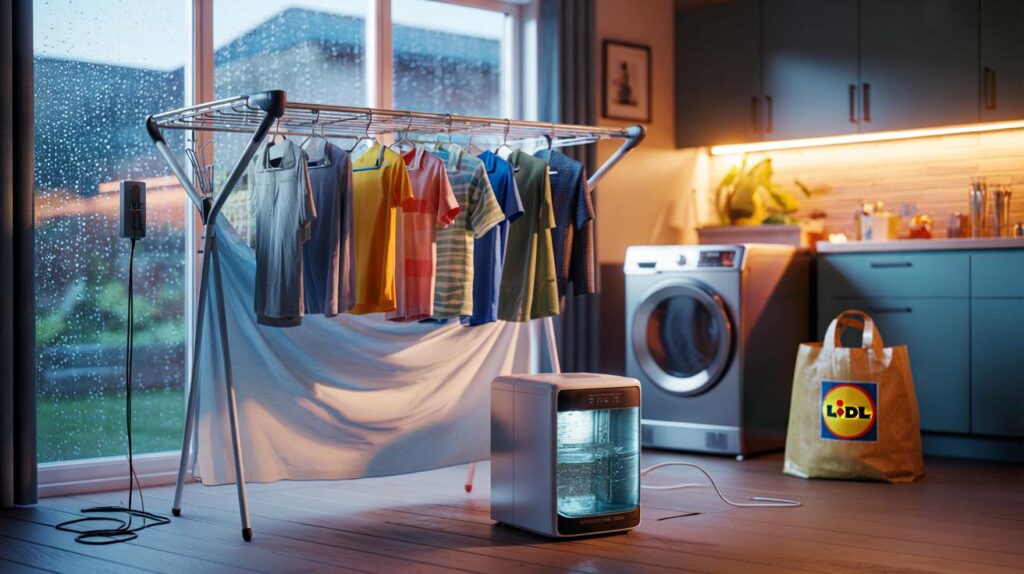
Rainy days are back and radiators groan under soggy shirts. Households are hunting for faster, cheaper ways to stay on top.
The latest must‑have sits somewhere between a rack and a radiator. A powered airer promises speed without the sting of a big energy bill.
Why indoor drying is back on the agenda
Shorter days, cooler air and on‑off showers make outdoor drying unreliable. Inside, draping clothes over radiators can slow room heating and push moisture into walls. Tumble dryers are quick, but the cost of a regular cycle adds up across a busy week. That gap has opened the door for heated airers, which warm rails to accelerate evaporation while sipping electricity.
Households are reporting running costs of around 8p per hour, a fraction of a £1.50 tumble‑dryer cycle.
What this heated airer actually is
Think of a standard folding rack with mains‑powered rails. Warmth travels along the bars, drying garments from direct contact rather than blasting them with hot air. The popular 12m model sold by Lidl is branded Minky, a familiar name in the laundry aisle. It folds flat for storage, opens in seconds, and can be moved to any room with a socket.
Key specifications at a glance
- Drying space: 12 metres across wings and central rails
- Stated load: up to 16kg of wet laundry (about two average machine loads)
- Running cost: about 8p per hour, depending on your tariff
- Price: £39.99 at Lidl, compared with listings around £59.99 elsewhere
- Form factor: folding, winged design for shirts, jeans and small items
At £39.99, the upfront price is roughly £20 lower than similar models listed at £59.99.
Counting the pennies: what you might actually spend
The headline figure is the hourly rate. If your airer costs 8p an hour to run and a typical load needs five to six hours, a full dry could cost around 40p to 48p. By contrast, a traditional vented or condenser tumble dryer is commonly quoted at roughly £1.50 per cycle. Modern heat‑pump dryers are thriftier, with estimates around 65p per cycle, but the machines are pricier to buy.
| Appliance | Typical running cost | Typical time/cycle | What that means |
|---|---|---|---|
| Heated airer | ~8p per hour | 5–6 hours per load | ~40p–48p to dry a load, gentler on fabrics |
| Tumble dryer | ~£1.50 per cycle | 1–2 hours | Fast but costly per use |
| Heat‑pump dryer | ~65p per cycle | 1.5–2.5 hours | Cheaper to run, higher upfront cost |
Now map that onto real life. A family doing six loads a week could spend roughly £2.40–£2.88 weekly with a heated airer, versus about £9 with a conventional dryer. That difference of around £6 a week means a £39.99 airer can pay for itself in under two months, before you consider lower wear on garments.
A busy household could recoup the £39.99 spend in 6–7 weeks when swapping several tumble cycles for the airer.
How fast does it dry and how kind is it to clothes?
Speed depends on fabric weight, spin speed and room conditions. A well‑spun mixed load often reaches cupboard‑dry in an evening. Heavy cotton and denim take longer. Because rails warm rather than blast, many owners report less shrinkage and fewer creases, especially with wool, silk and elastane‑rich sportswear.
Real‑world speed tips
- Run the highest spin your machine allows for the fabric; water out equals hours saved.
- Space items so they don’t touch; use hangers on the wings for shirts and dresses.
- Create a “tent” with a lightweight sheet or an aftermarket cover to trap warmth and airflow.
- Pair with a dehumidifier in the same room to pull moisture and cut drying time.
- Flip thicker items halfway through to expose damp seams and waistbands to the rails.
- Prioritise smaller batches of heavy items rather than one overloaded session.
Airflow, spacing and a simple cover often halve drying times compared with an open rack.
Damp, safety and where to put it
Any indoor drying releases moisture. In small homes that can mean condensation, fogged windows and mould risk. Choose a room with a crack of ventilation or run a dehumidifier nearby. Keep the unit on a flat surface, away from soft furnishings and walkways. Avoid bathrooms, where humidity is already high. Do not cover controls or the plug, and do not overload rails beyond the stated 16kg.
Best practice checklist
- Leave a window slightly ajar, or open trickle vents when drying.
- Keep cables tidy and out of pathways used by children and pets.
- Never rest wet items on the plug, switch or power cord.
- Allow air to circulate underneath; avoid thick carpets where heat builds.
- Fold and store once cool and dry; unplug when not in use.
Who gains most from switching
Renters without outdoor space, families juggling school uniforms, and anyone facing rising energy bills stand to benefit. If you already own a heat‑pump dryer and dry several loads daily, the dryer’s convenience may still win. For occasional tumble use—bedding in winter, emergency school kit—the airer covers most other days far more cheaply.
Alternatives if this model sells out
- Unheated folding racks plus a dehumidifier: low purchase cost, moderate speed.
- Heated airers with zipped covers: faster, pricier upfront.
- Community laundrettes for big duvets and blankets: pay per cycle, quick turnaround.
Price, availability and what to check
Lidl lists the unit at £39.99, a clear discount on similar Minky 12m heated airers seen elsewhere around £59.99. As with many middle‑aisle specials, stock varies by store and sells through quickly. Before buying, check the rail spacing suits your laundry mix, the folded size fits your cupboard, and the cable length reaches your intended socket without an extension.
£39.99 versus £59.99 is a straight £20 saving at the till, before you add running‑cost wins.
Extra ideas to stretch every pound
Use a simple plug‑in timer to cap running hours, so you don’t forget it overnight. Schedule drying for when you’re home to flip heavy items and finish sooner. If you do keep a tumble dryer for bedding, clean the lint filter every time and the condenser path monthly to stop energy creep. For sports kits and school polos, microfibre and quick‑dry fabrics will always finish faster on a rail than thick cotton.
If you want a rough household forecast, count your weekly loads, multiply by your estimated hours per load, then by 8p. Compare that figure with your current dryer spend. The maths often answers the question before marketing does—and for many, the sums point firmly towards a heated airer this autumn.



16kg sounds great on paper, but is that wet weight or a max you shouldn’t actually aim for? Heavy denim still damp at the seams, tho—any real users tried it without a cover?
Grabbed the £39.99 Minky from Lidl and honestly my laundry life is calmer. 8p/hr and a cheap sheet-as-tent = speedy dries, less shrinkage. Paired with a dehumidifier and it’s a mini drying station 🙂