
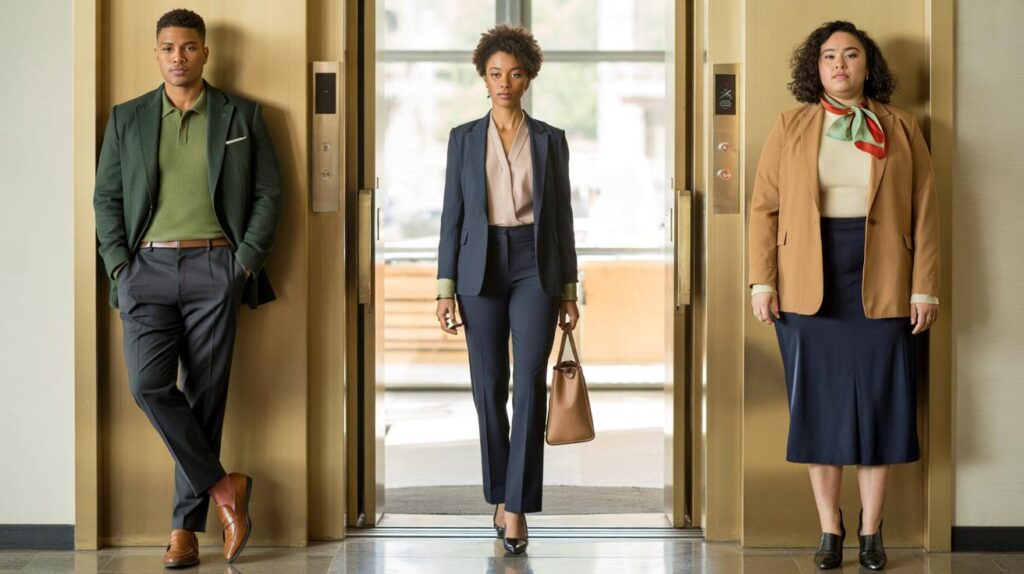
You’ve prepped your answers, stalked the company on LinkedIn, and set three alarms. Then comes the question that always arrives too late: what on earth do I wear? Clothes don’t land the role, yet they help your mind arrive before your mouth does. They set your pace, steady your breath, and frame the first ten seconds — those silent seconds that linger louder than any CV line. The right outfit doesn’t shout. It holds the door for you. It lets the room meet you at your best.
The lift doors open and you catch yourself in the chrome. Jacket sits clean on the shoulders, shirt collar flat, shoes quietly polished. You’re early, so you breathe the foyer air and feel the fabric move when you do. The receptionist smiles, the light is kinder than expected, the seat isn’t. You cross one ankle over the other and remember how your trousers creased just right when you tested them last night. There’s a pause, a name, the small march of heels on carpet. You stand like you’ve already started. You feel taller.
The quiet power of fit, fabric, and first seconds
The fastest way to look composed is fit. Not expensive, not flashy — simply clothing that sits where it should. Shoulders align with seams, sleeves kiss the wrist, trousers break once on the shoe. When fabric follows your frame, your posture follows the fabric. You move smoother. You breathe fuller.
There’s evidence behind the feeling. In a well-cited study on “enclothed cognition,” people performed better on attention tasks when they believed they were wearing a doctor’s coat. Different context, same brain. Your interview outfit is a cue to yourself first, and to them second. And yes, plenty of recruiters report first impressions landing inside seven seconds. You’re dressing for that blink.
Think of colour like volume. Deep navy, charcoal, forest green, and soft beige read as calm and capable. Black can be strong and sleek, though in daylight it sometimes skews severe. In creative or start-up settings, a muted accent — a clay jumper, a sage blouse, a rust tie — signals personality without stealing focus. Texture matters more than people admit. *Matte wool, brushed cotton, and soft knits absorb glare and give a human warmth to the frame.*
What to wear, piece by piece, across different rooms
Start with a base you trust. For formal roles, a well-fitted suit in navy or charcoal with a crisp shirt works across industries. For smart-casual offices, think tailored trousers with a knitted polo, or a midi skirt with a tucked blouse and a single-breasted blazer. Shoes should be quiet and clean: loafers, derbies, ankle boots with a slim profile. If you can’t walk three blocks and sit for an hour in them, they’re not your interview shoes.
We’ve all had that moment where a hem rides up or a collar sags and your mind trips on it for the next twenty minutes. A candidate I met in Shoreditch wore wide-leg trousers, a simple cream knit, and leather trainers so sleek they almost disappeared. She’d rolled the waistband the night before to test the sitting height. She looked effortless because she rehearsed the mundane. The panel noticed her eye contact, not her outfit. That’s the point.
Confidence is assembled in the boring details. Steam the night before. Pack a lint roller. Tuck a spare pair of tights or an extra shirt in your tote if rain threatens. Keep jewellery minimal and coherent — one metal tone, one story. If you can’t sit comfortably in it, you won’t speak confidently in it. Your clothes should be on your side, then leave the stage to you.
Small upgrades that change the whole picture
Try the “mirror test” in motion. Dress fully, then do three laps of your hallway, sit on your hands for a minute, reach for an imaginary glass, and stand without fussing with anything. If something shifts, fix the alteration or pick another piece. This tiny rehearsal rewires your outfit from costume to kit. It stops surprises before they reach the room.
Let’s be honest: nobody really does that every day. On the morning of, hang your look in one place and lay accessories in order. Stick to one standout at most — a textured tie or a silk scarf or a subtle pin. Fragrance should be nearly private. Hair should look like you, tidied. For video interviews, raise your camera to eye level, choose mid-tone colours that don’t flicker on screen, and avoid noisy patterns. Your top half carries the frame, but the bottom half carries your posture.
Clothes don’t win jobs — but they can win seconds. Those seconds buy ease, and ease buys clarity. They also buffer tiny stumbles, which we all have.
“Confidence is the residue of preparation.” — A line passed through dressing rooms and boardrooms for a reason.
- Fit check: shoulder seams, sleeve length, trouser break, waist comfort when seated.
- Colour map: two neutrals + one muted accent, max.
- Texture balance: one structured piece, one soft piece.
- Shoe test: walk, stairs, and quiet tread.
- Bag logic: one clean tote or brief, nothing jangly.
Make space for you
Your outfit should say: I respect this room and bring my own daylight. That’s different to blending in. A signature watch face, a neatly pinned curl, a pocket square with a story you’d actually tell — these touches hold warmth. If the role is finance or law in the City, lean classic and let tailoring do the talking. If it’s a creative studio, sharpen the silhouette and soften the palette. Confidence is a system, not a suit. Build yours piece by piece, then step into the day like it already knows your name.
| Point clé | Détail | Intérêt pour le lecteur |
|---|---|---|
| Fit first | Seams align, sleeves and hems tailored, comfort when seated | Instantly looks polished without spending more |
| Colour and texture | Two neutrals + one muted accent; matte fabrics over shiny | Projects calm authority and photographs well |
| Rehearse the outfit | Walk, sit, reach, and check on camera if remote | Removes surprises, frees attention for the interview |
FAQ :
- What should I wear to a tech or start-up interview?Smart-casual usually wins: tailored chinos or trousers, a knit polo or oxford shirt, and a lightweight blazer. Clean trainers or loafers work if the office vibe is relaxed.
- How formal for finance, law, or consulting roles in the UK?Lean classic. A navy or charcoal suit, pale shirt, subtle tie, and leather shoes. Keep jewellery minimal and your bag structured.
- What’s best for a video interview?Mid-tone colours, simple patterns, and a collar or knit that frames the jaw. Raise your camera to eye level and test lighting to avoid harsh shadows.
- Can I show tattoos, piercings, or bright hair?Know the room. Many workplaces are open to it. If unsure, cover or simplify for round one, then relax later once you read the culture.
- Any tips for plus-size, petite, or tall candidates?Prioritise tailoring. Choose fabrics with drape, not cling. Cropped jackets for petites, longer line blazers for taller frames, and proper rises on trousers for comfort when sitting.



Loved the “mirror test”—doing three hallway laps caught a fussy sleeve before it caught me. The “two neutrals + one muted accent” rule is gold; my closet suddenly makes sense 🙂 Also appreciated the reminder that matte textures read calmer on camera. I always overpack accessories, so the “one standout” tip will save me from myself. Thanks for prioritizing fit over price; my budget can breath a little easier.