
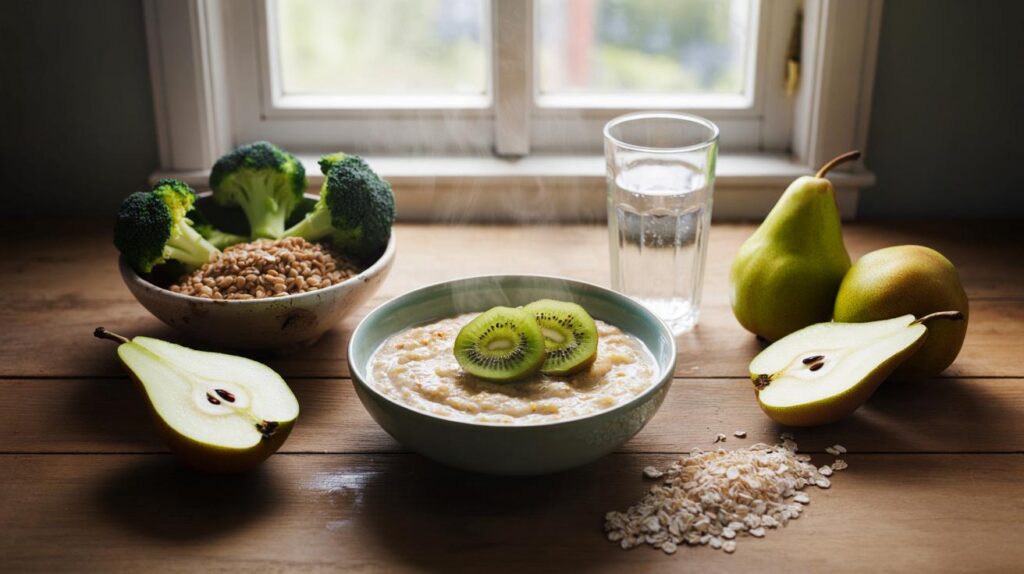
Feeling bloated and stuck in the loo queue? Small tweaks to what you eat today can calm cramps and ease bathroom stress.
Constipation slows everything down, yet food can speed relief without harsh fixes. Across the UK and EU, kiwifruit has been singled out for easing constipation, putting fibre back at the centre of care. Pair that with smart swaps, more fluids and a routine your gut trusts, and the strain starts to ease.
Why a fibre-first plate beats the strain
Fibre forms bulk, feeds gut microbes and helps stools hold water. That combination moves things along. The UK and EU recognise kiwifruit for constipation relief when included in a balanced diet, reflecting growing evidence that targeted foods can nudge bowel rhythm.
Kiwifruit stands out: UK and EU guidance recognises its effect on constipation when part of everyday meals.
Most adults in Britain fall short of the 30 g-a-day fibre target. Closing that gap works best with simple, repeatable habits rather than drastic overhauls.
Five foods that get things moving
Kiwifruit
Two green kiwifruit a day have become the poster child for gentler, more regular bowel movements. The fruit offers both soluble and insoluble fibre and natural enzymes that appear to support motility.
- How to use: eat two whole kiwis with breakfast or slice over yoghurt.
- Why it helps: fibre plus water-binding compounds soften stools and support regularity.
Porridge oats or bran cereals
Oats bring beta‑glucan, a soluble fibre that holds water like a sponge. Bran adds heft. Together they set up the gut for the day.
- How to use: a warm bowl of porridge or a bran‑based cereal most mornings.
- Why it helps: increases stool weight and consistency without heavy fat or sugar.
Lentils
Cooked lentils offer a fibre punch alongside plant protein and minerals. A modest serving adds bulk to the day’s tally without breaking the bank.
- How to use: stir into soups, toss through salads, or swap into a Bolognese.
- Why it helps: a mix of fibres feeds gut bacteria and adds volume to stools.
Broccoli
Broccoli carries fibre and sulphur‑containing compounds that may support a healthier gut environment. Lightly cooked florets are easy to add to plates you already cook.
- How to use: roast, steam or stir‑fry and serve with dinner most nights.
- Why it helps: adds water‑holding fibre without heavy calories.
Pears with the skin on
A ripe pear delivers a blend of soluble fibre and peel‑rich insoluble fibre. The peel matters, so skip the peeler.
- How to use: snack mid‑afternoon or slice over cereal.
- Why it helps: softens stool texture and speeds transit time.
| Food | Typical serving | Approx. fibre | Easy swap |
|---|---|---|---|
| Kiwifruit | 2 fruits | About 5–6 g | Slice over yoghurt instead of sugary toppings |
| Porridge oats | 40 g dry | About 4 g | Swap sugary cereal for porridge |
| Lentils, cooked | 150 g (1 cup) | About 7–8 g | Use in place of half the mince in sauces |
| Broccoli, cooked | 80–100 g | About 2–3 g | Roast a tray and add to weeknight meals |
| Pear with skin | 1 medium | About 5–6 g | Snack on a pear instead of crisps |
Hydration: the partner fibre needs
Fibre works best when you drink. Without fluid, added fibre may backfire and harden stools. Keep a glass within reach and sip regularly.
Fibre needs fluid: aim for 6–8 drinks a day so stools stay softer and easier to pass.
Plain water is ideal. If you struggle, try weak tea, diluted fruit juice, clear soups or a jug of water with sliced citrus. Spread drinks through the day rather than all at once.
What to skip when you’re backed up
Some choices crowd out fibre and slow the gut.
- Fast food and fried snacks low in fibre, high in fat.
- Large meat‑heavy plates without vegetables or pulses.
- Highly processed ready meals that skimp on wholegrains.
- Crisps, pastries and sweet snacks that displace fruit and nuts.
Build a bathroom‑friendly routine
Set a regular window after breakfast when the gut is naturally most active. Take your time and avoid straining. A small footstool under the feet can line up the angle of the bowel and ease the effort.
Move daily. A brisk 20‑minute walk stimulates the digestive tract. Stress management helps too; tense days often tighten the gut.
Start slow and keep count
Jumping from low to high fibre can cause gas and cramping. Add roughly 5 g every few days and see how you feel. Most UK adults are advised to aim for about 30 g of fibre a day, using food first.
Small, steady increases in fibre, plus regular sips of fluid, usually beat the boom‑and‑bust approach.
A one‑day plate that helps you go
- Breakfast: porridge oats topped with two sliced kiwis.
- Lunch: lentil and vegetable soup with a slice of wholemeal bread.
- Snack: a pear with skin and a handful of unsalted nuts.
- Dinner: grilled chicken or tofu with roasted broccoli, carrots and brown rice.
- Drinks: water with meals, plus tea, clear soup or diluted juice across the day.
When to seek advice
Speak to a pharmacist or GP if constipation lasts longer than a couple of weeks, if you need laxatives often, or if you notice pain, bleeding, unexpected weight loss or a change in your usual bowel habit. Children, pregnant people and older adults may need tailored guidance.
Extra pointers that make a difference
Label check for “whole” in the first ingredient on breads and cereals. Keep a simple fibre tally for a week to spot gaps. Batch‑cook lentil soup and roast vegetables on Sundays to stay on track when life gets busy.
Travelling or working shifts? Pack portable fibre: a small tub of overnight oats, a pear, a bag of roasted chickpeas. Pair every high‑fibre snack with a drink, and your gut will thank you on the go.



Does the research actually show kiwifruit works better than prunes, or is this just cautious UK/EU guidance being cited?
Tried two kiwis with porridge for a week and—wow—much less straining. Cheeers for the practical plate ideas! 🙂