
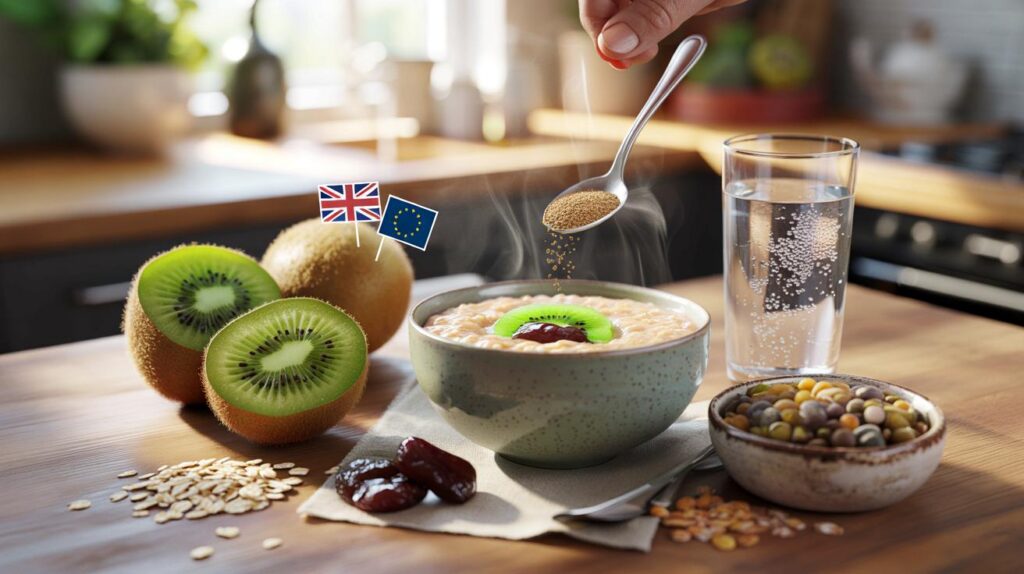
When bathroom time feels like a battle, small tweaks at mealtimes can spare you strain, discomfort and that awkward wait.
Constipation creeps in for many of us, often after travel, stress, new meds or a change in routine. The fastest wins usually start in the kitchen. Here’s how to use everyday foods to nudge things along safely, cheaply and without fuss.
Why constipation trips people up
Across Britain, irregular bowel habits affect people of all ages. Low fibre meals, dehydration and long periods sitting all slow gut movement. The NHS suggests adults aim for 30g of fibre a day, yet most of us fall well short. Bringing that closer to target, while drinking enough fluid, can restore regularity within days.
Evidence cited by health bodies in the UK and the EU recognises green kiwifruit for supporting normal bowel function.
Fibre works best with water. Soluble fibres form a soft gel. Insoluble fibres add bulk. Some fruits also contain natural sugars and compounds that draw water into the bowel and stimulate movement.
The five foods that get things moving
Below are five wallet-friendly options you can slot into breakfasts, lunches and snacks. They combine fibre, fluid-binding gels and, in some cases, gut‑active compounds.
Kiwi
Two green kiwifruit a day can help soften stools and increase frequency. They deliver a mix of soluble and insoluble fibre plus actinidin, an enzyme thought to aid digestion. That’s why kiwi has won formal recognition for bowel function claims in both the UK and the EU. Eat them with the seeds; some people even enjoy the skin scrubbed clean for extra fibre.
Oats and bran
A warm bowl of porridge or a serving of bran flakes at breakfast adds beta‑glucan and roughage that hold water in the stool. Start with modest portions to reduce wind, then step up. Stir in sliced pear or a handful of berries for a double hit.
Lentils and other pulses
Lentils, chickpeas and kidney beans are cheap, filling and rich in prebiotic fibres that feed friendly gut bacteria. A ladle of lentil soup or a chickpea salad lifts your daily total fast. Rinse tinned beans to reduce salt, and pair with vegetables for extra volume.
Prunes
Five to six prunes offer fibre plus natural sorbitol and polyphenols, which draw water into the bowel and support motility. If you prefer to drink them, prune juice works for some people, though the whole fruit gives more fibre. Take care with portions if you’re sensitive to FODMAPs.
Ground flaxseed (linseed)
One to two tablespoons of freshly ground flaxseed stir smoothly into yoghurt or porridge. Its mucilage forms a soft gel that helps stools pass comfortably. Always follow with water, and avoid dry spoonfuls to reduce the risk of choking.
| Food | Suggested portion | Approximate fibre (g) | Helpful extras | Easy swap |
|---|---|---|---|---|
| Kiwi | 2 medium | 4–5 | Actinidin enzyme | Slice over yoghurt |
| Oats/bran | 40 g oats or 30 g bran flakes | 4–6 | Beta‑glucan | Swap toast for porridge |
| Lentils | 150 g cooked | 7–8 | Prebiotic fibres | Add to soups or salads |
| Prunes | 5–6 prunes | 3–4 | Sorbitol, polyphenols | Snack or stew with oats |
| Ground flaxseed | 1–2 tbsp | 3–6 | Mucilage gel | Stir into breakfast |
Think “fibre + fluid + movement”: the trio that turns strain into a smooth, regular routine within days.
Hydration and daily habits
As you lift fibre, raise fluids. Aim for 6–8 glasses of water and other drinks daily. If plain water bores you, try herbal tea, clear soups or a splash of fruit juice in sparkling water. A warm drink soon after waking can prompt the gut’s natural reflex.
Movement matters. A 20‑minute walk after meals stimulates the bowel. When you sit on the toilet, a small footstool helps straighten the rectum and reduces straining. Give yourself time after breakfast, when the gastro‑colic reflex peaks.
What to cut back on
Foods low in fibre and high in fat slow transit. Keep portions of crisps, fast food and heavily processed snacks small. Limit frequent large servings of cheese and red meat. Very refined starches such as white bread and microwavable ready meals can back things up. Alcohol and too much coffee can dehydrate you, which works against fibre.
Simple swaps you can make this week
- Breakfast: porridge with kiwi and a spoon of ground flaxseed, plus a mug of tea.
- Lunch: wholemeal sandwich and a lentil soup; add a piece of fruit with edible skin.
- Snack: a small handful of almonds or 5 prunes with yoghurt.
- Dinner: wholewheat pasta with broccoli and chickpeas; drizzle olive oil for softness.
- Bedtime: a warm herbal drink and five minutes of gentle stretching.
When to get medical advice
See a GP or pharmacist if constipation lasts longer than three weeks, you rely on laxatives frequently, or you notice blood, severe abdominal pain, unexplained weight loss or a sudden change in bowel habits. People over 60 and those on medicines such as opioids, some antidepressants or iron tablets may need tailored advice.
A gentle 48‑hour reset you can try
Day 1: begin with porridge, kiwi and flaxseed; sip water through the morning. Have lentil soup at lunch. Walk after meals. Eat a bean‑rich chilli with vegetables at dinner. Finish with stewed prunes.
Day 2: repeat the fluids; swap in bran flakes with milk and berries at breakfast. Lunch on a chickpea salad with wholemeal pitta. Dinner of baked salmon, broccoli and new potatoes with skins. Use a footstool each toilet visit.
Extra pointers for different ages and stages
Children benefit from fruit with edible skins, peas, beans and water; keep juice small. Pregnant people often need extra fibre and fluids due to hormonal changes. Older adults can find ground flaxseed, stewed fruit and soups gentle and effective. Anyone increasing fibre should step up gradually to limit wind and bloating.
For many, the winning plan is modest: choose one high‑fibre food at each meal, drink regularly and keep moving. Put kiwi on the shopping list, build a bean‑based lunch twice a week, keep prunes in the cupboard and grind a jar of flaxseed. Small habits add up to easier mornings.



This is super practical—simple swaps, clear portions, and the footstool tip I always forget. I’ll definately try kiwi + oats tomorrow, plus a walk after brekkie. Love that it’s all under £1 a portion; my gut and wallet can finally agree.
Are these really under £1 everywhere in the UK? Kiwi prices jump in my local shop. Also, when you say UK/EU recognition for kiwi, is that a formal health claim or just supportive evidence? Link would be handy.