
Across the housing market, small spaces with clever tech keep drawing crowds. Promises of speed, savings, and flexibility tempt buyers.
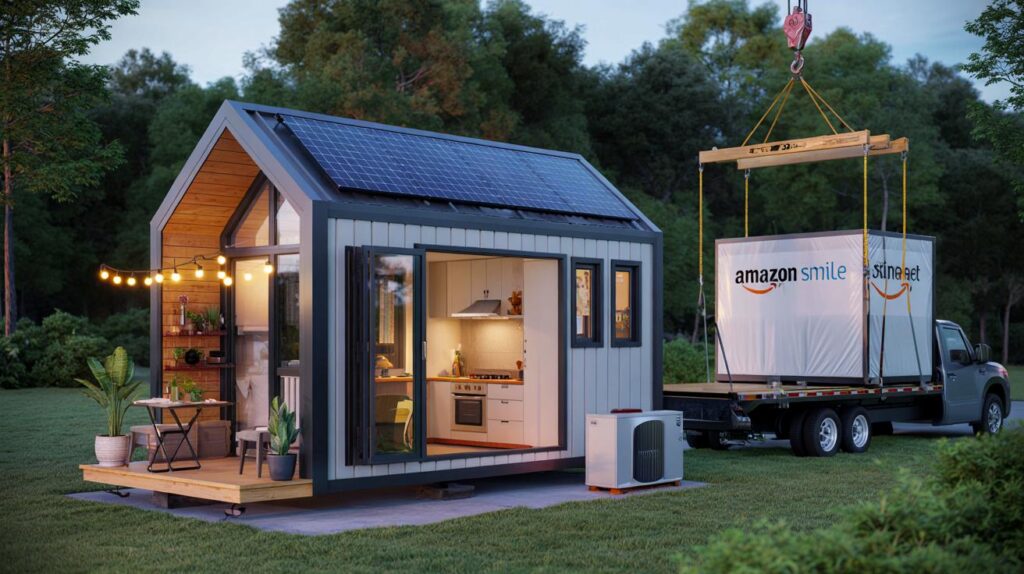
Now a solar‑equipped prefabricated tiny home listed on Amazon has sparked new interest. It’s a compact two‑bed, one‑bath starting around $11,000, designed to arrive prewired, with plumbing ready for hookups, and room to expand when your needs change.
What’s on offer
The headline model, a modular prefabricated tiny home, measures about 387 square feet (roughly 36 m²) in its base form. The seller positions it as a durable unit built around a steel frame with flame‑retardant insulated panels. It ships with wiring and plumbing runs in place, so a competent crew can assemble and connect services without starting from scratch.
Key promise: a solar roof that can run lighting, kitchen appliances and climate control, trimming reliance on the grid and easing monthly bills.
Inside, you get a bright living area with double‑glazed windows, a kitchenette featuring an induction hob and oven, built‑in storage, and worktop space. A small dining nook fits for family or guests. Outside, a covered front porch offers shade by day and a cosy spot for string lights after dusk.
Core features at a glance
- Approx. 387 sq ft base layout, expandable to around 774 sq ft.
- Two bedrooms and one bathroom in the standard plan; other plans add rooms.
- Steel structure with insulated panels intended for tough weather.
- Prewired electrics and pre‑run plumbing to speed installation.
- Solar roof designed to power daily essentials and climate control.
- Double‑glazed windows to help with warmth and noise.
- Custom finishes: flooring, window styles, interior paint, bathroom fixtures.
- Front porch with overhang suitable for outdoor lighting.
Layouts and room to grow
The range includes five layouts, with two 40‑foot options that push up to four bedrooms. You can ask the seller for a personalised floor plan if the standard configurations don’t quite fit your plot or family size. The headline figure here is flexibility: the base 387‑sq‑ft configuration can extend to around 774 sq ft, which changes how you can use the space from starter studio to genuine family dwelling.
From 2 to 4 bedrooms: buyers can pick from five layouts or commission a plan tailored to their site.
What you’ll pay and where prices sit
The modular model that headlines interest starts in the low‑$11,000 bracket according to the listing. Amazon’s marketplace also shows adjacent options at higher price points if you want a different form factor or extra amenities.
| Model | Listed starting price (USD) | Notable traits |
|---|---|---|
| Modular prefabricated tiny home | $10,178–$11,000 range (seller dependent) | Solar roof, 2 beds/1 bath base, expandable to ~774 sq ft |
| Expandable prefabricated tiny home | $13,700 | Fold‑out design for quick on‑site expansion |
| Luxury prefabricated container tiny home | $35,160 | Container‑style build with upmarket finishes |
| Aolebor modern prefabricated tiny home | $34,999 | Modern styling, larger footprint, premium fittings |
How the solar roof can shift your bills
The built‑in solar array aims to power lights, cooking, refrigeration and heating or cooling. The listing does not publish a specific wattage, so you should request the panel capacity, inverter rating, and whether batteries come included. If batteries are optional, factor them into the budget along with an off‑grid or hybrid inverter.
To test the idea, run a simple scenario. Assume a frugal daily load of 5–8 kWh for a two‑person household using efficient appliances, LED lighting and an inverter heat pump. A modest roof system can cover a large share of that in sunny months, while winter output drops. In many regions, pairing panels with a 5–10 kWh battery smooths evening peaks and reduces grid draw. Actual savings hinge on local sunshine hours, shading, tariffs, and how much time you spend at home.
Ask for the system’s panel wattage, inverter size, battery capacity and warranties before you buy.
Assembly, services and compliance
The home arrives with electrics and plumbing pre‑run, but you still need a proper foundation, safe grid or generator connections, and tested water and waste lines. Many buyers hire a contractor for groundworks, assembly and sign‑off. Local rules set the pace here.
Checks before you commit
- Planning and zoning: confirm whether your council or authority allows a prefabricated dwelling on your plot.
- Foundation: ask for the load plan and recommended piers or slab specifications.
- Wind, snow and seismic ratings: request certificates matched to your location.
- Electrics: verify voltage, frequency and plug standards; UK/EU buyers face 230 V, 50 Hz, not US 120 V, 60 Hz.
- Plumbing and waste: plan for mains connections, septic or alternative systems as required.
- Permits and inspections: book sign‑offs for electrical, plumbing and occupancy.
- Delivery and cranage: check access for lorries and lifting gear, and budget for them.
- Insurance: confirm cover during transit, installation and habitation.
- Warranty and returns: get terms in writing, including remedies for transit damage.
The real‑world budget
Sticker price rarely reflects the full spend. You will likely add site prep, delivery, lift, trades, utility hookups and potential battery storage. Here’s a simple planning aid for a base 387‑sq‑ft unit:
- Home shell and included systems: around $11,000.
- Delivery and cranage: $1,500–$6,000 depending on distance and access.
- Foundation and groundworks: $2,000–$8,000 based on soil and design.
- Electrical and plumbing finalisation: $1,500–$5,000.
- Battery storage (if not included): $2,000–$6,000 for 5–10 kWh.
- Permits and professional fees: highly variable; request local quotes.
- Taxes, duties and VAT for overseas buyers: check before purchase.
The headline price gets you in the door; the site, services and storage choices define the real total.
Who this suits
Downsizers can move from rent or a large mortgage to a smaller footprint with lower monthly costs. Families may use the unit as a garden annexe for multigenerational living, subject to permission. Holiday‑let hosts can add seasonal capacity if local rules allow. Remote workers can set up a dedicated office that doubles as guest space at weekends.
Extra practical notes buyers ask about
Thermal comfort and ventilation
Insulated panels and double‑glazed windows help hold heat, but airflow still matters. Ask for U‑values of walls and glazing, and whether the package includes trickle vents or mechanical ventilation with heat recovery. Good ventilation reduces condensation, protects finishes, and improves indoor air quality.
Appliances and compatibility
Induction hobs need compatible cookware and a steady electrical supply. Check the breaker sizing and whether the inverter can handle startup surges from fridges, pumps and climate units. If you plan to run off‑grid, size batteries so you can cook and chill food after sunset without running a generator.
Custom finishes and future changes
Buyers can pick flooring types, window styles, paint colours and bathroom fixtures. Keep future maintenance in mind: choose finishes with easy replacement options. If you expect to expand to 774 sq ft, ask the seller to show how the shell accepts modules later and whether you’ll need extra foundation piers for the larger footprint.
A quick sizing exercise you can try
Measure how you live today. List your essential furniture and kit, then sketch a 387‑sq‑ft rectangle and place items to scale. If it feels tight, sketch the 774‑sq‑ft footprint and test a four‑bedroom plan. This reveals whether you should start small and expand or select a 40‑foot layout from day one.
Risks and advantages to weigh
- Advantage: rapid setup and lower running costs via solar generation and compact space.
- Advantage: custom layouts and finishes let you tailor the home to your plot and lifestyle.
- Risk: hidden costs for site prep, batteries and compliance can erase savings if you underbudget.
- Risk: mis‑matched electrical standards and planning rules can delay occupancy.
- Tip: lock down specifications, delivery timelines and warranty coverage in a signed document.
For shoppers, the appeal here sits in the mix of price, speed and self‑reliance. A solar roof that shoulders everyday loads, a liveable two‑bed format, and a path to 774 sq ft give buyers options. Get the paperwork straight, model your energy profile, and insist on clear technical specs. If the numbers add up, a cart click could move you closer to a functional, modern, low‑energy home.



This is the kind of modular flexibility we need—start at 387 sq ft and expand to 774 when life changes. But $11k feels like headline pricing; did anyone tally foundation, cranage, permits and batteries? My guess: real total lands closer to $25–35k depending on site. Still, if the solar can cover 5–8 kWh/day, it’s a legit downsizer option.