
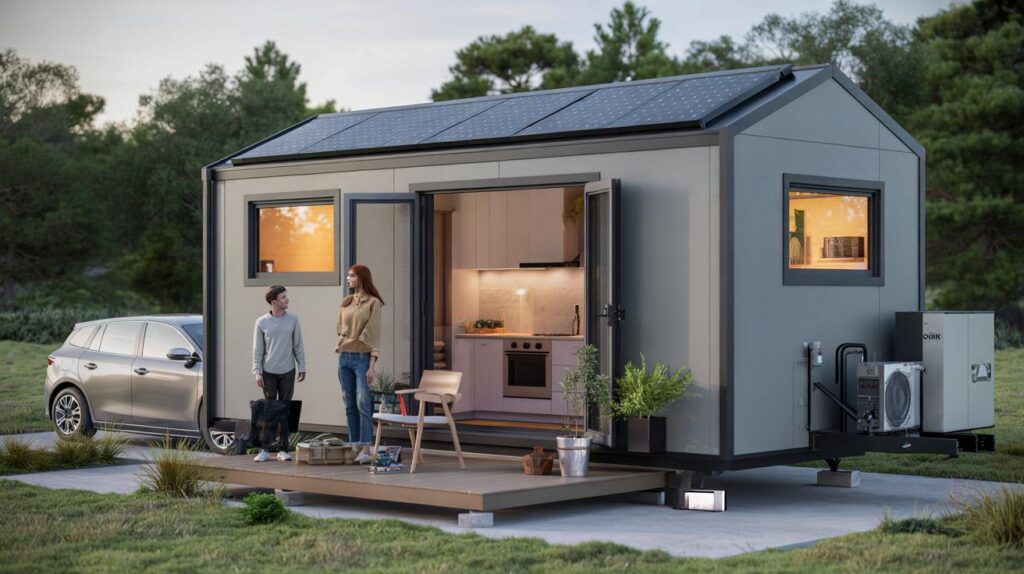
Rents climb, bills bite, and space runs short. A prefabricated fix now promises a real roof, fast, and for far less.
Amazon’s latest prefab listing pitches a modern micro‑home with power from the sun and room for a family. The price tag starts in four figures, not six. It won’t suit everyone, but it will make many readers pause and run the numbers.
A tiny house you can add to your basket
The Generic Modular Prefabricated Tiny Home sits at the centre of this new wave. The base model starts at $10,178, placing it within reach for people who want a simple, permanent dwelling without a lifetime of debt. The footprint is a compact 387 square feet, yet the plan carves out two bedrooms and a bathroom. The seller also offers bigger layouts and says you can scale to as much as 774 square feet if you need more room.
From $10,178 for 387 square feet, two bedrooms and a solar roof: a price that undercuts many annual rents.
What you actually get at this price
The shell uses a steel frame and flame‑retardant foam boards, which aim to balance strength with thermal performance. The unit arrives pre‑wired for electricity and plumbing, so qualified trades can hook it up to local services quickly. Inside, the main living area includes a kitchenette with an induction hob, an oven, built‑in storage and worktop space. Double‑glazed windows bring in daylight and help reduce heat loss. A small front porch adds a spot to sit out under cover.
- Structure: steel frame with insulated, flame‑retardant panels
- Area: 387 sq ft base model, with upgrade paths to larger layouts
- Rooms: two bedrooms, one bathroom, open living space with kitchenette
- Power: integrated solar roof for everyday essentials
- Fit‑out: induction cooking, oven, storage, and space for a dining table
- Glazing: double‑pane windows for light and thermal control
- Services: pre‑wired electrics and plumbing for faster commissioning
The roof integrates solar generation designed to cover lighting, appliances and climate control under typical use.
Solar on the roof: expectations and limits
The built‑in solar array aims to trim energy bills and keep the essentials running during the day. In strong sun, a well‑sized system can comfortably handle lights, refrigeration, induction cooking, device charging and a heat pump on moderate settings. Overnight or on grey days, you will depend on a battery bank or the grid. The listing does not publish detailed inverter and storage specifications, so buyers should ask for the rated output, battery capacity, and wiring diagrams before they commit.
Location also matters. A unit in Arizona sees far more sun hours than one in coastal Maine. Shading from trees or neighbouring buildings reduces yield. Plan panel cleaning and check for snow‑shedding capability if you live in colder climates. If you plan true off‑grid living, budget for extra storage and a backup generator for winter or storm weeks.
Custom layouts and finishes
Personalisation sits at the core of the offer. The seller lists five layouts, including two 40‑foot plans with up to four bedrooms. Buyers can choose flooring, window styles, paint colours and bathroom fixtures. If those templates do not fit your site, you can request a personalised floor plan. Always ask for structural drawings and a materials schedule so you understand what changes affect weight, insulation and cost.
Build quality and weather readiness
Steel framing resists rot and pests, and the panels promise fire resistance and basic thermal control. That said, not all panels perform alike. Ask for measured U‑values, moisture barriers, and details on thermal breaks around window and door openings. Check wind ratings and snow load figures if you live in a region with severe weather. A robust anchoring plan matters as much as the frame itself.
Durability depends on verified ratings: wind speed, snow load, U‑values and proper anchoring to the foundation.
What to check before you buy
Planning, zoning and rules
Regulations vary by city, county and state. Some areas treat a tiny home as an accessory dwelling; others treat it as a primary residence; a few ban them outright. Confirm zoning, setbacks, utility requirements and minimum size rules. Ask whether you need a permanent foundation and whether your model meets local building and energy codes. If you plan to rent the unit out, short‑term let rules may apply.
Delivery, assembly and hookups
Prefab does not mean plug‑and‑play. Measure your access road, turning radius and overhead clearances. Confirm crane or forklift needs for placement. Get a written timeline for manufacturing, shipping and on‑site assembly. Line up licensed trades for electrical, plumbing and HVAC commissioning. Collect all warranties and manuals, and keep photos of work‑in‑progress for future inspections or resale.
How the costs stack up
The sticker price makes headlines, but your budget must include delivery, foundation, site prep, permits, and utility connections. Solar storage, if not included, adds further cost. Even so, many buyers still land well below the price of a conventional build or a year of rent in major metros.
| Model | Indicative price (USD) | Notable trait |
|---|---|---|
| Generic Modular Prefabricated Tiny Home | $10,178+ | Solar roof, 2 beds in 387 sq ft, scalable layouts |
| Generic Expandable Prefabricated Tiny Home | $13,700 | Expandable footprint |
| Generic Luxury Prefabricated Container Tiny Home | $35,160 | Container‑style construction |
| Aolebor Modern Prefabricated Tiny Home | $34,999 | Contemporary fit‑out |
Who this suits, and who should think twice
- You want a fast, lower‑cost route to ownership and can manage light project work.
- You value small footprints, integrated solar and lower monthly bills.
- You have a site with clear sunlight and permissive zoning for compact dwellings.
- You accept modest room sizes and clever storage in place of expansive space.
- You prefer custom finishes without paying bespoke architect fees.
On the other hand, if you need wide corridors, large utility rooms or heavy workshop space, a micro‑home will feel tight. Families with frequent guests may want the larger layouts or a second unit. Buyers in cold or windy regions should interrogate insulation, air‑sealing and structural ratings before they finalise an order.
Practical next steps and risk checks
Ask the seller for a full specification pack: structural drawings, energy performance data, electrical one‑line diagrams, plumbing schematics, appliance lists and solar/battery datasheets. Request proof of third‑party certifications where relevant. Use those documents to get quotes from local trades, then build a total‑cost spreadsheet that includes a 10 to 15 percent contingency for surprises.
Run a power budget while you are at it. List your daily loads—fridge, lights, induction hob, kettle, laptop, heat pump—and note their wattage. Estimate hours of use, multiply, and compare the total to the solar system’s stated output and your chosen battery capacity. This simple exercise shows whether you need extra panels or a bigger battery to meet winter demand.



Two bedrooms in 387 sq ft for $10,178? That’s defintely tempting if zoning allows it.