
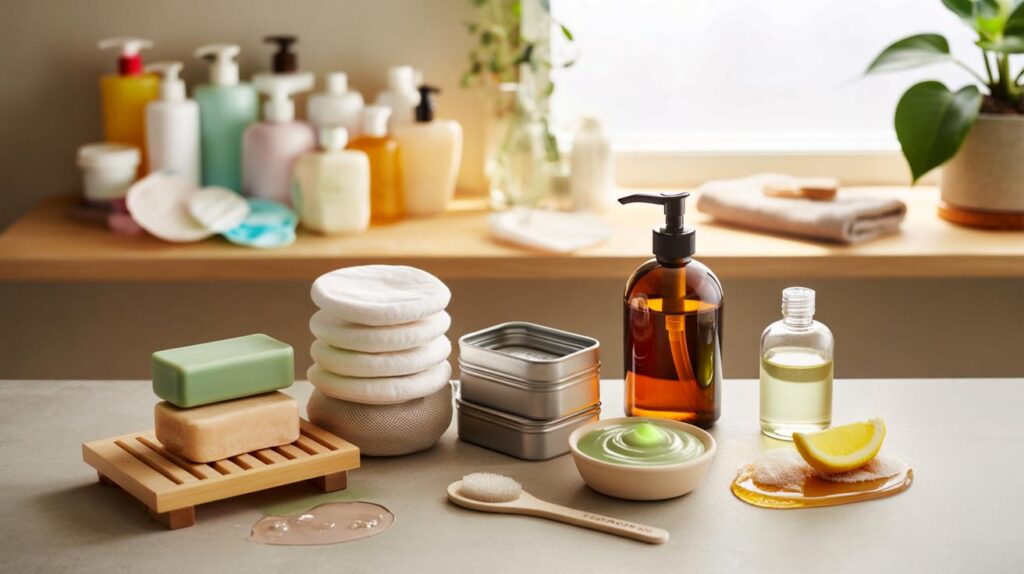
Beauty shelves are groaning, purses are thinning, and bathrooms are cluttered. A quiet shift is happening behind closed doors.
Across Europe, shoppers are rewiring daily routines to cut bills and waste. Early adopters say three small swaps can carve hundreds from annual beauty spending without ditching results. The changes look modest. The impact stacks up fast.
Why the beauty bill keeps ballooning
Marketing cycles push constant novelty, so baskets swell. Liquids ship in heavy bottles, so freight adds cost. Plastic packaging multiplies, so you pay for containers as much as for contents. Surveys often place personal beauty spend between €600 and €1,000 per person each year in Western Europe. Many households sit at the top end once haircare, skincare, body wash and disposables pile in.
Bins tell the same story. Bottles, pumps and wipes leave the bathroom at pace. Each item costs money to buy and money to bin. Time also disappears as people juggle duplicates and half-used jars.
Most households pay for the liquid, the plastic and the shipping, not just the formula.
The three-step switch that cuts costs fast
Go solid in the shower
Solid bars shrink packaging and stretch usage. A 70 g shampoo bar often replaces about two 250 ml bottles. Cold-process soap outlasts a gel, because you dose less and waste less. Travel gets simpler because bars sail through security checks.
One 70 g shampoo bar can replace roughly 500 ml of liquid shampoo and save €60–€100 per person each year.
- Pick one 70–80 g shampoo bar matched to scalp type.
- Add a cold-processed body soap with minimal fragrance.
- Use a draining dish so bars dry fully between showers.
Results vary with water hardness and hair length. A well-drained bar lasts two to three months for one person. That cadence drives the saving.
Make a couple of kitchen-table treatments
Pantry staples cover a weekly scrub and a monthly mask at tiny cost. A gentle face polish takes one tablespoon of fine sugar, one tablespoon of a light oil, and a few drops of lemon. Massage for thirty seconds, then rinse. A detox clay mask uses one tablespoon of green clay and enough warm water to form a paste. Leave for five minutes if your skin tolerates it well.
These mixes cost cents per dose, so branded scrubs and masks drop off the list. Customisation is easy. In colder months, swap lemon for a teaspoon of honey. For dry skin, switch to sweet almond oil. Patch test new mixes, and keep eyes clear of acids from citrus.
Choose reusable and refillable gear
Five washable pads replace a monthly bag of cotton rounds. A small laundry bag keeps them together in the wash. An aluminium or steel tin protects soap bars and shampoo bars on the sink and during trips. Refillable bottles cut plastic and unit price when you buy concentrated refills.
Reusable pads and refills commonly return €100–€150 in savings over the first year, with bigger gains after year two.
What the numbers look like after 12 months
| Category | Typical annual spend | After switch | Saving |
|---|---|---|---|
| Shampoo and body wash (liquid) | €180 | €90 (solid bars) | €90 |
| Face scrubs and masks | €120 | €24 (pantry mixes) | €96 |
| Make-up remover and cotton rounds | €144 | €36 (reusable pads + gentle oil) | €108 |
| Hand wash and shower gel refills | €160 | €80 (concentrates or solids) | €80 |
| Misc. impulse buys | €200 | €80 (list-first shopping) | €120 |
| Total | €804 | €310 | €494 |
Households with two adults and teens can pass €500 in savings with ease. People who travel often see added gains because bars remove the need for pricey miniatures.
Local and low-additive formulas are gaining ground
Short supply chains cut freight and layers of margin. A bar made in your region often lists fewer additives and ships without a pump. Refilleries now sell gentle cleansers and shampoos by weight. You pay for the formula, not for the branded bottle. Labels show simple ingredients such as olive oil, coconut-based surfactants and aloe vera gel. That simplicity helps sensitive skin and trims the basket price.
Short routes reduce transport, packaging and margin stacking, which trims the till price and the bin.
Practical playbook for the first 30 days
- Week 1: audit every bottle, note duplicates, and commit to finishing open products first.
- Week 2: buy one shampoo bar and one body soap, plus a draining dish or soap net.
- Week 3: switch to five washable pads and a mild oil for make-up removal.
- Week 4: add one two-ingredient treatment you will use, and set a refill reminder on your phone.
Track each empty in a note on your phone. Write the date you opened a new bar. Usage data beats guesswork and sharpens future choices.
Caveats and skin-safety pointers
Bar format does not mean harsh formula. Seek pH-balanced shampoo bars if your scalp gets tight. Keep bars dry between uses to avoid mush and waste. Patch test new pantry blends behind the ear for 24 hours. Avoid lemon on freshly shaved skin. People with eczema or active dermatitis should seek clinical advice before changing routines.
Who saves the most
High-frequency users save most. Households with multiple bathrooms cut duplicates by centralising refills. Teenagers who switch to reusables stem constant cotton and wipe purchases. Frequent fliers stop buying travel minis because solids glide through cabin checks and last longer than travel bottles.
Run your own savings scenario
Take last year’s beauty spend and split it into five lines: hair, body, face care, disposables, impulse treats. Assign a switch to each line. If you move hair and body to solids, replace disposables with washables, and cap impulse buy slots to one per quarter, your numbers may look like this:
- Hair: €220 to €120 with two bars and one conditioner bar.
- Body: €150 to €70 with soap bars and one refill.
- Face care extras: €130 to €30 with pantry masks and scrubs.
- Disposables: €144 to €36 with reusable pads.
- Impulse space: €200 to €100 with a fixed quarterly slot.
The combined saving lands near €518 in year one. Year two often improves because you have the tins, pads and dishes already, so fixed costs vanish.
Extra ways to amplify the gain
Buy in pairs when bars are on promotion to avoid emergency purchases at higher prices. Share multi-use items across the household, such as one tub of shea butter for elbows, feet and lips. Keep a small travel bag ready to prevent last-minute mini buys. If you like fragrance, add a single essential oil to unscented bases rather than buying multiple lotions.
Watch for greenwash. A dense ingredient list and a heavy bottle often signal higher cost without better results. Read for short INCI lists, and check for simple actives you recognise. Choose fragrance-free options if your skin reacts easily. The calm routine usually costs less and performs more steadily.



I switched to a 70 g shampoo bar for travel—airprot security is finally chill and it actually lasts. If I save even €200 I’ll call it a win. Pantry masks next!
€520 feels high. Are these savings based on Western Europe averages only? What if someone already buys drugstore basics and no salon shampoos—would the bar + pads still move the needle that much?