
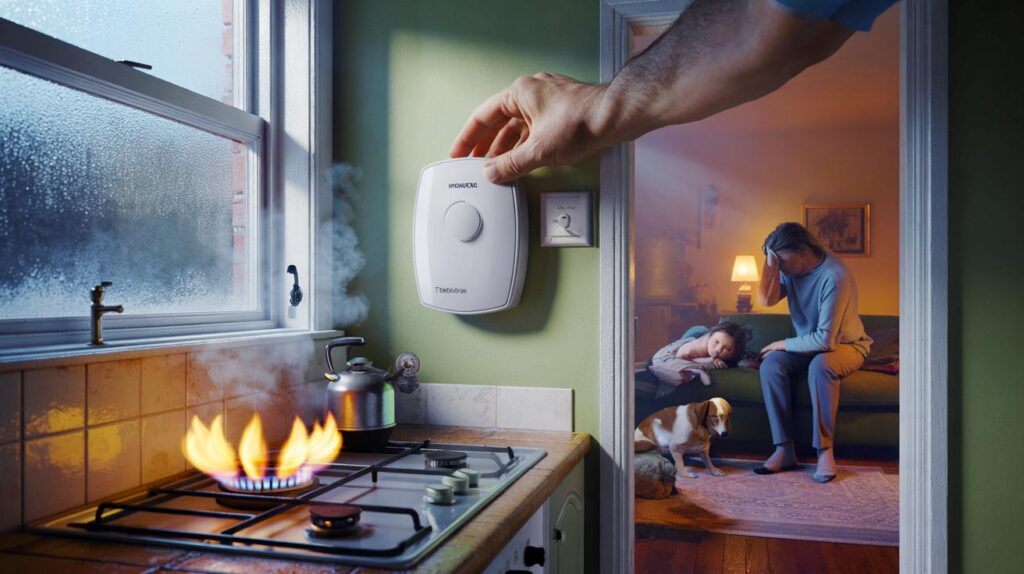
As frosts creep in and heaters hum again, a quiet threat slips back into homes, hiding in plain air.
Carbon monoxide creeps out of faulty boilers, stoves and fires without scent or colour. Families only notice when headaches start and time has already slipped away. This week, focus turns to the one installation habit that makes a lifesaving difference.
Why carbon monoxide keeps catching households off guard
Every winter, ambulances attend thousands of suspected poisonings in the UK. Public health data points to more than 4,000 A&E presentations each year. Dozens of people die, often in homes that felt perfectly normal minutes earlier. Carbon monoxide binds to haemoglobin 200 times more readily than oxygen. Organs begin to struggle while rooms look calm.
What CO does to your body
At low levels, CO starves tissues and blurs thinking. People feel sick, weak or confused. Moderate exposure brings dizziness and chest pain. High levels can knock people out within minutes. Children, older adults, pregnant people and pets succumb faster. The onset can appear like flu, yet there is no fever.
Early signs you should not shrug off
- Sudden headache, dizziness or nausea that eases outside.
- Multiple people or pets ill at the same time in the same space.
- Yellow or floppy flames on gas hobs and fires.
- Sooty marks around boilers, stoves or fireplaces.
- Condensation on cold panes near appliances, with musty air.
If more than one person feels unwell indoors, move to fresh air at once, call 999 and do not re-enter until safe.
The decisive choice: which alarm actually protects your family
Smell and sight fail against CO. A certified alarm does not. Shelves are crammed with options, and some are little more than toys. A few checks separate life-savers from let-downs.
Standards and labels that separate life-savers from gimmicks
Look for EN 50291 on the packaging and the device. This standard means the alarm has passed rigorous testing for accuracy and durability. The CE mark should be present as well. A model with a digital display helps you spot rising levels before they trigger a siren. Packaging should state a service life, typically seven to ten years.
Features that help without costing the earth
- Sealed lithium battery for 7–10 years of power.
- Test and hush buttons that are large and responsive.
- Interlinking alarms that trigger together across floors.
- Voice alerts or smartphone notifications for heavy sleepers.
- Event memory to show if an alarm sounded while you were out.
Prices start near £20 for a compliant basic unit and reach £60 for interlinked or smart models. A bargain device without EN 50291 is a false economy.
Buy to EN 50291. Mark the installation date on the unit with a pen. Replace it when the end-of-life signal begins.
Placement makes or breaks performance
Alarms only save lives if they trigger early and wake people. Placement decides both. CO mixes evenly with indoor air. That changes the best height for mounting.
The one gesture that changes everything
Fit your alarm at eye level on a wall, about 1.5–1.7 metres above the floor. People see the light, hear the siren clearly and can press the test button easily. Ceiling corners create dead air spaces that slow detection. Skirting level adds dust and knocks. Flush, central wall positions work best.
- Keep 1–3 metres from a boiler, fire or stove to avoid localised spikes.
- Avoid behind curtains, on shelves or in cupboards that block airflow.
- Do not mount next to extractor fans, trickle vents or open windows.
- Keep away from bathrooms and very humid rooms to limit false alarms.
Rooms where alarms make the biggest difference
Fit an alarm in every room with a fuel-burning appliance. That includes rooms with gas boilers, log burners, open fires and oil or LPG heaters. Place another near bedrooms so sleepers wake even with doors closed. In multi-storey homes, install at least one alarm on each floor.
Eye level, 1.5–1.7 metres from the floor, near bedrooms and in every room with combustion: this trio saves minutes you cannot spare.
Keep it alive: the monthly routine that stops nasty surprises
Test like clockwork
Press the test button once a month. The alarm should sound loudly within seconds. No sound means new batteries or a replacement unit. Note the test date on a calendar. Vacuum the grille gently to remove dust. Never paint the casing. Do not rely on appliance servicing alone to manage risk.
When the alarm sounds
- Open doors and windows wide to bring in fresh air.
- Turn off all combustion appliances if it is safe to do so.
- Leave the building and move everyone into clean air.
- Call 999 if anyone feels unwell or loses consciousness.
- For suspected gas appliance faults, call the National Gas Emergency Service on 0800 111 999.
- Do not go back inside until professionals confirm it is safe.
Never silence and forget. A beeping alarm is the start of the response, not the end of the problem.
What this winter changes for households
Energy costs push households towards portable heaters, second-hand stoves and makeshift fixes. These increase risk if ventilation is poor or flues are damaged. Garages and sheds are dangerous when engines run. Barbecues should never be used indoors or inside tents and caravans. Holiday lets and short-term rentals need the same protection as your main home.
Rules, responsibilities and the bits many people miss
- In England, landlords must fit CO alarms in any room with a fixed combustion appliance, excluding gas cookers.
- Scotland and Wales apply similar duties, with variations on coverage and interlinking.
- Home insurers expect reasonable precautions. A working alarm supports claims after an incident.
- Annual servicing of boilers and flues remains vital, even with alarms in place.
Choosing quickly: a snapshot of options
| Type | Power | Typical life | Approximate price | Good for |
|---|---|---|---|---|
| Basic EN 50291 alarm | Replaceable AA batteries | 7 years | £20–£30 | Most homes on a budget |
| Sealed-battery alarm | Built‑in lithium | 10 years | £30–£45 | Low-maintenance households |
| Smart or interlinked alarm | Sealed battery or mains with backup | 10 years | £45–£60+ | Large homes and heavy sleepers |
Extra knowledge that widens your safety net
CO alarms are not smoke alarms
Smoke alarms sense particulates rising with hot gases. CO alarms sense a toxic gas that mixes evenly with room air. This is why smoke alarms suit ceilings, while CO alarms belong at eye level on walls. Both are necessary, and both need regular testing.
A quick home risk check you can run today
- Count combustion appliances. Match them with the same number of CO alarms.
- Measure eye level in your home. Mark 1.6 metres on walls for reference.
- Check for EN 50291 on every unit you own. Replace anything without it.
- Schedule monthly tests and yearly service visits on your phone.
The cheapest upgrade this week may be a £20 alarm mounted at 1.6 metres. That small gesture gives families time.
For context, mild CO symptoms begin near 50 parts per million over hours. Many alarms display readings before the siren. Seeing a rise during cooking or heating helps you ventilate earlier and call a qualified engineer before harm occurs. People with sleep apnoea machines, wood stoves or attached garages face higher baseline risk and benefit from interlinked units.
Renters can ask landlords for alarms in all rooms with combustion. Homeowners can add alarms to annexes, loft conversions and utility rooms. Carers can fit voice-alert models for relatives with hearing loss. A felt-tip marker, a tape measure and five minutes on a step stool complete the job most people put off.



Is EN 50291-1 sufficient, or should we specificaly seek EN 50291-2 for holiday lets, caravans or boats? And for bedrooms with high ceilings, does the eye-level (1.5–1.7 m) rule still beat ceiling mounting, or are there exceptions?
Really useful breakdown. I’d stuck my old alarm on the ceiling near a corner and assumed more height = safer. After reading this, I moved it to eye level and, surprizingly, the weekly test sounds louder. I’ll mark the install date too—definately a habit I’ll keep.