
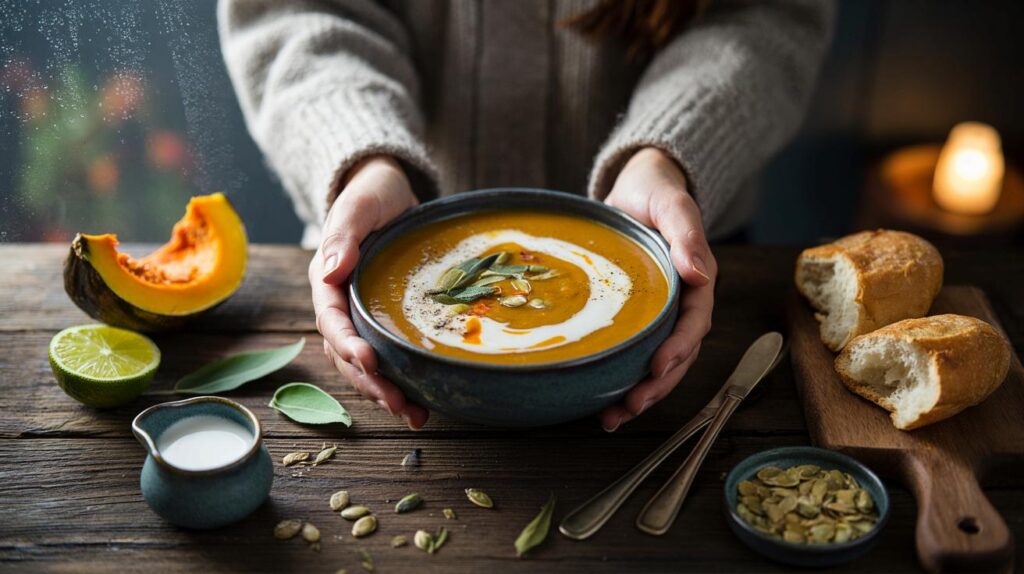
The cold creeps under the door, socks go on, and dinner needs to be both simple and a bit special. You want warmth without waiting an hour. You want flavour that feels like a blanket. Creamy pumpkin soup with coconut milk answers all of that, with steam curling up and spices humming low in the background.
I stepped in from a wet London evening with cheeks stung pink and a tote bag thudding against my hip. On the counter: a small pumpkin, an onion, a tin of coconut milk, and a lime I’d forgotten I owned. I put the kettle on, not for tea, just because the sound of it calms a room, then set a pan to medium and let a knob of butter kiss the metal before an onion slid in, whispering. The coconut milk tin clicked open. The rain slowed. The pumpkin yielded under the knife with that gentle, squeaky give that says the soup will be thick and kind to you. The spoon did the talking.
Why pumpkin and coconut belong together
Pumpkin is gentle by nature, sweet and soft, like a friend who listens more than they speak. Coconut milk brings the velvet and a faint tropical hush, smoothing everything without smothering it. Together they carry ginger, turmeric and a little chilli as if they’d been practicing harmonies for years.
At a Saturday market in Hackney, a grower handed me a crown prince wedge and said, “Roast it and don’t look back.” He wasn’t wrong. That pale blue skin guards dense, sunset flesh that leans into spice, and coconut milk makes it sing. A quick scan of supermarket baskets in October tells the same story: pumpkins everywhere, and the promise of bowls clutched in both hands.
There’s a bit of kitchen science tucked under the cosiness. Pumpkin has starches that turn silky when blended, and coconut milk brings fats that carry aromatics all the way to your nose. A squeeze of lime or splash of apple cider vinegar lifts the sweetness so it doesn’t droop, and a measured pinch of salt locks the flavours in step. Soup like this is a small act of kindness to yourself.
How to cook a pot that tastes like a hug
Start by roasting the pumpkin because caramelised edges make the difference. Cut about 1 kg pumpkin into chunks, toss with oil, salt and a little turmeric, then roast at 200°C until the corners bronze and a fork slides through. In a pot, soften a chopped onion and two garlic cloves, add grated ginger, scrape in the roasted pumpkin, pour in 600 ml hot vegetable stock and 400 ml coconut milk, and let it murmur for 10 minutes. Blitz until it’s velvet, then finish with lime and black pepper.
Good soup is rarely rushed, but it doesn’t have to take all night. Bloom your spices briefly so they smell warm, not raw, and keep the heat gentle so the coconut doesn’t split. If it tastes flat, it likely needs salt or acid, not more chilli. We’ve all had that moment where dinner tastes almost-there and it’s maddening. Let’s be honest: nobody really does that every day.
You can keep it purist or dress it up, there’s room for both. A swirl of extra coconut milk looks like a painter’s flourish, and toasted seeds add crunch that wakes the spoonfuls up.
“Simmer until the pumpkin politely collapses, then stop. The rest is just seasoning and instinct.”
- Roast, then simmer: roasting deepens flavour; simmering blends it all into a calm whole.
- Salt in stages: a little with the onion, a little with the stock, a final check after blending.
- Add-ons: crispy sage, chilli oil, toasted pumpkin seeds, or crumbled feta if you’re not keeping it vegan.
- Finish with acid: lime, a splash of cider vinegar, or even a squeeze of orange for a softer lift.
Serve, share, linger
This is the bowl that invites people to sit for a minute longer than planned. It goes with warm bread you tear with your hands, a salad of tart apples and leaves, or just a quiet corner of the sofa and a blanket. The coconut rounds the edges of the day, and pumpkin tastes like the season closing its fist around the last of the light.
You don’t need a dozen ingredients or a chef’s cadence to get it right. Taste as you go and trust your nose; it knows more than you think. When the ladle glides like satin and the colour looks like late afternoon, you’re there. Share it with a neighbour, or keep it for lunch tomorrow and feel smug all morning.
| Key points | Details | Interest for reader |
|---|---|---|
| Roast for depth | Caramelised pumpkin builds a richer base than boiling alone | Max flavour with the same ingredients |
| Coconut milk balance | Fat carries spice; lime or vinegar lifts sweetness | Restaurant-level harmony at home |
| Finish smart | Season in layers, blend smooth, add crunch and a bright note | Silky texture and a memorable last spoonful |
FAQ :
- Can I use any pumpkin or squash?Yes, go for dense, sweet varieties like butternut, kabocha, or crown prince. Avoid watery carving pumpkins if you can.
- Will light coconut milk work?It will, though the soup will be a bit thinner. You can simmer a touch longer or add a small potato to boost body.
- How do I make it spicier?Add a fresh red chilli with the onions or finish with chilli oil. Smoked paprika lends warmth without heat if that’s your lane.
- Can I freeze this soup?Absolutely. Cool completely, portion, and freeze for up to 3 months. Reheat gently and brighten with fresh lime.
- What toppings really shine?Toasted pumpkin seeds, crispy sage, coconut cream swirls, or a spoon of yoghurt. A little maple and black pepper on top is gorgeous too.



Roast-then-simmer is a game-changer. I just tried it with butternut and the caramelised edges definately boosted the flavour. Finished with lime and a crack of pepper—silky, bright, and not cloying at all. Might toast seeds next time for crunch. Thanks for the clear, no-fuss steps!