
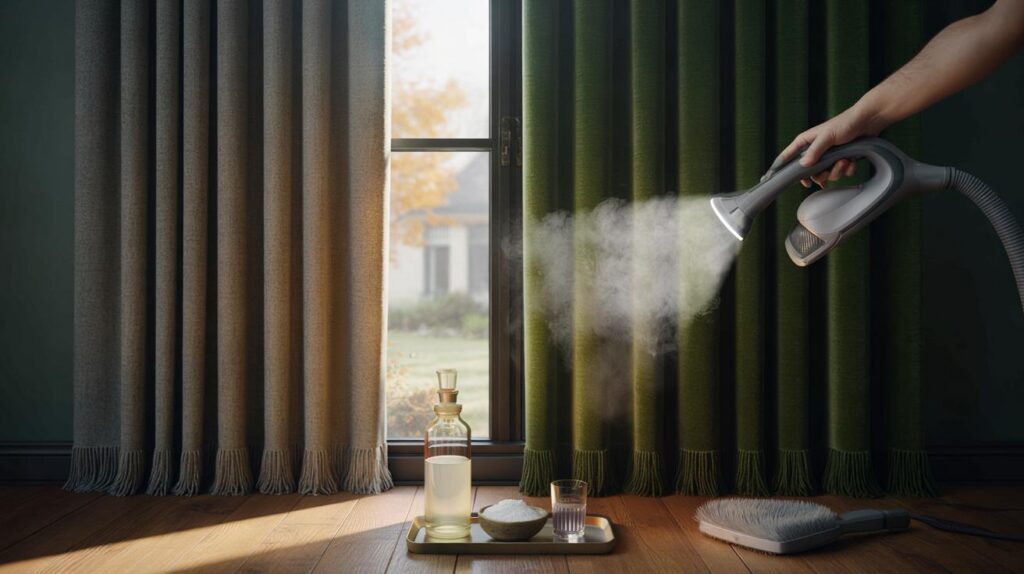
Daylight shrinks by the week, and dull curtains swallow what remains. Households want fast fixes that cost pennies today too.
As October closes in and radiators click on, fabric hangs start to look tired, dusty and creased. A handful of simple, low-cost adjustments can lift colour, reduce allergens and sharpen the drape without an iron or a costly trip to the dry-cleaner.
Why curtains lose their sparkle in autumn
Open windows invite particles from traffic, pollen and soot. Closed windows and heating boost static, which makes dust cling to fibres. Shorter days leave marks and fading more noticeable. Blackout coatings complicate care and often react poorly to heat.
Address the causes and the weekly routine becomes light work. Tackle dust first, then protect fibres, then set the drape.
Quick wins add up: lift colour with kitchen vinegar, slow dust with a salty soak, and let steam reset creases.
The salt soak that keeps dust off longer
Salted water can reduce static and slow the build-up of grime on washable curtains. It’s cheap, fast and suits hard-working living spaces.
How to mix it
- Use 1–2 handfuls of table salt for every 5 litres of cold water.
- Remove hooks and rings so metal doesn’t corrode.
- Submerge fabric for 20–30 minutes, agitating gently.
- Rinse briefly, then proceed to your normal wash.
The salt solution helps prevent tiny particles bonding to fibres between washes. You wash less often, colours look brighter for longer, and fabric retains a crisp hand.
When to avoid it
Skip salt soaks on silk, viscose blends, delicate prints or any fabric labelled dry-clean only. Always patch-test inside a hem to ensure colourfastness.
Keep colour lively with white vinegar
White spirit vinegar works as a gentle, residue-free softener. It neutralises odours, unlocks leftover detergent and brightens colour without perfumed build-up.
Settings that protect fibres
- Add 100–150 ml white vinegar to the softener drawer for the final rinse.
- Wash at 30°C on a delicate cycle with a low spin to guard against shrinkage.
- For blackout or foam-backed curtains, choose a cold, short programme or hand wash the fabric edge only, keeping backing as dry as possible.
Choose a mild liquid detergent and avoid bleach, which can chalk dark dyes and yellow light fabrics. Hard water areas benefit from a water softener or distilled rinse to prevent mineral haze.
No harsh softeners needed: a half‑cup of white vinegar in the final rinse keeps fibres supple and colours clear.
Wrinkle control without an iron
Creases form as fibres dry flat and rigid. Manipulate moisture and gravity, and you rarely need a board.
Rehang damp for a natural press
- Shake clean curtains, then rehang while still damp.
- Straighten pleats by hand and space them evenly along the pole.
- Open windows slightly for airflow or run a fan to speed drying and set the fall.
Use safe steam, not heat
- Hold a handheld steamer 20–30 cm away and sweep downwards.
- No steamer? A kettle produces enough vapour; keep it at a safe distance to avoid drips.
- Stubborn hems respond to a second pass once fully dry.
Optional starch for a tailored finish
Add 1 tablespoon of liquid starch to the final rinse to sharpen pleats on cotton or linen mixes. Avoid starch on velvet, blackout backing and silk.
Between deep cleans: a 5‑minute routine that actually sticks
Freshness comes from strategy, not struggle. Rotate simple actions and your fabric hangs stay poised.
- Vacuum weekly with a soft brush attachment; work from top to bottom to capture settled dust.
- Mist lightly with clean water; a fine spray refreshes fibres and helps odours dissipate.
- Lift and tap hems; floor-level fibres hold the heaviest grit.
- Space pleats evenly after every draw; compressed folds trap moisture and dust.
- Air the room daily for 10 minutes; humidity spikes make fibres limp and crease-prone.
A gentle monthly plan beats a punishing annual blitz. Small, regular steps keep fabric bright and air clearer.
Quick reference
| Task | Measure | Frequency | Notes |
|---|---|---|---|
| Anti-dust salt soak | 1–2 handfuls per 5 litres cold water | Every 2–3 washes | Remove metal hardware first |
| Vinegar in rinse | 100–150 ml | Each wash | Softens, brightens, reduces odour |
| Low-temp wash | 30°C, low spin | As needed | Cold, short cycle for blackout |
| Steam reset | 2–3 minutes per panel | After drying | Hold 20–30 cm away |
| Starch finish | 1 tbsp in final rinse | Occasional | Avoid on delicate or coated fabrics |
Fabric caveats that save headaches
- Always check the care label; flame-retardant finishes can degrade with incorrect washing.
- Test for colourfastness on an inner hem with a damp white cloth; stop if dye transfers.
- Velvet and silk prefer professional care; at home, limit to gentle vacuuming and careful steaming from a distance.
- Ring-top metal eyelets can rust; take them off or protect them during soaking.
- Foam-backed blackout fabric can crease permanently under heat; avoid hot irons and tumble dryers.
Cleaner curtains, easier breathing and lower bills
Regular vacuuming removes allergen reservoirs where dust mites and pet dander settle. Lighter, cleaner fibres need less scented spray to mask smells, which cuts respiratory irritants indoors. Rehanging damp and letting natural airflow finish the job reduces tumble drying, saving energy during pricier winter months.
If hay fever or asthma troubles the household, set a calendar: vacuum weekly, short steam fortnightly, wash at the turn of each season. During peak pollen, dry curtains indoors and keep windows closed at midday, airing rooms early morning or late evening instead.
A practical example for busy households
Two lined living-room curtains, polyester-cotton blend, slightly greyed at the hem. Remove hooks. Soak 25 minutes in 10 litres of cold water with 2 handfuls of salt. Rinse, then machine wash at 30°C delicate with a teaspoon of liquid detergent. Add 120 ml white vinegar to the softener drawer. Low spin. Shake, rehung damp. Hand-form pleats, space evenly. Steam each panel for two minutes from 25 cm. Once dry, a light mist revives the hem. Total hands-on time: under 20 minutes.
Useful extras when you rotate textiles
Seasonal swaps prolong life. Summer voiles benefit from a vinegar rinse to keep them crisp and translucent. Heavy winter drapes need a gentler spin and a longer hang to prevent seam strain. Store off-season curtains clean in breathable bags with cedar blocks, not plastic, to avoid condensation marks.
If you sew your own heading tape, mark pleat spacing on the pole with removable tabs. Even spacing speeds daily dressing and stops fabric from crowding, which keeps the drape sharp and the surface less dusty. A small investment of time up front removes faff every evening.



Definately trying the vinegar in the final rinse—cheap and no residue. Did this on my grey cottons and the colour popped without that heavy softener smell. Cheers for the tip!
The salt soak sounds like an old wives’ tale—does it actually cut static on polyester blends, or am I just seasoning my curtains? Anyone got long‑term results, like dust sticking less after a week?