
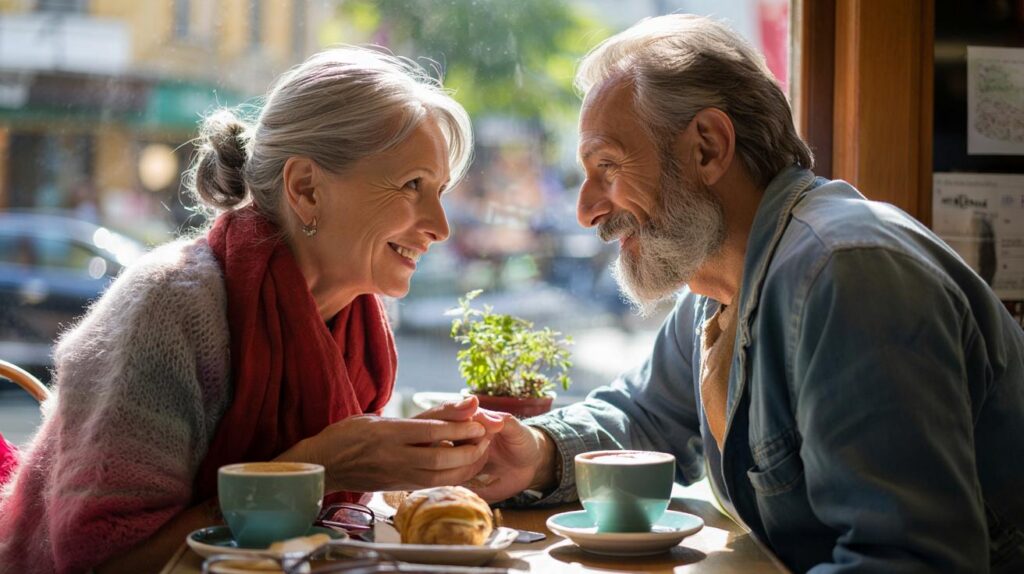
Dating after 60 is rarely about fireworks. It’s about steadier sparks: the calm of being seen as you are, the relief of not auditioning, the quiet joy of a hand finding yours at the end of a long day. The question isn’t “can I still find love?” It’s “what does love look like when the performance ends?”
The café was nearly empty, save for the hiss of the espresso machine and the rustle of newspapers. A woman in a red scarf leaned in as her date spoke about allotments and jazz. No grand claims. No hard sell. He paused and said, with a shrug, that he snores and naps mid‑afternoon. She laughed, then confessed she prefers early dinners and hates loud restaurants. It felt ordinary and oddly electric.
Neither tried to be 30. The conversation had that soft, unhurried tempo you hear on a Sunday walk. And then she asked the question people dodge for years: “What do you need, really?”
Dating after 60: what really changes
By this age, you know your seasons. You’ve seen the weather of a life, and you carry that map without apology. The result is a kind of ease that younger romances often can’t reach. Age strips away the need to perform.
There’s also less noise. No looming pressure to prove you’re “relationship material”, no race to tick boxes. Children, careers, and the relentless climb have shifted, so the centre of gravity sits closer to the everyday. Two cups in the sink, two chairs pulled up to the same sunset. It’s smaller, and richer.
Honesty blooms in that quiet. People talk plainly about energy, money, distance, the rituals that make days workable. Not everything is negotiable. That clarity doesn’t kill romance. It feeds it. When you meet without disguises, attention feels deeper, not thinner.
Stories behind the shift
Margaret, 67, met Dev, 70, at a community choir in Kent. He wore a ridiculous hat in winter and remembered everyone’s verse. Their first date was a matinee and a walk by the river. She mentioned arthritis in her hands; he mentioned his pacemaker. Both looked out at the water for a bit. Then they shared a bag of crisps and laughed at nothing in particular.
They didn’t trade CVs of their pasts. A second date became a weekly ritual: choir, tea, the long amble home. The honesty arrived like weather—there, reliable, rarely dramatic. When they disagreed about holidays, they set a rule: “Two weeks near home, one week away.” It wasn’t grand compromise. It was practical love.
That kind of relationship works because expectations are realistic. Time feels more finite, so the games drop away. People are quicker to express boundaries, and quicker to forgive. The promise you make isn’t forever in abstract; it’s coffee tomorrow, a lift to the GP, a steady presence through winter. That promise holds real weight.
How to date with clarity and warmth after 60
Begin with a values conversation, not a sales pitch. Ask about rhythms: mornings or nights, travel or nesting, quiet or bustle. Build your dating profile like a front room—welcoming, lived‑in, specific. Mention the things you actually do: the bakery you love, the local walk, the book that sat on your bedside for months. Use recent photos, daylight, real smiles. It’s the strongest filter you’ll ever have.
Plan dates with gentle scaffolding. Daytime coffee, short gallery visits, a market stroll. Enough space to talk, enough pause to breathe. We’ve all had that moment when a date runs long and lovely, then fatigue sneaks in and turns sweet into scratchy. End while you’re still glad to be there. Let curiosity do the job of chemistry. Let kindness set the pace.
Common traps? Overexplaining past marriages, vague talk about money, editing your age or health to “keep options open”. Let’s be honest: nobody does that every day. Say what you can manage joyfully, and what you can’t. Boundaries are kinder when stated plainly. If online, protect yourself: meet in public, keep early chats on the platform, trust your gut if a story doesn’t stack up.
“I’m not auditioning anymore,” said Alan, 68. “I want companionship that feels like fresh air. If we both exhale, we’re good.”
- Start small: one hour, one coffee, one truth.
- Share a current joy before a past sorrow.
- Ask practical questions: timing, distance, pets, stairs.
- Keep a light plan to exit gracefully if needed.
- Name one deal‑maker, one deal‑breaker.
Why the honesty feels so good
In later life, the stakes change. You’re not building a brand. You’re building a day. That shifts love from performance to partnership. It’s less about being fascinating, more about being reliable. *The most romantic sentence at 65 might be: “Text me when you’re home.”*
There’s also a new kind of intimacy in dealing with the unglamorous stuff. Medications on the counter. Grandkids’ schedules. The way knees complain on stairs. When someone sees those truths and stays, affection deepens. It’s not settling. It’s choosing.
Honesty becomes the most attractive trait in the room. On dating apps, in walking groups, at the local cinema club, the people who say “this is me, and this is the life I want” stand out. They waste less time, attract better fits, and create calmer relationships. That calm is its own kind of thrill.
You can’t rewind the clock, and that’s the gift. The love you build now doesn’t have to prove youth or possibility. It has to hold. It has to breathe with your real days. That tends to make conversations cleaner and affection steadier. Partners become companions, fun becomes easier to reach, and the ordinary starts to glow.
| Key points | Details | Interest for reader |
|---|---|---|
| Self‑knowledge improves dating | Less performance, clearer boundaries, realistic expectations | Helps you filter faster and feel more at ease |
| Practical first dates work best | Daytime, short, specific activities that suit your energy | Makes meeting safer, lighter, and more enjoyable |
| Honesty attracts better matches | Recent photos, daily habits, direct talk about needs | Reduces disappointment and builds trust early |
FAQ :
- Where do people over 60 actually meet?Local clubs, walking groups, choirs, community classes, volunteering shifts, and niche dating apps for over‑50s. Familiar places make conversation easier.
- How soon should I talk about health or mobility?Early enough to be fair, late enough to be human. A simple heads‑up before meeting works: “I walk slowly, but I’m keen for a short stroll.” Clear, warm, no drama.
- Is online dating safe for my age group?Yes, with the usual care. Keep chats on the app at first, meet in public, tell a friend your plan, and never send money. Small steps, steady intuition.
- What about intimacy after a long gap?Go at the pace of trust. Talk about comfort, consent, and health without apology. Laughter helps. So does patience. Desire tends to return when pressure leaves.
- How do I honour a late partner and date again?By speaking their name when it matters and living fully in the present with someone new. Grief and love can share space, if you name them kindly.



Beautifully put. The idea that love after 60 is about “steadier sparks” really resonates. I’m 64 and the most romantic moments now are practical: a lift to the GP, a text when I’m home, remembering my dodgy knee. Age strips away performence, yes—but it also sharpens kindness. Thank you for giving language to that quieter, durable kind of affection.