
A crowded drawer is rarely just a drawer. It’s a quiet museum of half-finished plans, guilt-laced gifts, and old versions of you that no longer fit. **A lighter life starts with lighter shelves.**
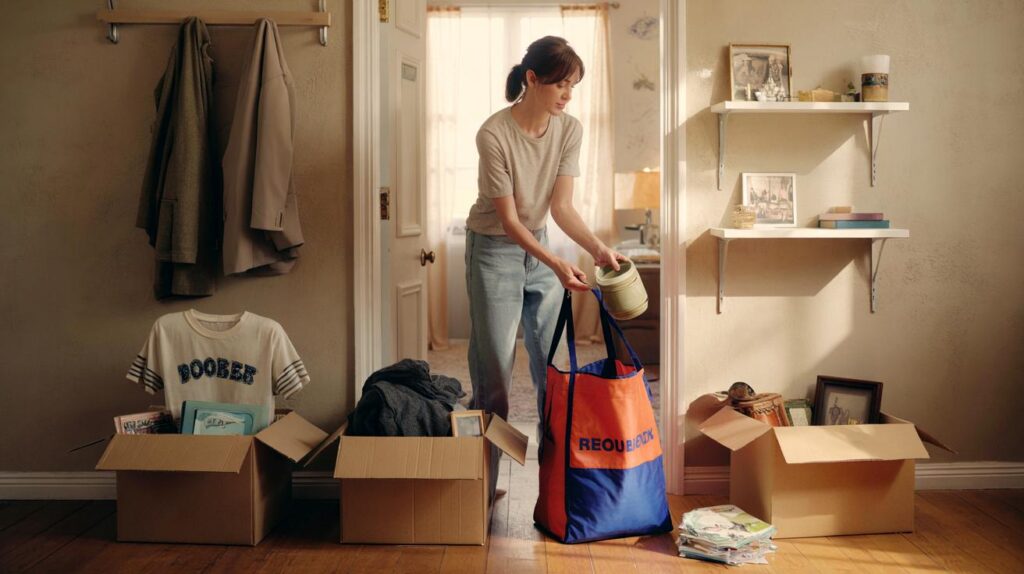
On a grey Tuesday, I watched a friend stand over three cardboard boxes in her small London flat: keep, donate, not sure. A faded gig tee, a chipped mug from an ex, a train ticket from a city she no longer visits. Her hands trembled, then steadied, as if she were tuning a radio to find her future voice. This isn’t about perfection; it’s about breathing again. She dropped the mug into the donate box and laughed at the hollow clink, as if a spell had snapped. The room went quiet.
Why letting go soothes the mind
Objects aren’t neutral; they hum with memory, obligation, and little whispers of “one day”. Every untouched craft kit and almost-new jacket is a tiny tab left open in your head. We’ve all had that moment when a cupboard door becomes a confession booth.
When Leila, 34, finally said goodbye to her father’s old coats after three winters, she cried, then slept better than she had in months. She didn’t lose him; she lost the heavy pause she felt each time she walked past the hallway rail. Research from UCLA has linked messy, overfull homes with higher stress hormones in parents, which feels painfully right.
Your brain clings to possessions thanks to the endowment effect: once you own it, it seems more valuable. There’s also the story effect: things become proof that you were an artist, a runner, a perfectly attentive friend. **Objects are stories, not obligations.** When the story no longer serves you, keeping the prop won’t bring the plot back.
How to let go without regret
Try the **Outbox Ritual**. Place a sturdy bag or box by the front door and feed it daily with items you’re ready to release. The rule is simple: if you wouldn’t buy it again tomorrow at full price, it goes in the outbox.
Guilt is the stickiest glue. Gifts, money spent, “but it still works” — all strong tethers. Let’s be honest: nobody does this every day. Start with low-sentiment areas like duplicates and supplies, then graduate to the trickier relics of your old self. Relief is a muscle; you build it.
Anchor your decisions with three questions: Did I use this in the last year? Does it fit my life now, not my fantasy life? Would future-me thank me for storing it? Then give yourself a soft landing for tough calls.
“Keep the memory, not the museum. Photograph, honour, release.” — a grief counsellor told me after a house clearance
- Take a photo before you donate sentimental items, then write one line about the moment that matters.
- Create a shoebox-sized “treasure box” and cap it at that. When it’s full, you edit, not expand.
- Favour charity shops and community give groups; letting go feels kinder when it helps someone else.
What a lighter life looks like
When clutter leaves, time comes back. Mornings move; you find your keys, your phone, your sense of humour. Your space stops nagging you with half-promises and starts backing your next chapter like a loyal friend. You cook because the counter is clear. You read because the chair is free.
There’s a keen shift in self-story. The tennis racquet you haven’t used in six years no longer gets to tell you that you’re failing. The spare duvet that hogged your top shelf isn’t the ceiling on spontaneous weekends away. You trade the weight of “what if” for the air of “what now”.
Maybe you keep the postcard your sister sent from Naples and let the bulky frame go. Maybe you sell the gadget and buy a train ticket. Maybe you donate the jacket and meet the person who needs it more than you do. A lighter home won’t fix a heavy heart, but it gives it room to mend.
| Point clé | Détail | Intérêt pour le lecteur |
|---|---|---|
| Outbox Ritual | One bag by the door, filled a little each day | Reduces decision fatigue and makes progress visible |
| Buy-It-Again Test | Keep only what you’d pay full price for tomorrow | Cuts through nostalgia and sunk-cost guilt |
| Memory, Not Museum | Photo + one-line note; cap keepsakes to a shoebox | Honours emotions while freeing physical space |
FAQ :
- How do I let go of gifts without feeling rude?Thank the person and the moment, not the object. A donated gift still spreads the kindness you received.
- What about sentimental things from someone I’ve lost?Create a focused shrine: one box or one shelf. Photograph the rest, then pass items on with a small note about their story.
- Should I sell or donate?Sell higher-value items if you have bandwidth; donate the rest to keep momentum. Time saved is part of your profit.
- How long should a declutter session last?Set a 20-minute timer with one clear goal, like a single drawer. Stop while you still feel steady.
- How do I stop the clutter from coming back?One-in, one-out. Add a 24-hour pause before buying and a monthly outbox sweep for maintenance.



Loved the line “Objects are stories, not obligations.” The Outbox Ritual feels doable, and the Buy-It-Again test cut through my occasional guilt. Any tips for convincing a partner who’s more sentimental, without turning it into a tug‑of‑war?
I get the point, but this definitly risks turning grief into logistics. Are we sure photographing and donating isn’t just outsourcing the mess? Sometimes the “one-in, one-out” rule feels a bit rigid—life isn’t that tidy. Curious what the research really shows.