
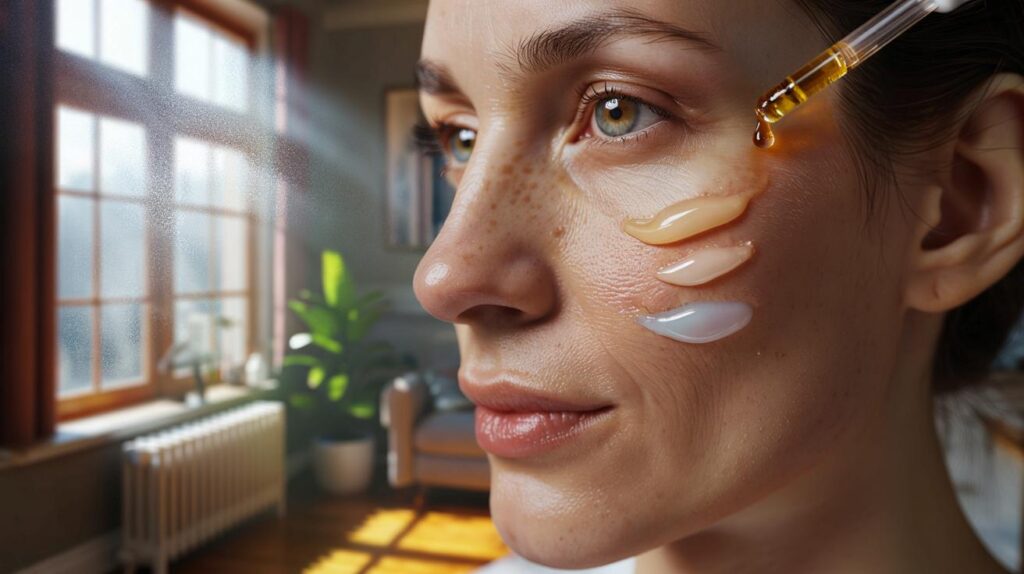
Every aisle looks the same now: sleek bottles, tiny promises, big words. You tap a cap, read “niacinamide,” then “peptides,” then “hyaluronic acid,” and wonder what any of it means when your face just feels tight by 4 p.m. The labels are loud; the skin is quiet. This is where the story gets real: ingredients either earn their keep, or they don’t.
It’s winter in a small London flat and the mirror is honest. The radiator’s been on for six days straight, the windows sweat at dawn, and my skin has decided to act like paper. I line up three serums—one cloudy, one silky, one that looks like water—and I try to remember what goes where. Downstairs, a neighbour hoovers. A bus sighs outside. I press two drops into my palm and wait to see if it makes a difference. The truth hides beneath the surface.
Niacinamide, peptides, and hyaluronic acid: what they actually do
Niacinamide (vitamin B3) is the reliable flatmate: tidies the place, fixes the draught, keeps the peace. It helps your skin make more ceramides, which means less water escaping, fewer dry patches, calmer redness. It can also nudge oil into a steadier rhythm and soften the look of pores and little lines. **Niacinamide isn’t a miracle; it’s a multitasker that quietly strengthens your barrier so everything else behaves.**
Peptides are messengers—tiny fragments that tell the skin, “Build here. Repair there.” Some are signal peptides linked to collagen support, some carry copper to where it’s needed, others try to relax expression lines. Results are subtle and take weeks, not nights. Picture them like coaches on the sidelines rather than star strikers. **Peptides are tiny messengers, not magic—and that’s okay.**
Hyaluronic acid is a humectant, which means “thirsty sponge.” It pulls water into the skin so the surface looks springier and feels bouncier. High molecular weight sits on top for soothing slip; lower weights travel a little deeper for plumpness you can actually see in the mirror. It doesn’t moisturise by itself; it gathers water and needs a cream on top to lock the party in. **Hyaluronic acid is a sponge, not a moisturiser.**
What this looks like in real life
Here’s a day you might recognise. Your morning face has that rumpled pillow crease, your cheeks feel squeaky after the shower, and the office heating is set to Sahara. A few drops of hyaluronic acid on damp skin soften the tightness fast, niacinamide keeps the calm through emails and coffee, peptides stroll in as the patient long-game. End of day, you look less crumpled than you feel. Small wins are still wins.
I met Mira, 32, who’d bounced between actives for months and mostly felt irritated. We pared it back: a 2–5% niacinamide serum morning, a light peptide cream at night, and hyaluronic acid under both. In four weeks she said the afternoon shine settled, the redness around her nose wasn’t screaming, and her makeup didn’t cling. No fireworks. Just steady, boring progress—the kind that sticks.
There’s logic under the glow. Niacinamide’s barrier boost reduces transepidermal water loss, so hyaluronic acid has more to hold. Peptides prefer a stable, non-stressed environment; a soothed barrier means their messages land. Layering is less about stacking trendy words and more about creating conditions where each one can do its job. The glow is the side effect of good engineering.
How to layer them so they actually work
Think “watery to creamy.” After cleansing, leave your face slightly damp. Press in 2–4 drops of hyaluronic acid, wait 30–60 seconds. Follow with niacinamide (2–5% is the sweet spot), then your peptide serum or cream. Seal with moisturiser, finish with SPF 30+ in the morning. At night, the same minus sunscreen. Give each layer a breath; skin likes unhurried hands.
Common snags happen quietly. Using 10–15% niacinamide when your skin is already touchy can trigger flushing; start lower and let your barrier catch up. Hyaluronic acid in bone-dry rooms can pull water from you instead of the air—mist or apply on damp skin, then trap it with cream. Mixing copper peptides with a strong, low-pH vitamin C can be a chemistry squabble; separate them by routine or time of day. We’ve all had that moment when something new makes things worse before it gets better. Let your face set the pace.
Let’s talk expectations and patience. Let’s be honest: nobody really does that every single day. Consistency lives in “most days,” and that’s enough for results you can feel.
“Your barrier is your bank account,” a dermatologist told me. “Niacinamide makes consistent deposits, hyaluronic acid keeps the cash flowing, and peptides are your long-term investments.”
- Apply humectants on damp skin, then seal.
- Keep niacinamide in the 2–5% range to start.
- Peptides need time—think 8–12 weeks.
- When in doubt, simplify the stack.
- SPF keeps your progress from evaporating.
The bigger picture: skin that behaves, not skin that performs
The secret most people find later than they’d like is that calm skin looks like “good” skin. Niacinamide does the unsexy work of resilience. Hyaluronic acid gives you that immediate sigh-of-relief bounce. Peptides hum in the background, slowly tightening the scaffolding. It’s less a fireworks finale and more a well-rehearsed orchestra playing on time. Share what actually changed your face, not just what made a satisfying bathroom shelf. Someone needs the boring recipe that works today.
| Point clé | Détail | Intérêt pour le lecteur |
|---|---|---|
| Niacinamide | Strengthens barrier, balances oil, evens tone at 2–5% | Calmer skin, fewer flare-ups, makeup sits better |
| Peptides | Signal skin to support collagen and repair over weeks | Gradual smoothing without harsh actives |
| Hyaluronic acid | Draws water in; works best on damp skin then sealed | Fast bounce, softer fine lines, less tightness |
FAQ :
- Can I use niacinamide, peptides, and hyaluronic acid together?Yes. Apply hyaluronic acid first on damp skin, then niacinamide, then peptides, followed by moisturiser and SPF in the morning.
- What percentage of niacinamide should I start with?Begin at 2–5%. Higher strengths can be useful for some, but start low and see how your skin responds.
- Do peptides really work or is it hype?They can help, but they’re slow and subtle. Expect smoother texture and a gentle softening of lines over 8–12 weeks, not overnight changes.
- Why does hyaluronic acid sometimes make my skin feel tighter?Used on dry skin in a dry room, it can pull water from you. Apply to damp skin and seal with a cream to keep the moisture in.
- Can I pair copper peptides with vitamin C?Many do without trouble. If your vitamin C is very acidic or your skin is reactive, alternate them by time of day to keep the peace.



Loved the “barrier = bank account” analogy—finally makes sense. The damp-skin HA tip plus 2–5% niacinamide actually fixed my 4 p.m. tightness after a week 🙂 Bookmarked for “most days” consistency!
Appreciate the breakdown, but I’m still not conviced on peptides. Any peer‑reviewed RCTs on specific signal peptides (beyond copper) showing clinically meaningful changes at cosmetic concentrations? Marketing claims are noisy; would love real reasearch links.