
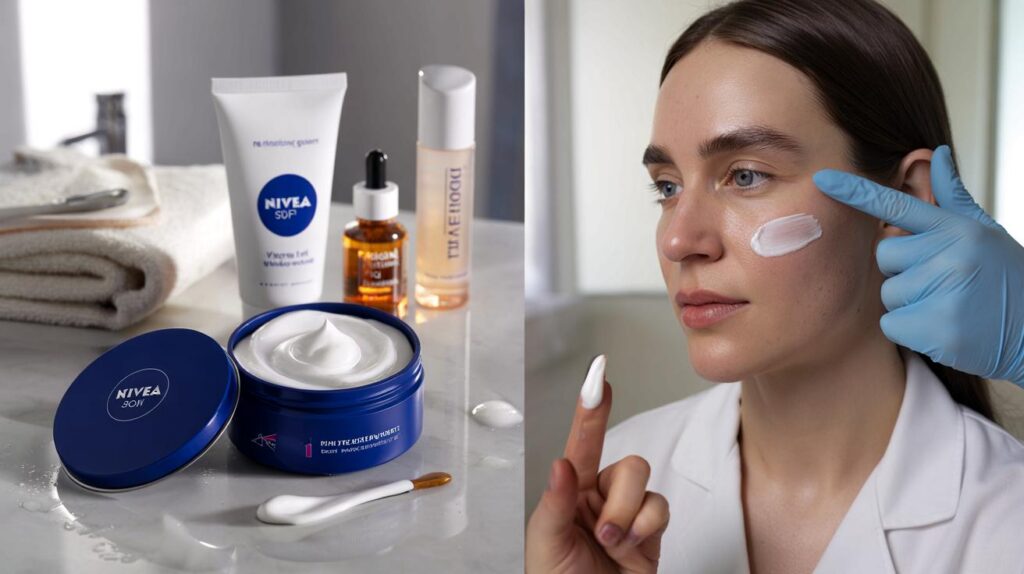
You know the blue tin in your mum’s cupboard. People swear by it. But what does skin science actually say?
For more than a century, Nivea’s blue cream has sat on British bathroom shelves, loved for its price and its promise. The brand shifts 3.6 million jars a year globally, and its softer sibling sells about 400 jars an hour. That history matters. So does the big question: where does it genuinely help, and where does it fall short?
A century-old icon with modern questions
Launched in 1911, the classic blue cream built its reputation on simple, rich moisturising. Dermatologists still credit its formula with strong hydration. Glycerin helps pull water into the skin. Shea butter cushions dry patches and slows water loss. The thick texture shields against wind, cold and friction. That’s why elbows, hands and cheeks react well in winter.
The jar’s appeal also lives in its price and scent. Familiarity drives trust. Yet skin has needs that change with age, climate and hormones. One cream rarely covers every base.
Great for cushioning dry, tight or wind-chapped skin. Not a fix for acne, dark marks or deep lines.
What dermatologists really rate
- Moisture retention: glycerin boosts hydration when applied to damp skin after cleansing.
- Barrier support: the rich texture reduces water loss, especially on hands, feet and cheeks.
- Cold-weather comfort: works as a protective top layer on dry patches during autumn and winter.
- Sensitive-friendly concept: many people tolerate it well, including those with reactive skin.
- Budget access: frequent high-street pricing under £5 for small tins keeps it within reach.
Where it fits in your routine
Dermatologists use it as a moisturiser and shield, not as a corrective treatment. Pair it with targeted actives for specific concerns.
Think of it as a coat for your skin: actives are your tailoring; this is the weatherproof layer on top.
What it doesn’t do—and what to use instead
Blue cream hydrates and softens. It doesn’t treat acne, melasma, or deep wrinkles. For spots, choose formulas with salicylic acid or adapalene. For pigmentation, consider azelaic acid or vitamin C. For lines and texture, retinoids remain the gold standard, introduced gradually. Always couple these with daily sunscreen to protect gains and prevent new damage.
Oily or blemish-prone skin can still use the blue cream sparingly. Target the driest patches, not the whole face. Avoid thick layers across the T‑zone to reduce extra shine.
Nivea blue or Nivea Soft: which suits you?
| Product | Texture | Best for | How to use |
|---|---|---|---|
| Nivea blue cream | Rich, occlusive | Very dry patches, winter, wind exposure | Sparingly on rough zones, over serums, at night |
| Nivea Soft | Lighter, faster-absorbing | Daily face and body use, combination or oilier skin | All over after cleansing; top up dry areas if needed |
Three groups who should be cautious
Fragrance-sensitive readers: the classic blue cream has a recognisable scent. Patch test along the jawline or behind the ear for 48 hours before wider use. If you react to perfume, look for fragrance-free moisturisers.
Very acne-prone skin: keep it off active breakouts. Layer it only on flaky edges caused by retinoids or cold weather.
Rosacea-prone skin: heat and friction aggravate redness. Apply the thinnest layer and avoid vigorous rubbing. Prioritise calming serums first.
Patch test first. Apply small, thin layers. Treat the driest areas, not every inch of skin.
Answers to questions you actually ask
- Can sensitive skin use it? Many do well, thanks to the hydrating base. If you react to fragrance, perform a 48‑hour patch test first.
- Daily face use—yes or no? Yes on dry zones; for shiny foreheads or noses, keep it minimal and use a lighter moisturiser elsewhere.
- Does it fix wrinkles, spots or acne? No. Pair it with targeted serums and use SPF daily to protect results.
- Children’s skin? Fine for older kids’ rough patches. For babies, reach for products formulated for infant skin.
- What’s the difference from Soft? Blue cream is denser for barrier support. Soft is lighter for quick, everyday hydration.
How to apply for maximum payoff
Cleanse with lukewarm water. Leave skin slightly damp. Warm a pea-sized amount between fingertips. Press onto dry zones. Add more only if the skin still feels tight after two minutes. During the day, lock it in with sunscreen. At night, layer it last to seal earlier steps.
Value, numbers and where it earns its keep
Global demand remains robust, with 3.6 million jars moving each year and the softer variant moving hundreds per hour. In UK chemists and supermarkets, small tins often sit under £5. A pea-sized amount goes a long way, which brings the weekly cost down to pennies when used on targeted patches rather than the whole face.
Where it shines: cracked knuckles from cold commutes, tight cheeks after hill walks, windburn risk at the seaside, foot care between pedicures, and post-retinoid flaking at the jawline.
Smart pairings that upgrade results
For dehydration lines, use a hyaluronic acid serum first, then a thin layer of blue cream to reduce water loss. For uneven tone, apply vitamin C in the morning and a retinoid at night, keeping the blue cream as a buffer on sting-prone spots. For redness, azelaic acid can calm the look of flushing; finish with a light sweep of blue cream to prevent dryness. Always protect with SPF 30 or higher, even in winter.
A 48‑hour patch test you can actually follow
- Day 1 evening: dab a lentil-sized amount behind the ear and along the jawline.
- Day 2: observe for itch, redness or stinging. Reapply the same amount.
- Day 3 morning: if the area stays calm, proceed to targeted use on dry patches.
If you need a simple, low-cost hydrator that cushions dryness and shields skin from the cold, the blue jar still earns a place. Treat it like a tool: reliable for moisture, neutral for complex concerns, and best used alongside the right actives for your goals.
Those chasing quicker wins can run a three-step plan for 30 days: AM vitamin C plus sunscreen; PM gentle retinoid; blue cream only on areas that feel rough or tight. Track changes with weekly photos in similar light. If shine rises in week two, cut the blue cream to just cheeks and hands, and switch to the lighter Soft version for the T‑zone.



If it’s mostly an occlusive moisturiser, why buy this over plain petrolatum or Aquaphor? Is the glycerin + shea combo actually more effective, or just nicer‑feeling? Would love any head‑to‑head data, especialy for winter hands vs cheeks.
Tried the “pea-sized, on damp skin” tip and it definitley reduced that tight, wintry cheek feeling. Also appreciated the 48‑hour patch test—frangrance can sneak up on me. Thanks for calling out that it’s not for acne; saved me from false hope.