
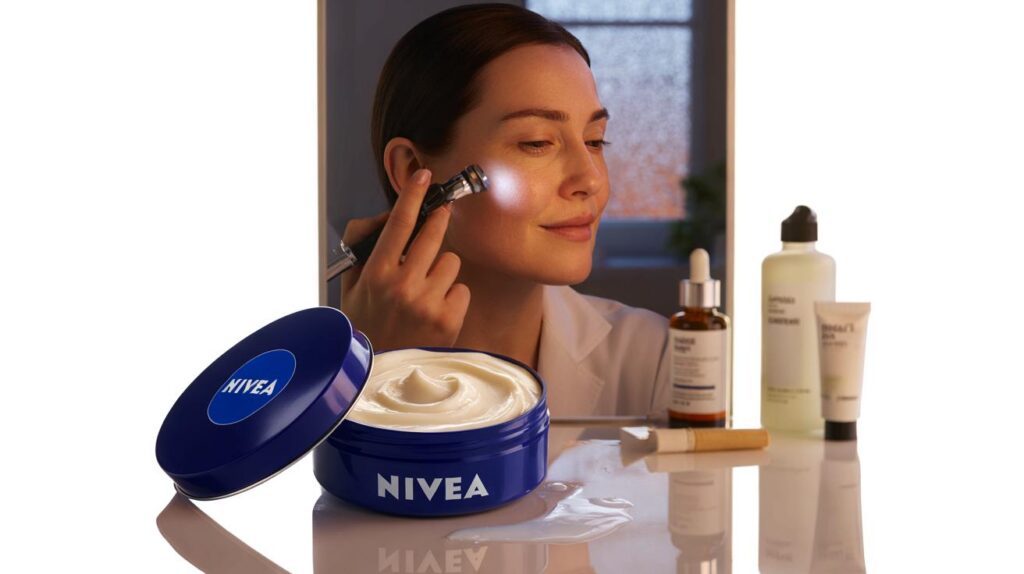
Your gran swore by the blue tin. Your gym bag likely hides one. Does the century-old classic still earn its spot?
For generations, the little blue jar has promised soft, comforted skin at a small price. A consultant dermatologist weighs what it does well, where it falls short, and how you can use it smartly without sidelining targeted treatments.
What dermatologists actually say
Nivea’s heritage cream launched in 1911 and still moves at pace, with estimates equating to hundreds of jars sold every hour. Dermatologists point to simple reasons: it hydrates, softens, and shields skin from water loss. The formula contains known moisturisers such as glycerin and shea butter. Together, they draw water into the skin and create a protective film that slows evaporation, which helps rough, wind-chapped or over-washed areas feel comfortable again.
That makes it suitable for many skin types, including sensitive skin that tolerates fragrance. Its recognisable scent signals perfume, so people with very reactive skin may prefer to patch-test first or limit use to the body.
Great for moisture and barrier support. Not a treatment for acne, pigmentation or deep wrinkles.
Moisture and barrier support
Think of the blue cream as a seal. Glycerin brings in water. Rich emollients hold it there. This helps rebuild the skin’s barrier after cold weather, hot showers, frequent handwashing, or friction from clothing and masks. The texture sits on the surface longer than a gel cream, which many people like overnight or on elbows, hands and shins.
Who should use it, and where
- Very dry patches: apply a pea-sized amount to elbows, knees, knuckles, heels and chapped lips edges.
- Face in winter: smooth a thin layer over cheeks and around the nose after your serum at night.
- Oily or blemish-prone skin: keep it for dry zones only; avoid heavy layers on the T‑zone.
- Sensitive skin: patch-test behind the ear for 48 hours, especially if you react to fragrance.
- Children: fine for older kids’ dry spots; babies benefit from products designed for infant skin.
Where it falls short
Dermatologists agree on limits. A classic moisturiser will not target dark spots, persistent acne, or pronounced lines. Those concerns need actives in leave-on products used consistently.
Use it as the finisher that locks in targeted skincare, not as a substitute for targeted skincare.
Build a simple routine around it
Pair the blue cream with focused treatments so each step has a job. Keep layers light to avoid pilling and congestion.
- Morning: gentle cleanse, antioxidant serum (for example vitamin C or niacinamide), lightweight sunscreen, then a whisper of blue cream on dry areas if you feel tight.
- Evening: cleanse, targeted serum (retinoid for lines, azelaic or niacinamide for tone, salicylic acid for blemishes on breakout-prone zones), then blue cream as a sealing layer over the driest parts.
If your skin gets greasy midday, swap the blue jar for a lighter moisturiser on the face and keep the blue cream for hands and body.
Blue cream vs Nivea Soft: which should you reach for?
| Product | Texture | Absorption | Best use | Skin types |
|---|---|---|---|---|
| Nivea blue cream | Rich, occlusive | Slow, forms a protective film | Night-time, winter, dry patches, hands/heels | Normal to very dry; use sparingly on oily areas |
| Nivea Soft | Lighter cream | Faster, fresher feel | Daytime, humid weather, face under makeup | Normal to combination; suits oilier skin better |
The numbers and why they matter
The blue tin’s reach is vast, with annual sales counted in the millions and hourly sales reported in the hundreds. That scale reflects a simple proposition: a familiar scent, a soothing texture and a price that starts around a couple of pounds. Mass availability lowers the barrier to basic skincare, especially when heating bills and prescription costs bite. It is an accessible safety net for dry skin days.
How to get the most from the blue jar
Timing and technique
- Apply on slightly damp skin within three minutes of washing to trap water.
- Warm a small amount between fingers and press on, rather than rubbing back and forth.
- Layer thinly on the face; a little goes a long way and reduces the chance of clogged pores.
- Pair with daily SPF. Hydration does not replace UV protection.
Common pitfalls to avoid
- Using it as the only step for acne or dark spots. Add evidence-led actives for results.
- Smothering the T‑zone if you shine easily. Target the cheeks and sides of the face instead.
- Ignoring fragrance sensitivity. If redness or stinging appears, stop and try a fragrance-free option.
FAQ you actually ask
- Is it safe for sensitive skin? Yes for many, but patch-test first if you react to perfume.
- Can I use it daily on my face? Yes on dry areas; if you’re oily, keep it to cheeks or use it at night only.
- Will it fix wrinkles or acne? No. It hydrates. Use retinoids, AHAs/BHAs or azelaic acid alongside, based on your concern.
- Is it good for children? Suitable for older kids’ dry patches; choose baby-specific formulas for infants.
- Why choose Soft instead? It absorbs quicker and feels lighter, which many prefer under makeup or in warm weather.
Extra pointers dermatologists share
If your skin is angry and tight, think repair before treatment. Press on the blue cream after cleansing for a week, pause actives, and rebuild tolerance slowly. Once comfort returns, phase in your serum every other night. This rhythm helps avoid the boom-and-bust cycle of irritation and overcompensation.
Budget matters. You can pair the blue jar with a low-cost niacinamide serum for oil control or a retinol starter twice weekly for lines, then adjust as your skin settles. Keep a small tin in your bag for hand care after sanitiser use; apply to cuticles at bedtime to reduce splits. Small, consistent habits compound faster than sporadic splurges.



If it’s fragranced, how is it really “fine” for sensitive skin? Patch-test noted, but I’ve had stingy cheeks before. Any fragrance-free dupes that behave the same?
I keep a mini tin in my coat. After hand sanitizer, a pea-sized dab saves my knuckles. Not magic for acne, but defnitely a barrier booster for winter walks.