
A new push to move everyday documents onto phones arrives with fanfare, doubts, and promises of fewer forms and queues too.
Ministers have opened the gate with a digital veterans card, signalling a broader plan to place key government IDs in a secure wallet on your handset by the end of 2027. Supporters promise convenience and faster checks. Critics warn of mission creep, data risks and a step towards compulsion by stealth.
What went live today
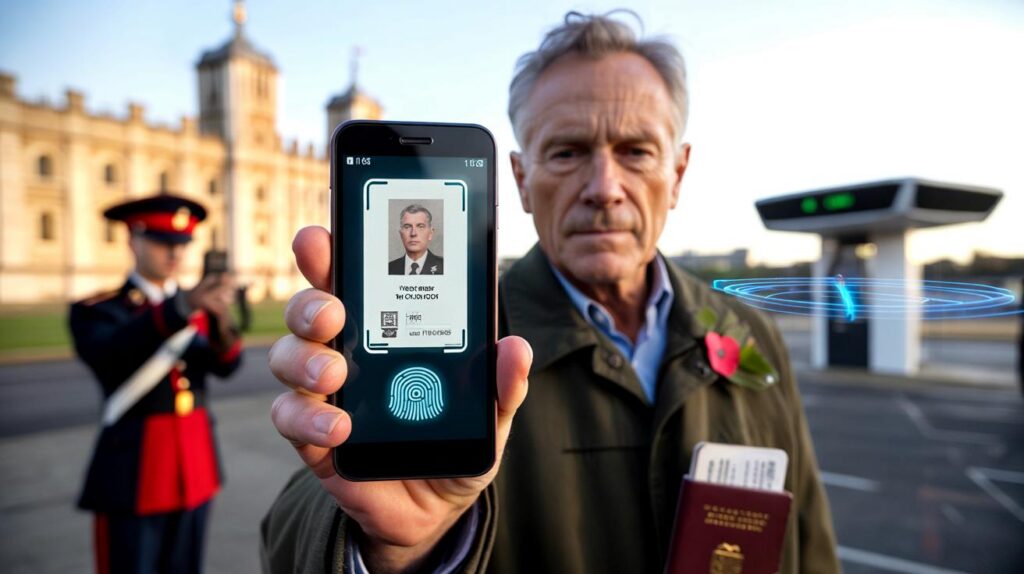
From this morning, former members of the armed services can download a digital Veteran’s ID to their phone. The launch took place at the Tower of London, where Yeoman Warders brandished shiny screens instead of plastic cards, underscoring the shift from paper to pixels.
The pilot matters because it is the first real-world test of a broader programme. The Government Digital Service, housed in the Department for Science, Innovation and Technology, is building a common way to hold official credentials in a wallet-style app. The same approach could apply to passports, driving licences and National Insurance details.
Target set: multiple government IDs available on your phone by the end of 2027, with a single wallet-like experience.
How the system is meant to work
Officials say the architecture uses a “federated” model rather than a single giant database. Your core records stay with the department that already holds them. For veterans, that is the Ministry of Defence. For driving licences, it is the DVLA; for passports, HM Passport Office; for National Insurance, the Department for Work and Pensions.
You add an ID by verifying yourself against the original record, then store a digital credential on your phone. Access requires the phone’s security—Face ID, fingerprint, or a PIN. The government is also testing tap-to-prove features so you can show your age or identity contactlessly at tills or desks without handing over a full document.
Key claim: data remains with the original department; the wallet only proves facts about you when you consent.
What this could change for you
Proponents see fewer forms, fewer photocopies and fewer queues. Everyday friction could shrink across many points of life if the wallet lands as billed.
- Right to work checks: show a code or tap your phone instead of copying passports.
- House buying: share verified identity once, then reuse it across conveyancers and lenders.
- Travel: link a passport credential to smoother e-gate journeys and faster checks.
- Discounts and services: veterans could validate status for housing support, museum entry and retail deals.
- Age checks: confirm you are over 18 without exposing your address or full date of birth.
The politics behind the rollout
The plan arrives with baggage. Last month the prime minister touted mandatory digital ID in the context of curbing illegal immigration. That framing spooked parts of the Conservative and Reform bases, who bristled at the idea of compulsory checks.
The minister overseeing the programme, Ian Murray, says compulsion applies only to right to work verification—because proof of permission to work already sits in law. He argues the rest should win people over on convenience, not force.
Government line: only right to work will be compulsory; other IDs remain opt-in for citizens.
Concerns from civil liberties voices
Opponents warn that a digital wallet creates the infrastructure for wider mandates later. They cite risks from ransomware gangs, foreign states and common crooks. They also note that the government’s OneLogin sign-in layer could become a strategic target if security falters.
Ministers answer that the wallet reduces oversharing—showing only what is needed—and that departments keep core records, limiting the blast radius of any breach.
Security, privacy and real-world risks
Technically, the wallet borrows from technology already used for payment cards on phones. That brings mature protections, but identity adds different stakes. Attackers chase data that can unlock bank accounts or credit lines. A successful phishing attack against an employer’s portal could still trick someone into sharing a code.
Smartphone loss also matters. If you lose your device, you will need a quick way to revoke credentials and reissue them. Expect remote wipe options, recovery via OneLogin, and strong device-level security to feature heavily.
What if your phone is lost, stolen or offline?
- Use your phone’s “find my” tools to lock or wipe it.
- Log in to your government account from another device and revoke wallet credentials.
- Re-enrol on a new phone with biometric checks and liveness tests.
- For offline moments, the wallet aims to hold time-limited tokens that work without signal for simple checks like age.
Timeline and what comes next
Officials point to a phased rollout across services between now and 2027. Dates may shift, but the sequencing looks like this:
| Phase | What to expect | When |
|---|---|---|
| Veterans card live | First digital credential available on phones; feedback on performance and usability | Now |
| Wider pilots | Age checks and right to work wallet passes tested with employers and retailers | 2025 |
| Core IDs expand | Driving licence and passport credentials added for more users | 2026 |
| Broad availability | Most major government IDs usable via the wallet across public services | By end of 2027 |
How to get ready
When your eligibility opens, the process should feel familiar to anyone who has added a payment card to a phone. You will need a recent smartphone, the official wallet app, and a stable internet connection for the initial set-up.
Employers and service providers will see a machine-verifiable confirmation rather than a photo of your passport. That cut in manual handling should reduce fraud linked to tampered scans and dodgy photocopies.
What other countries can teach the UK
India’s Aadhaar shows the power—and the pitfalls—of digital identity at scale. Fast verification can unlock welfare quickly and cut duplication. Yet centralised checks have raised privacy rows and pushed authorities to tighten safeguards. Estonia, which uses a strong digital ID for public and private services, shows the gains when standards, privacy rules and user design line up.
The UK’s federated approach aims to blend convenience with departmental control. Success depends on security practice, clear laws on data use, ruthless simplicity for users, and reliable offline pathways for those with poor connectivity.
What to watch in the months ahead
Look for practical wins: quicker hiring, cleaner age checks and fewer forms in property chains. Track the accuracy of facial matching, error rates in liveness checks, and the ease of recovery after phone loss. Watch the legislative guardrails: limits on compelled use, penalties for misuse of data, and independent oversight with teeth.
For households, the calculation is simple: does this save time and reduce hassle without surrendering too much control? For businesses, the prize is lower admin and sharper compliance. For government, the test will be trust—earned by transparent metrics, prompt incident reporting and real choice beyond the single mandatory use case.
Bottom line for users: convenience rises when you share less data more precisely—and retract it just as easily.
Extra context and practical tips
Think about edge cases. Shared devices complicate consent. Older phones may not support secure elements or modern biometrics. People without smartphones need alternatives—postal routes, counters and plastic cards must remain. If you travel, keep a physical passport: airlines and border forces still require it, even if a digital pass speeds checks.
Run your own risk check. If you use the wallet for right to work, plan how you will revoke access, store recovery codes, and handle a device switch. If you are an employer, test your onboarding flow with both digital and paper routes so candidates are not blocked by tech. The gains will show up when the system trims duplication, prevents oversharing, and makes verification quick, quiet and boring—exactly where security often works best.



As a vet, this could finally end the paperwork carousel. If the wallet really uses a federated model and I can revoke creds remotely, I’m in. Please publish uptime, breach reports, and recovery SLAs—transparency will definately help trust.
Mission creep alert. Today it’s optional; tomorow it’s “show me your phone” to buy paint. Who audits OneLogin? Where’s the legal firewall against compelled use beyond right-to-work? Spell it out in law, with penalties, not just ministerial assurances.