
Your pocket could soon hold your life on screen, as a quiet rollout starts with ex-service personnel today across the UK.
A digital veterans card goes live, marking the first public move in a sweeping plan to put official documents on your phone by 2027. Ministers pitch it as convenience and control for citizens. Critics see a risk-laden path to compulsion. The stakes run far beyond one card.
What launches today
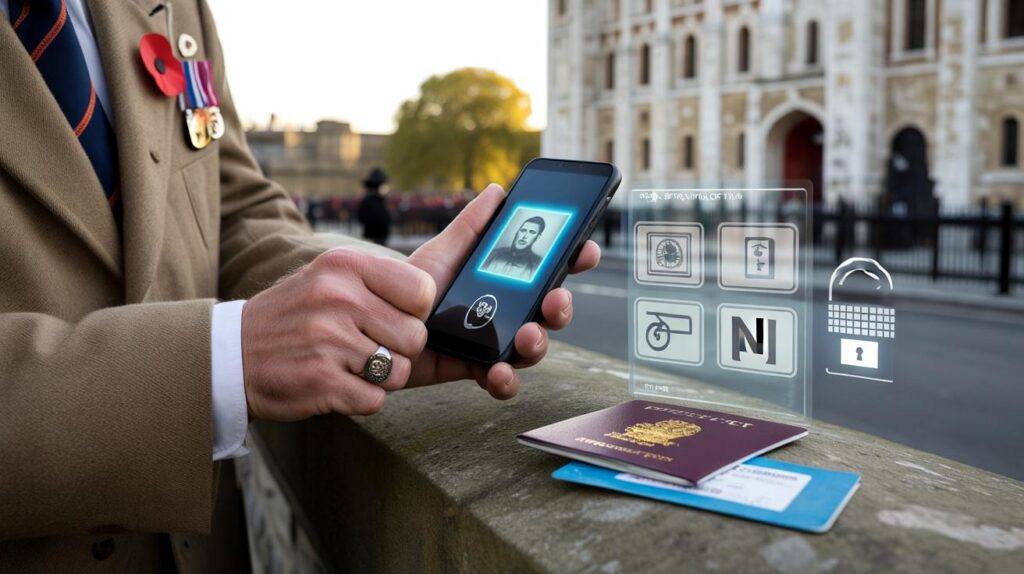
From this morning, former members of the armed forces can download a digital Veterans ID to their smartphones. The card is designed to help prove service quickly and unlock support, from housing and mental health services to retail discounts and museum entry. The unveiling took place at the Tower of London, where Beefeaters tried the system and swapped jokes about cheaper lunch. Patchy signal caused a few delays, but most users got set up.
Today’s veterans card is the opening move in a plan to put major government IDs in a secure phone wallet by the end of 2027.
How the system is meant to work
The vision mirrors Apple and Google Wallets. Official IDs sit inside a government-backed wallet, protected by the phone’s own security — face scan, fingerprint or a PIN. The Government Digital Service is building the platform, using a “federated” model rather than a mega-database.
Under a federated design, the department that created a record keeps it. The wallet proves facts about you without pooling everything in one place.
Who keeps what
Each department remains the source of truth for its own records. That limits the blast radius if one system is attacked, and reduces the incentive for criminals to target a single vault.
| Document | Data holder | Status now | How you unlock |
|---|---|---|---|
| Veterans ID | Ministry of Defence | Available from today | Face, fingerprint or PIN |
| Driving licence | DVLA | Planned for wallet | Face, fingerprint or PIN |
| Passport | HM Passport Office | Planned for wallet | Face, fingerprint or PIN |
| National Insurance | Department for Work and Pensions | Planned for wallet | Face, fingerprint or PIN |
What it could change for you
The government wants weary paperwork to shrink. If the wallet works as advertised, common interactions could become quicker and less error-prone. Engineers are also exploring contactless “tap to prove” for basic checks, such as age at the till, without handing over full identity.
- Speeding up house purchases with fewer paper scans and e-signature delays.
- Faster border control by pairing a phone-held credential with a physical passport.
- Simple, privacy-preserving age checks in shops using tap-to-verify.
- Smoother right to work checks with no photocopying or manual record-keeping.
- Instant proof of veteran status to access services and discounts.
Only one use case is compulsory for now: digital right to work checks during hiring. Ministers say everything else remains voluntary.
Where compulsion begins — and where it doesn’t
Ministers have tied mandatory use to right to work checks, arguing that people already need to prove they can work in the UK. Employers would verify status digitally rather than collect copies of passports or utility bills. The Home Office gains a clearer view of employers that skip checks. Officials suggest the digital record for this check can be deleted after employment is confirmed.
Beyond that, the government insists participation will be optional. The wallet is pitched as a convenience tool, not a compulsory pass, with the promise that physical documents remain valid. The reality may evolve with future legislation, and that unsettles some MPs and privacy advocates.
Security, trust and the politics of control
Digital identity attracts a predictable question: who is in control? Supporters say the wallet gives power back to the user by letting them share only what is needed, when it is needed. A hiring manager could confirm work eligibility without seeing unrelated details. A shop could confirm you are over 18 without learning your address.
Opponents worry about drift. They fear a tool built for convenience could become a lever for mass checks, or a honey pot for cybercriminals. Concerns also focus on the government’s One Login sign-in system, which stitches services together. Critics argue any single sign-on creates strategic pressure points for ransomware and hostile states. Engineers counter that strong encryption, device-bound keys and departmental separation mitigate the worst risks.
Lessons from day one
Launch events highlighted two practical truths. First, network coverage matters; if your signal drops, setup can stall. Second, clear guidance helps; not everyone knows how to find or use a phone wallet. These are solvable issues, but they shape early public opinion.
Who stands to benefit first
Veterans get immediate utility. Around two million people in the UK have served, and many still rely on a patchwork of proof to access support. A digital credential removes friction, especially for those navigating housing, job changes or health services. Service charities see potential value if consent-led data flows can speed referrals and reduce repeated storytelling during stressful moments.
What remains unclear
Several practical questions will define public acceptance:
- What happens if your phone battery dies during a police or border check?
- How are older or budget phones supported, especially those without the latest biometrics?
- Will offline verification work securely in shops and on site at workplaces?
- How will errors be corrected when data held by one department is wrong?
- What appeals routes exist if an employer misuses a right to work result?
The timeline to 2027
The ambition is sweeping: a government wallet that hosts multiple IDs by the close of 2027. Departments will join in phases. The pattern is clear — start with low-risk, high-benefit credentials, lay the plumbing, and add more sensitive documents once the pipes hold under pressure.
If you are a veteran, how to get started
You will need a compatible smartphone and basic security switched on. Expect to sign in with the government’s One Login, confirm details against Ministry of Defence records, and protect your card with face or fingerprint unlock. Keep a physical backup card or document until services universally accept the wallet.
Why this matters beyond veterans
Digital identity changes the texture of daily life. Used well, it means sharing less data, not more. It means fewer forms, fewer scans, and fewer errors born of retyping your name and address yet again. Used badly, it could normalise casual checks and expand surveillance by stealth. The difference will sit in the default settings, the audit trails, the redress mechanisms — and whether opt-out remains genuine.
Convenience is the selling point. Safeguards, redress and real choice will decide whether people buy in.
Practical tips and risks to weigh
Before you place official documents on your phone, review your device hygiene. Set a strong passcode, turn on biometric unlock, and enable remote wipe. Back up your device and keep your operating system updated. Consider a second factor on your government sign-in to limit account takeover if your email is breached.
Think about real-world scenarios. Try an “offline day” to see where you would be stuck if your battery dies. Keep a physical ID in your bag for travel or formal checks. If you manage staff, rehearse a hiring flow using digital right to work so you know how to handle errors and refusals. If you are a carer for an older relative, plan for assisted access or stick with physical documents until support improves.
What to watch next
Three developments will show whether the programme is on track. First, pilots for tap-to-prove age should demonstrate privacy gains without slowing queues. Second, departmental onboarding to the wallet needs to land without major outages. Third, a transparent incident log and independent scrutiny will help settle nerves about cyber risk. If those pieces fall into place, many people will adopt the wallet by choice, long before any deadline arrives.



Love the federated model—share only what’s needed, when it’s needed. As a hiring manager, digital right-to-work could save hours and cut errors. Keep physical IDs valid and publish clear audit trails, and people will buy in. Fewer forms, fewer photocopies—yes please 🙂