
The headlines about pollinators feel distant until your garden falls quiet. Fewer bees on the lavender, fewer hoverflies over the lawn, fewer butterflies skipping the fence. You don’t need an estate or a grand plan to help—just a weekend, a few pots, and the ordinary corners where the sun hangs around.
I noticed it first thing, cup of tea warming my hands, when a single bumblebee banked hard into the catmint and stayed there as if landing on a soft sofa. A neighbour’s strimmer buzzed, someone opened a window and the smell of toast drifted out, and in that messy chorus the bee kept working. Later, a child from next door shouted “ladybird!” like it was treasure, and for a moment the whole street seemed to tilt towards the tiny life happening among the leaves. A friend had rolled out plastic grass last summer and regretted it by October. Then the garden answered.
From tidy beds to living larder: why small fixes work
Think of a garden not as decoration but as a larder with beds and bunks. Flowers are the meals, stems and hollow canes the rooms, and sunny bare soil a warm hallway. You don’t need to redesign everything or spend a fortune. Small patches change everything.
On a London balcony barely two metres wide, I watched a novice scatter a native wildflower mix into a single trough and water it with a chipped jug. By June, self-heal and cornflower were buzzing like a tiny airport queue, and syrphid hoverflies patrolled the air as if they’d been invited. One UK study has found that city gardens provide a huge share of urban nectar—more than half in some places—at a time when countryside wildflower meadows have shrunk dramatically since the 1930s.
Pollinators don’t need a show garden; they need continuity. Flowers that offer nectar and pollen from early spring to late autumn keep them flying, with refuge when wind and rain roll in. A few upright daisies for landing pads, some deep tubes for the long tongues, and leaf litter where the shy ones hide—this is the quiet architecture of a good garden.
Hands-on projects you can start this weekend
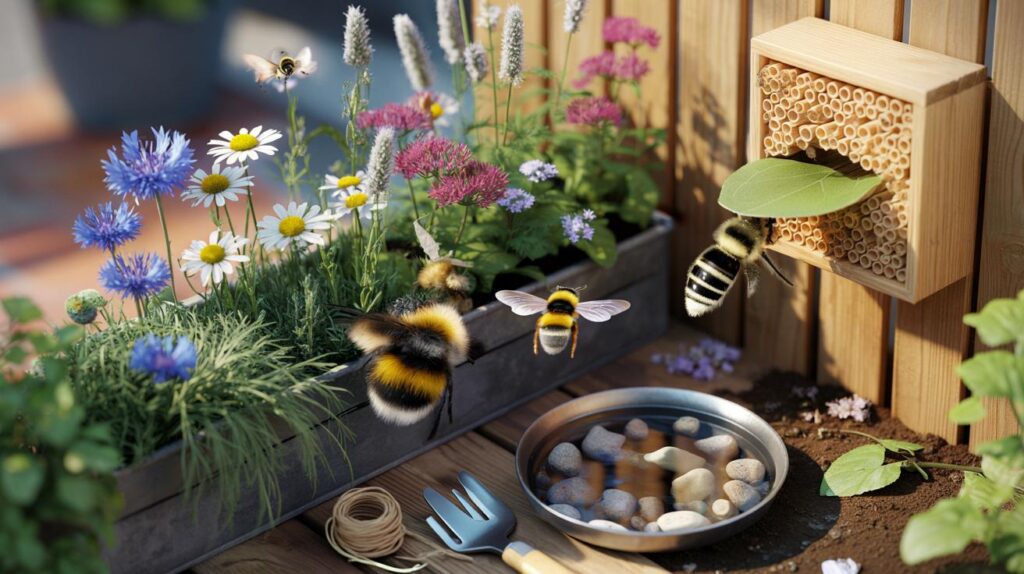
Build a container meadow and let it do the talking. Choose a 40–60 cm trough or wide pot, add peat-free compost mixed with a couple of handfuls of sharp sand, and rake a seed mix of native annuals and perennials across the surface. Firm lightly, water once, and wait; in spring or autumn, that’s enough. Aim for a staggered cast—cornflower and red clover, oxeye daisy, yarrow, knapweed—so something’s always open for breakfast.
Keep it low fuss. Don’t feed with high-nitrogen fertiliser or you’ll grow floppy stems and fewer flowers. Skip the daily soak; water when the top few centimetres are dry, then give a proper drink. We’ve all had that moment when the urge to tidy kicks in, but leave some seedheads standing for winter. Let’s be honest: nobody does that every day.
Give them water and places to stay. A shallow washing-up bowl sunk into the soil with pebbles for perches becomes a safe drinking spot, and a simple bee hotel—hollow bamboo canes cut flush in a weather-proof box—can host solitary bees through the year. Water is as crucial as flowers.
“The first time a leafcutter bee carried a perfect green disc into our bee hotel, my kids cheered like it was a football final,” says Janine, an allotment holder in Leeds. “It made our whole summer.”
- Starter plants: spring — lungwort, crocus, willow; summer — catmint, lavender, marjoram; autumn — ivy, sedum, Michaelmas daisy.
- Simple kit: peat-free compost, a trough or pots, wildflower seed, a hand fork, secateurs, bamboo canes, string, and a washing-up bowl.
- Placement tips: morning sun, shelter from hard wind, and a nearby patch of bare soil for mining bees.
Keep the buzz going, lightly
Think in seasons, not schedules. Swap sterile bedding plants for nectar-rich varieties, leave a corner a little wild, and mow less so clover can bloom between the blades. No pesticides, full stop.
Rotate colour through the year. Spring bulbs for early queens, long-flowering herbs for summer, ivy and asters to close the season like a warm blanket. Prune shrubs after they flower so you don’t cut off next year’s meals, and let some autumn leaves lie where they fall to shelter overwintering visitors.
This is your tiny act of repair. You’re not chasing perfection; you’re hosting a guest list. Five square metres is enough, a balcony even more so if it’s sunny, and a windowsill can be a runway. Tell a child what you planted and ask them what lands there next.
When the first bees find your garden again, the sound is small but it carries. You start noticing heavy pollen baskets, then the way hoverflies hold their place against the wind as if pinched by invisible fingers. Someone will ask why your grass is longer, and you’ll talk about clover and luck, and how colour gathers itself when you leave a little air in the plan. Share the seeds. Share the story. This is how streets change.
| Point clé | Détail | Intérêt pour le lecteur |
|---|---|---|
| — | Container meadow beats bare soil | Quick wins in small spaces with long bloom |
| — | Water + shelter are as vital as flowers | More visits, safer stops, better photos |
| — | Seasonal planting keeps food continuous | Pollinators return and stick around |
FAQ :
- How small can a pollinator-friendly project be?A single 40 cm pot with mixed flowers and a saucer of water will draw bees and hoverflies in weeks.
- Do I need native plants only?Mix mostly native species with a few nectar-rich garden staples like lavender and marjoram for steady bloom.
- Will a bee hotel attract wasps?You might see gentle solitary wasps, which are great pest controllers; site hotels in sun and keep holes 3–8 mm wide.
- What about a lawn?Raise your mower height and skip some cuts so clover and self-heal can flower between the grass.
- Is tap water okay for a wildlife dish?Yes. Refresh it every few days, add pebbles for safe landing, and keep it shallow so insects don’t drown.



I tried the washing-up bowl with pebbles last summer and saw bees queue like a tiny airport—so spot on! The seasonal plant list is gold. Any chance you could add a winter note about ivy pruning? Thanks for the no-pesticides nudge 🙂