
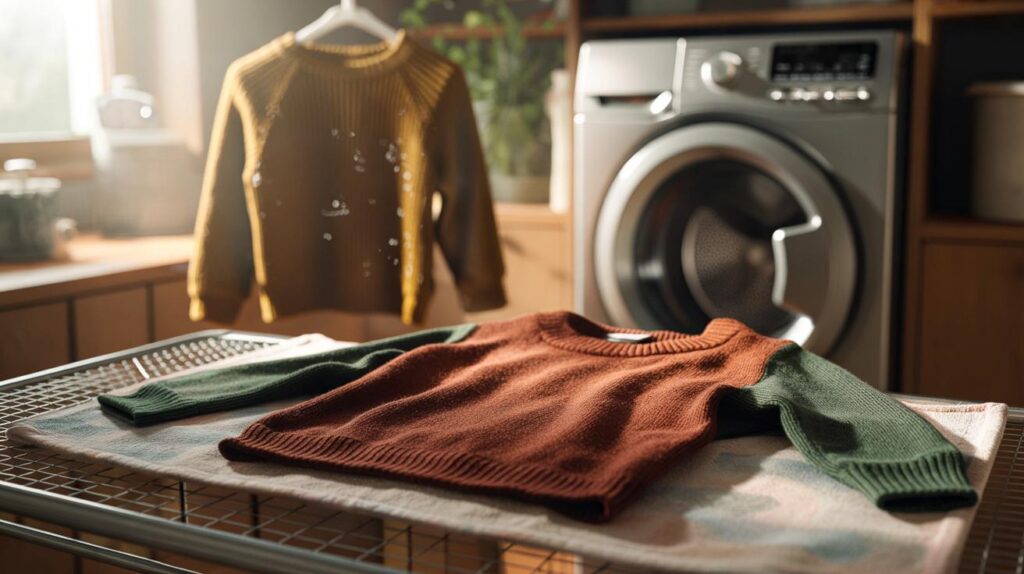
Autumn laundry returns with thicker knits and tighter budgets, and many households see favourite jumpers sag before winter bites.
Across the country, wardrobes fill with wool, cashmere and chunky blends as the heating stays off a little longer. Yet week after week, people pull limp sleeves from the drum, sigh at baggy necklines, and wonder what went wrong. The answer sits not in fancy detergents but in one stubborn habit that stretches knitwear out of shape.
The hidden culprit in your washday routine
Most misshapen jumpers share a single cause. They were hung up while heavy with water. A wet knit can hold a surprisingly high amount of moisture. Wool, for instance, can carry up to 30% of its weight in water without feeling soaked. Gravity then pulls on each loop of yarn, dragging the fabric down. Collars gape. Shoulders droop. Sleeves grow by several centimetres in one afternoon.
Never hang a wet knit. The weight of water stretches every loop, and the damage often becomes permanent.
Hangers speed up the problem by focusing stress on narrow contact points. A washing line does the same along the hem. Both actions distort the original pattern of the knit. Acrylic and cotton blends may snap back a little. Wool and cashmere rarely do. Heat from radiators adds another risk. It dries the outside quickly while the core stays damp, leaving waves, hard patches and an uneven finish.
Why fibre physics matters
Knits are not woven like shirts. They are a series of interlocking loops. Loops respond to tension and humidity. Water relaxes the fibre. Spin adds force. Hanging introduces constant downward pull. Combined, those three factors reshape the garment. High heat then sets the new, unwanted silhouette. That is why a soft approach at every stage protects the original size and drape.
How to wash knits without wrecking them
Small choices in the wash make a big difference. Think gentle, cool and short. Modern machines have precise settings. Use them. Aim to protect the yarn, not fight it.
- Choose a wool or delicate cycle at 20–30°C for most knits.
- Set the spin to 800–1,000 rpm to remove water without yanking loops out of shape.
- Turn jumpers inside out to reduce friction and pilling.
- Use a specialist wool detergent, or a teaspoon of mild shampoo for very soft fibres.
- Skip fabric softener. It relaxes fibres and flattens the natural loft.
- Wash similar colours together to avoid dye transfer on pale wool.
- Pop fine knits into a mesh bag to prevent snagging.
Gentle cycle, 20–30°C, 800–1,000 rpm. Protect the loops, and the shape follows.
Drying that preserves shape
Dry flat whenever you can. That single change prevents the downward pull that ruins fit. Here is a quick method that works in small homes as well as larger spaces.
Remove the jumper from the drum. Support it with two hands. Lay it on a clean towel. Smooth it to its original outline: shoulder to shoulder, cuff to cuff, hem straight. Roll the towel with the jumper inside to squeeze out more water. Unroll gently. Transfer the jumper to a drying rack with a second, dry towel. Keep everything flat and level. Turn the garment over halfway through. Most medium knits dry in 12–24 hours at room temperature with normal ventilation.
| Method | Shape | Time | Risk | Energy |
|---|---|---|---|---|
| Hanging on a hanger or line | Neckline and sleeves stretch; shoulders distort | Fast at edges, slow at core | Permanent lengthening, seam stress | Low |
| Drying flat on towel or mesh rack | Original proportions maintained | Moderate (12–24 hours) | Low if reshaped while damp | Low |
| Tumble drying (standard heat) | Can shrink or felt; surface roughens | Short | High for wool and cashmere | High per cycle |
Already stretched? Try a controlled reset
Soak the jumper in cool water with a cap of wool wash for 15 minutes. Support the weight as you lift it. Press, do not wring. Dry flat and coax it back to size with your hands, using light, even pressure. Measure a well-fitting jumper and match those numbers. Steam lightly from a short distance to help the fibres relax into place. If a wool knit has felted after high heat, recovery is unlikely. In that case, reshape while damp for comfort and repurpose if needed.
Everyday habits that keep knits looking new
Rotation reduces wear. Give wool a day to recover between outings. Air jumpers after each wear rather than rushing them back into the wash. Spot-clean cuffs and collars to extend intervals. Store folded, never on hangers. Keep drawers dry to protect fibres from mildew in damp homes.
- Fold along the body, not the shoulder, to prevent permanent creases.
- Use a sweater comb or fabric shaver to remove pills without tugging.
- Refresh with a cool steam or a gentle mist, then air for 30 minutes.
- Slip cedar blocks or lavender sachets into drawers to deter moths.
- Record chest width and body length once; use it as your reshaping guide after future washes.
Store folded, air between wears, and wash only when needed. Knits last longer when they rest.
Costs, climate and care: why this switch pays
Moving from hanging to flat-drying does not add effort once it becomes routine. It cuts replacements and keeps favourite pieces in service for years. Many households also reduce energy use. A washer’s gentle spin uses far less electricity than a full tumble-dry. A small dehumidifier near a drying rack can speed things up with modest power draw compared with a dryer, especially in winter flats.
Indoor drying needs airflow. Open a window for 10–15 minutes or run an extractor. That limits condensation and keeps fabrics fresh. Avoid radiators. Heat can bake the surface of wool while the inside stays damp. A mesh flat-drying rack over a bath works well in tighter spaces, and it stores away easily.
Fabric guide for smarter settings
Different fibres respond differently. Adjust your routine to the label, not the other way round.
- Wool and merino: cool wash, low spin, strict flat-dry. Reform while damp for clean edges.
- Cashmere: hand-wash or the gentlest cycle in a bag, no twist. Dry flat away from heat.
- Cotton knits: cool to warm wash, moderate spin. Dry flat to prevent drop at the hem.
- Acrylic blends: tolerant of machine cycles, but hanging wet can still stretch the knit.
- Silk blends: very delicate. Hand-wash cool and press in a towel before flat-drying.
Two quick extras that pay off
Blocking: measure and pin the jumper to a soft surface while damp to set crisp lines. This technique rescues hems and collars that wave after careless drying.
Label literacy: symbols matter. A hand-in-bucket icon signals hand-wash. A single bar under the tub means gentle. A crossed-out tumble symbol rules out the dryer. Following those cues prevents mistakes that no amount of reshaping can fix.
Risk to watch: colour bleed often strikes dark reds and indigos. Test with a white cloth on a damp area before washing with lighter pieces. Advantage to keep: natural wool resists odours better than synthetics, so it needs fewer washes. That saves time and preserves shape without sacrificing hygiene.
If you want to check your own routine, run a small simulation. Wash two similar jumpers on the same settings. Dry one flat on a towel and hang the other on a plastic hanger. Measure length and chest before and after. Most people see several centimetres of extra sleeve on the hung jumper within one drying cycle. That single side‑by‑side test persuades families to ditch the hanging habit for good.



Tried the 800–1,000 rpm + dry-flat combo today—sleeves stopped drooping 😅 The towel-roll trick is genius, and my cashmere finally kept its shape. Also appreciated the radiator warning; I was baking mine without realising. 🧶 Consider me converted.