
Windows close, radiators click on, and laundry lingers on racks. Then it happens: clean clothes waft a clammy, stale smell.
If your bedding smells tired minutes after the spin, the culprit hides inside the machine, not in your detergent. Cold programmes, short cycles and slow indoor drying let residues build up and feed odour-causing microbes. A simple monthly habit resets the balance and keeps sheets crisp without buying new products.
Why the smell builds after each wash
Modern machines clean well at low temperatures. People choose 20–40°C programmes to save energy and protect fabrics. These settings leave more residue behind. Detergent film clings to the drum, the door seal and the drawer. Lint sticks to damp patches. Skin cells and body oils ride in with every load. Together they form a biofilm. Bacteria and mould feed on it. The scent you notice is their waste.
Autumn makes this worse. Homes shut windows. Rooms grow humid. Sheets dry slowly on racks. Moist air lingers inside the machine after you shut the door. That moisture nourishes the very growth you want to stop. Your nose tells you the rest.
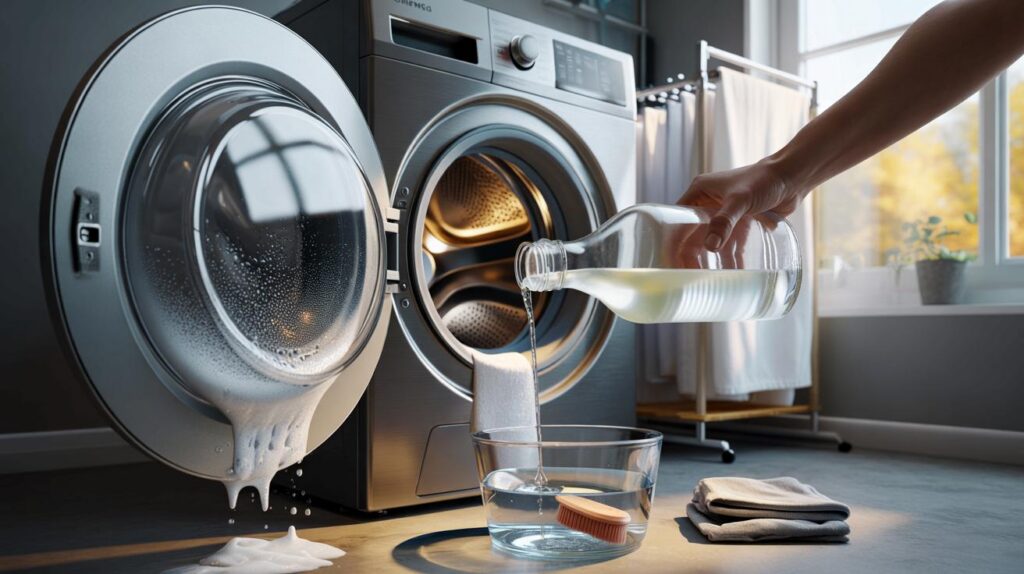
Run one empty 90°C maintenance wash with 1 litre of white vinegar every month. It strips residue, breaks down odours and resets the drum.
The simple reflex that stops the stink
Use white vinegar. It’s cheap, mild on metals and effective on limescale. The heat does the heavy lifting. The acid helps release film and neutralise smells. Do this once a month, and again at the change of season when indoor drying ramps up.
Your monthly maintenance wash, step by step
- Check the drum is empty. Remove any dryer sheets or microfibre cloths.
- Pour 1 litre of white vinegar straight into the drum. Do not add detergent.
- Select a 90°C cotton programme. Use the longest option available.
- While it runs, clean the drawer and door seal (see hotspots below).
- When finished, leave the door and drawer ajar for several hours.
Prefer a two-step clean? Use 2–3 tablespoons of bicarbonate of soda in the drum on a hot rinse first. Then run the 90°C vinegar wash. Avoid mixing bicarb and vinegar at the same time. They neutralise each other and can foam.
Never mix vinegar and bleach. This pairing gives off dangerous gas. Keep them separate in storage and in use.
Three hotspots you often miss
The maintenance wash reaches most surfaces. Three areas still collect grime. Tackle them alongside the hot programme for best results.
- Door seal: Pull back the rubber lip. Wipe sludge, lint and coins. Use a cloth dipped in warm water with a splash of vinegar. Dry the folds so they don’t harbour moisture.
- Detergent drawer: Slide it out. Soak in hot water. Brush the corners and the fabric softener well. Rinse, dry and reinsert. Wipe the cavity rails, too.
- Drum and glass: Inspect for stuck-on tissue or pet hair. Wipe the glass and inner metal with a microfibre cloth. Check the holes for threads and remove them.
Drying, dosing and daily habits that keep the drum fresh
Small choices each washday help more than any chemical. Measure detergent for your water hardness. Too much soap leaves more film. Softener coats fibres and parts; use it sparingly or not at all on towels and sportswear.
- Leave the door and drawer ajar for 2–3 hours after every load.
- Shake sheets before loading. Don’t pack the drum; give water room to circulate.
- Spin sheets at a higher rpm to shorten drying time and reduce musty odours.
- Wash towels at 60°C weekly. That higher hit helps control biofilm build-up.
- Empty wet laundry promptly. Don’t let it sit for hours after the beep.
- Clean the pump filter monthly. Trapped fluff and buttons smell when wet.
| Problem | What you notice | Fix | How often |
|---|---|---|---|
| Residue build-up | Stale, sour whiff after spin | 90°C empty wash with 1 litre vinegar | Monthly |
| Damp door seal | Black spots, slimy film | Wipe folds dry; clean with warm water and vinegar | Weekly |
| Gunky drawer | Clogged softener well, mould | Remove, soak, brush and dry thoroughly | Monthly |
| Slow indoor drying | Musty sheets on racks | Higher spin, dehumidify room, space items on airer | Every wash |
When vinegar isn’t the right choice
Check your manual if your machine uses special coatings or if the warranty limits acidic cleaners. Occasional vinegar maintenance is usually fine. Heavy, daily use isn’t needed. If you prefer alternatives, use 100–150 g citric acid in the drum on a 90°C programme, or use an oxygen-based machine cleaner. Always keep bleach far from acids.
If odours persist after a deep clean, inspect the waste hose and standpipe. A blocked or poorly vented drain can push smells back into the drum. A plumber can clear the line. Also check the sump and pump filter for trapped hair ties and coins.
If one wash a fortnight fails the sniff test, you’re running 26 extra rewashes a year. One monthly maintenance cycle beats that burden.
Costs, time and why the math still works
A hot maintenance wash uses energy. So does rewashing sour sheets and running the heated airer again. A monthly 90°C programme equals 12 cycles a year. Frequent rewashes can double that. The vinegar costs pennies per run. The habit pays back in fewer do-overs, less softener, and a drum that stays efficient for longer.
There’s also time. A maintenance wash runs while you do something else. A rewash steals a slot when you need the machine for uniforms or duvet covers. The monthly slot prevents a pile-up later.
Seasonal tweaks for damp homes
Autumn and winter demand extra care. Dry laundry in a single room with the door shut and a window cracked, or run a dehumidifier near the airer. Space items so air can pass between them. Flip sheets halfway through drying. Avoid radiators if condensation forms on windows; warm, wet rooms feed mould growth.
Use a brief “tub clean” or hottest cotton programme right before you strip beds for the weekend wash. The drum starts pristine. Your sheets absorb fewer odours. Add a second rinse if your detergent dose was heavy or your water is soft.
Quick troubleshooting checklist
- Detergent level matched to water hardness and load size.
- Door and drawer left open after use until surfaces feel dry.
- Filter cleared of lint, buttons and hair monthly.
- Hose and standpipe free of kinks and blockages.
- One 90°C vinegar maintenance wash booked into your calendar every month.
A clean machine makes clean laundry. Keep heat, acidity and airflow on your side, and your sheets will smell like they should.
Extra tips to broaden your results
Switch between bio and non-bio detergents based on fabric and temperature. Enzymes in bio work best at 30–40°C on body oils, while a 60°C towel cycle helps with bacteria. Use softener only when you want feel, not for routine odour control. Microfibre, gym kit and towels perform better without it.
Run a brief hot rinse after washing pet bedding. Hair and dander cling to film inside the drum. The rinse clears what the spin leaves behind. If you share machines in a block, wipe the seal before and after use to remove other people’s residue.



So you’re telling me my washer’s biofilm is basically an all-you-can-eat buffet for bacteria? Scheduling the 90°C vinegar sauna right now 😅