
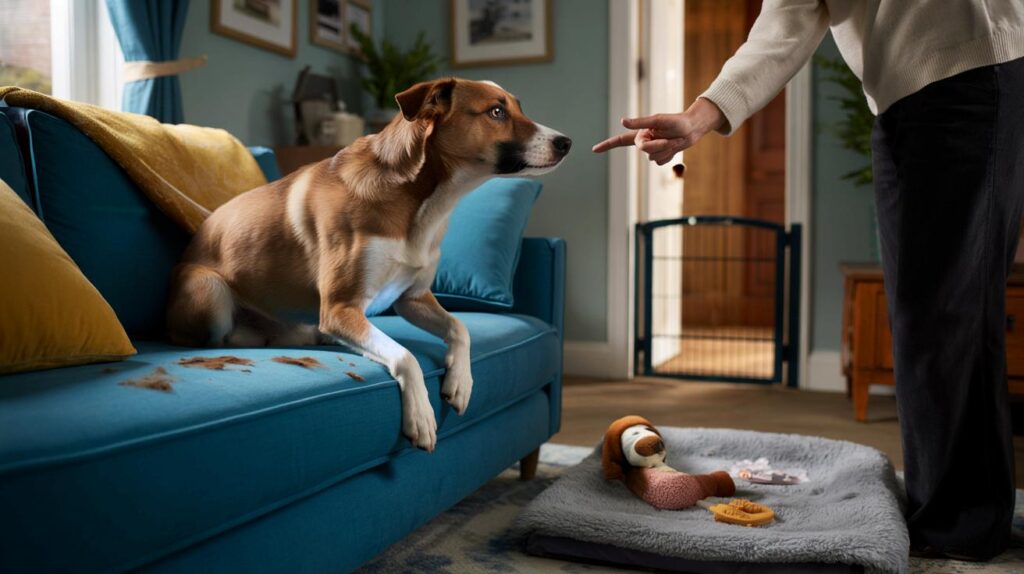
As winter closes in, British homes grow cosier, and canine habits turn bolder and subtler. Your sofa may already be keeping secrets.
Behaviour specialists report a spike in mixed signals at home as routines shift indoors. Many owners label it defiance. Most dogs are simply guessing the rules.
Seven signs your dog has missed the memo at home
When the sofa becomes a throne
A nap on the sofa looks harmless. It often signals an unclear boundary. Dogs learn patterns fast. If the rule changes, they gamble. Look for hair on cushions, a damp nose print, or a warm dip where a body just left. These traces tell you the behaviour already pays off.
Watch your dog’s face when you enter. Averted eyes, ears pinned back, and a slow slide off the cushions show uncertainty, not guilt. The message your dog hears is patchy. The rule applies sometimes, so it can be negotiated.
When a boundary shifts by day or by mood, a dog learns to try luck, not to trust guidance.
- He waits until you stand up or leave the room, then jumps on the sofa within seconds.
- She freezes when you reappear, glancing away or licking lips, then descends slowly.
- He hovers at the sofa edge with one paw lifted, testing the gap between rule and opportunity.
- She obeys “off” only when you loom over her, not when you ask from across the room.
- He bends rules during gatherings, because guests soften tone and timing.
- She parks herself in forbidden doorways, especially if those spaces smell strongly of you.
- He ignores the first cue at home yet responds in the park, showing the home context is muddled.
How mixed messages from people fuel the confusion
One Sunday exception rewrites the rule
Letting the dog up for a film night, then barring access on Monday, redraws the map. Dogs track outcomes, not intentions. A single win can restart the habit. Tone changes add more fog. A light laugh on one day, a sharp “off” on another, and a shrug when visitors coo will keep the behaviour alive.
Households also split the signal. Children invite cuddles on the cushions. Partners feel stricter after a long day. The dog hears multiple policies and chooses the kindest one.
Clarity beats severity. A soft voice that never wavers teaches faster than a loud voice that shifts.
Why predictability builds security
Dogs place safety in patterns. A stable rule reduces anxiety and cuts testing. The sofa stops being a prize and turns into background. Two steady weeks can reset habits. Short, consistent cues speed learning. “Off” for getting down, “bed” for the chosen spot, and “good bed” for staying make pathways clear.
Three fixes you can try tonight
1. Make the allowed spot irresistible
Assign one bed, mat, or crate as the reward zone. Place it near the family action but not in a walkway. Add a blanket that smells of you. Feed a chew there in the evening. Drop small treats on that surface whenever your dog chooses it without prompting. The place becomes the sofa’s rival.
2. Simplify the cues and keep them identical
Pick one word for each action. Use the same tone and timing. Ask once. Guide with a hand target or lure if needed. Mark success with a calm “yes” and a small reward. Repeat across the day in short bursts. Five quick wins beat one long drill.
3. Proof the environment so temptation stays low
Block access when you cannot supervise. Position cushions upright. Add a light cover that makes the surface less appealing. Close doors to high-value rooms. Give your dog a stuffed toy or a lick mat on the allowed spot during high-risk times, like meal prep or family TV.
Reward what you want, prevent what you don’t, and make the right choice easy every time.
| Household rule | Consistent cue | Reward | Typical reset window |
|---|---|---|---|
| No sofa access | “Off” then “bed” | Treat on bed, calm praise | 10–14 days of zero lapses |
| Stay on assigned spot | “Bed” then “stay” | Chew, scatter feed on mat | 7–10 days, 3–5 sessions daily |
| Doorway manners | “Wait” then release word | Release to rejoin family | 7–14 days with short rehearsals |
What to watch when the plan stalls
Check health, age and energy before blaming attitude
Pain changes choices. A dog with aching joints prefers soft cushions. Book a vet check if you see stiffness, reluctance to jump, or restlessness at night. Adolescents push limits between six and eighteen months. Multiply structure, not pressure. High-energy dogs need a daily outlet. Ten minutes of scent games can calm the evening better than a long fetch session.
- Swap one walk for a sniffari on a long line to drain mental energy.
- Teach a two-minute settle on the bed after meals to build duration.
- Rotate chews to keep the allowed spot valuable.
Make people part of the training, not the problem
Set the same rules for every pair of hands
Agree the cues on a note stuck near the sofa. Share the reward types and the timing. Ask guests to greet the dog on the floor, not on cushions. Give children a simple job, like dropping a treat on the bed when the dog lands there. One script makes progress visible.
When every person delivers the same cue and the same outcome, a dog relaxes into the rule.
Beyond the sofa: apply the same method across the house
Doors, kitchens and bedrooms follow the same playbook
Pick the spaces you want to protect. Mark clear borders with mats or baby gates. Use the same sequence: cue, reward at the desired spot, and prevention where needed. Short, frequent wins bank strong habits. Track lapses on a calendar so you see patterns. Adjust the plan on high-risk days.
Build a simple weekly routine that sticks
Choose three short training slots per day: morning, late afternoon, and evening. Keep each to three minutes. Add a chew on the bed during TV time. Close the sofa off when you leave the room. Review at the weekend. Celebrate a clean week with a new chew on the bed, not a film night on the cushions.
If you see guarding of the sofa or tense stares, seek a qualified trainer who uses reward-based methods. Safety comes first. Manage space with gates until emotions settle. A calm plan, delivered the same way every day, turns house rules from arguments into habits.



Is it normal that my dog only gets off the sofa when I stand up? I’ve probably created a proximity cue. How do I retrain so “off” works from across the room?
So my sofa is now a “warm dip” crime scene report? Love it. Any tips for roomates who keep plopping the cushions back down (aka undoing the booby-traps)?