
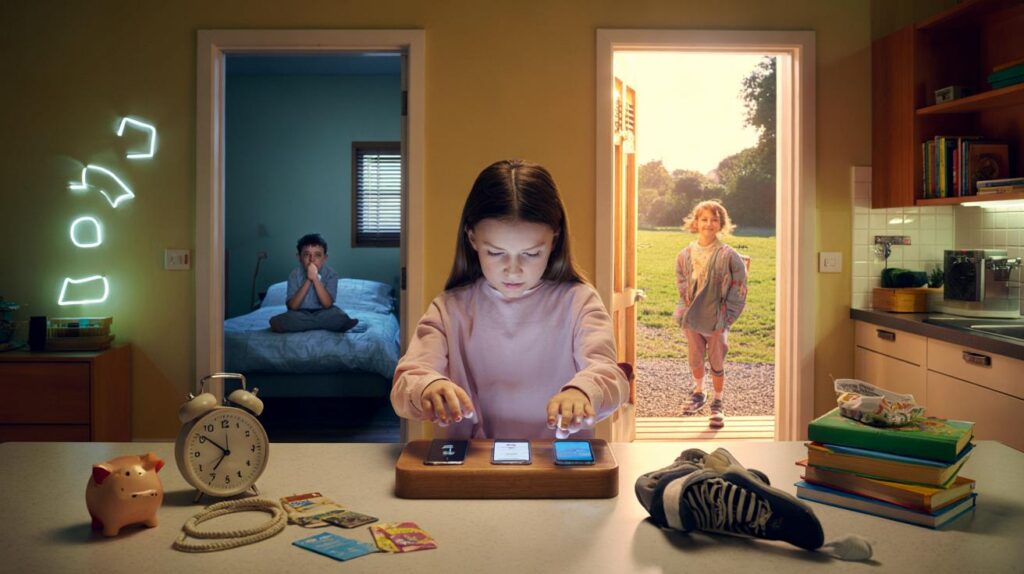
Across Britain’s kitchens and classrooms, phones hum, attention splinters and bedtime slips later, but a new push gathers pace.
Appearing on The Netmums Podcast, former A&E doctor and Love Island alumnus Dr Alex George set out a blunt diagnosis: children are “hyper-connected” online yet drifting apart face to face. He argues the problem is solvable if families, schools and tech firms shift course together, starting now.
Screens, solitude and the information diet
Today’s children swim in content. News alerts, short-form video and group chats rarely pause. That torrent brings novelty, social status and distraction in one irresistible bundle. It also rearranges sleep, heightens comparison and crowds out unstructured play. Dr George calls it an overloaded “information diet” that can leave young people wired yet strangely isolated.
Too much connection online can mean too little connection in real life. That gap breeds anxiety, poorer sleep and frayed friendships.
The challenge is not technology itself but the balance. A phone can be a library, a studio and a friendship line. It becomes a hazard when it governs the day, colonises the night and replaces in‑person experiences that build confidence and resilience.
Three red flags you can spot this week
- Late-night scrolling: bedtimes slide by 45–90 minutes, mornings start foggy and school focus suffers.
- Social shrink: fewer meet‑ups with friends, cancelled clubs, rising reluctance to join in group activities.
- Mood by notification: irritability after posts underperform, spikes of elation then crashes tied to likes and messages.
What Dr Alex George says
On the podcast, Dr George frames excessive screen time as the single biggest pressure on children’s mental health right now. He stresses there is room for hope. Practical answers exist in homes and classrooms, not only in policies. He also calls for a reset in schooling: less narrow academic drill, more support for growing emotionally mature, well-rounded young adults. That includes teaching money basics and making movement a daily habit.
There is a way forward if homes, schools and platforms move in step: rebalance time, rebuild routines and teach skills that last.
Inside the school gates: from Victorian drills to modern skills
Britain’s assessment-heavy model still prioritises memorise–revise–test. It rewards recall under timed conditions. Dr George argues for a broader mix that values emotional literacy, teamwork, physical activity and financial confidence alongside grades. That shift would better reflect the world pupils step into at 16 or 18.
| Old model | What kids need now |
|---|---|
| High-stakes exams as the main measure | Regular low‑pressure checks plus project work and collaboration |
| Homework volume as a badge of rigour | Protected sleep, planned downtime and smarter study blocks |
| Subject knowledge above all | Emotional maturity, conflict resolution and digital citizenship |
| Sport as a weekly bolt‑on | Daily movement woven into lessons and breaktimes |
| Silence on money | Financial health: saving, borrowing, tax and consumer rights |
Seven fixes you can try now
- Write a family screen plan: specify app-free times (meals, the first hour after school), a home “charging spot” and device‑off by set times. Put it on the fridge and revisit fortnightly.
- Guard sleep with a 60‑minute digital sunset: alarms still work on a basic bedside clock. Sleep debt magnifies anxiety and reduces coping skills the next day.
- Schedule 2 face‑to‑face meet‑ups weekly: a park kickabout, baking with a friend, or a library trip. Social practice offline rebuilds ease and empathy.
- Curate the feed: unfollow content that spikes stress; add accounts that teach, make or move. Encourage teens to ask, “How do I feel after ten minutes of this?”
- Teach money little and often: one five‑minute chat each Sunday on pay slips, APR, overdrafts, ISAs or budgeting. Involve them in a real purchase comparison.
- Build a daily movement streak: 20 minutes of brisk walking, cycling, skipping or a short body‑weight circuit. Treat it like brushing teeth—non‑negotiable, quick, done.
- Agree consequence‑light resets: if a rule slips, reset the following day rather than escalating rows. Consistency beats confrontation.
Why movement matters
Weight‑bearing activity does more than strengthen bones. It nudges a web of signals—hormones, inflammatory markers and neurotransmitters—that lift mood and sharpen attention. When a child jogs, jumps or plays netball, the brain registers effort, rewards persistence with feel‑good chemistry and, over time, builds resilience to daily stressors.
Schools can harness this without extra kit. Short “movement snacks” between lessons, outdoor learning for one class a day and active homework—like a local history walk—add minutes that compound across the week.
Money talk lowers worry
Financial stress sits high on adult worry lists. Yet many pupils leave school without the basics: how bank accounts work, how interest multiplies, how tax shows on a payslip. Bringing money into family chats demystifies it and reduces future dread.
A five-minute money primer for teens
- APR: the yearly cost of borrowing; compare it before taking credit.
- ISA: a tax‑efficient account for saving or investing; limits reset each tax year.
- Credit score: a track record of repayment behaviour; pay on time to protect it.
- Inflation: rising prices; savings need interest or growth to keep pace.
- Payslip basics: gross pay, deductions, net pay and why tax codes matter.
What schools and platforms could change next
Schools can set clear phone rules in the timetable, weave digital wellbeing into PSHE and assess success by more than grades. Training staff to spot sleep loss, online bullying patterns and money worries would help too. Simple additions—quiet rooms at lunchtime, student‑led clubs, peer mentoring—give pupils anchors.
Platforms could tighten under‑age access, default to stricter privacy for minors and offer genuine “quit for the night” modes that pause streaks and notifications until morning. Clearer time‑use dashboards would help families see where hours go.
A quick 48-hour reset you can test
Try this weekend: phones docked in the kitchen at 8pm; a late breakfast without screens; one hour outdoors both days; a joint review of apps on Sunday afternoon with two deletions or the removal of push alerts. Keep it light. Then choose one habit to carry into Monday.
Beyond the phone: widening the toolkit
Not every struggle stems from screens. Some children face bullying, grief or learning difficulties that need tailored support. Where worries persist, speak with the school and your GP, and consider evidence‑based therapies that teach coping strategies. Pair that help with steady routines—sleep, movement, and money basics—and you give children multiple routes back to steadier ground.



Thanks, Dr George. The “information diet” framing really clicked. We tried the 48‑hour reset—phones docked at 8, two app deletions, long walk—and the mood at home defintely softened.
So we replace “Victorian drills” with “movement snacks” — does that mean burpees between algebra? Asking for my quads.