
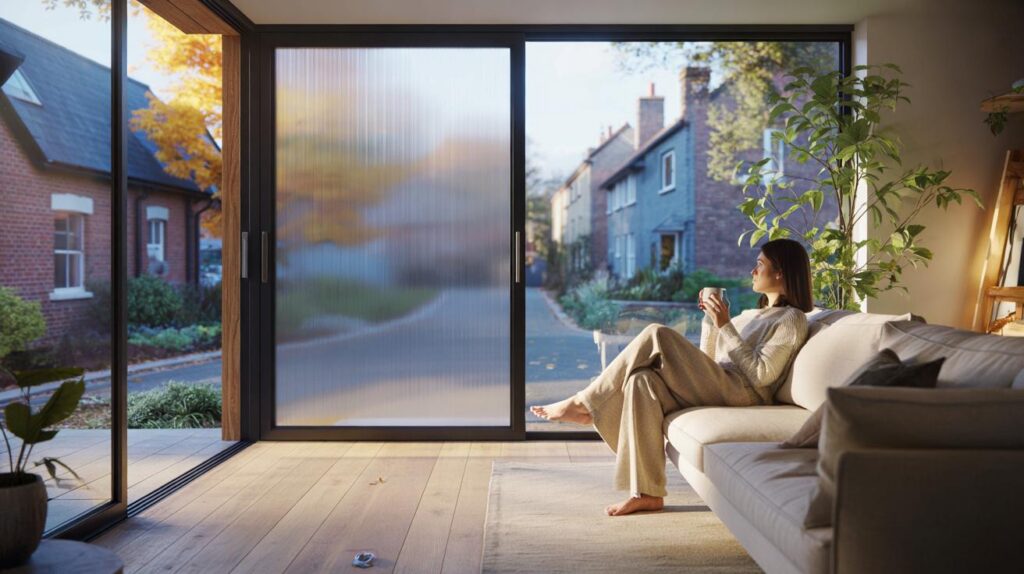
Autumn’s first bite returns, and millions face the same dilemma at the window: keep the daylight, or keep the warmth.
Design-minded homeowners are turning to a new fix that doesn’t pile fabric on the frame or plunge rooms into gloom. Instead, it turns the glass itself into an active part of your heating strategy while keeping your interior calm, bright and clean-lined.
How smart glazing kicks out draughts
“Smart” glazing, already used in cutting-edge offices, is now arriving in domestic catalogues and renovation quotes. The idea is simple: the pane adapts in real time to weather and sunlight. It can tint, clear, or moderate heat flow, giving you a dynamic thermal barrier without touching a blind or pulling a heavy curtain.
What sits inside the glass
Several material technologies power the change:
- Electrochromic layers that change tint on command or automatically via sensors.
- Thermochromic coatings that react to temperature and sunshine without wires.
- Phase-change materials (PCM) that store heat when rooms warm up and release it as the air cools.
Each approach targets a familiar pain point: winter heat leaking through panes, summer glare, and that icy “downdraft” you feel beside a big window. By managing solar gain and radiant losses, smart glazing stabilises indoor temperatures hour by hour.
Independent tests point to up to 30% less heat lost through windows versus standard double glazing, without heavy drapes.
Why it beats thermal curtains for real-world living
Thermal curtains help, but they ask for a trade-off: darkness for warmth, fabric bulk for performance, dust for maintenance. Smart glazing cuts that compromise. You keep daylight, views and clean lines, yet gain meaningful insulation and better comfort near the glass.
Light, privacy and control
Electrochromic panes go from clear to tinted or private at a touch or on a schedule. That means a sunny breakfast and an intimate evening scene, all with the same window. For minimalists, there is nothing extra to hang or clean, and the window frame stays part of the architecture rather than a rail for textiles.
Light stays, heat stays, bills fall: that combination is why designers are ditching thick drapes in bright living spaces.
Numbers that matter to your bills
Energy prices remain volatile, so cutting losses at the facade pays back over time. Window performance varies by size, orientation and existing glazing. To translate the headline figures into your home, use rule-of-thumb scenarios.
Three sample scenarios
- Gas-heated terrace, modest glazing: If windows account for 18% of heat loss, trimming that by 30% can reduce overall heating use by roughly 5%, saving around £40–£90 a year at typical gas tariffs.
- Electric-heated flat, south-facing: With windows responsible for 25% of losses, the same 30% improvement could cut annual spend by £120–£220 at peak-rate tariffs.
- Heavily glazed detached home, direct electric: Where glazing makes up 30–40% of losses, a 30% reduction can save 1,400–1,800 kWh a year. At 28p per kWh, that’s about £392–£504.
Your result depends on glass area, frame quality, climate, shading and heating type. A proper survey will refine the numbers, but the direction is clear: the more glazed your facade, the bigger the potential gain.
Comfort and health benefits you notice
No more cold wall effect
By moderating radiant exchange, smart panes remove that chilly sensation next to the glass. A sofa near the window becomes usable in January, not just June.
Less condensation, fewer mould hotspots
Warmer internal glass surfaces cut condensation risk, reducing mould around frames and gypsum reveals. That helps protect finishes and indoor air quality.
Cleaner interiors, fewer allergens
Fewer heavy textiles means less dust capture. Windows need normal cleaning; there is no seasonal washing of thick curtains, linings or tracks.
Homes report steadier room temperatures, a softer daylight quality, and fewer “dead zones” where you avoid sitting in winter.
What does it cost and how do you fit it?
Retrofit options
- Full unit replacement: Swap existing double glazing for smart double or triple units; best thermal results, higher cost, disruption during install.
- Laminated smart inner pane: Retains frames, replaces only the glass; a common route in timber or aluminium systems.
- Aftermarket switchable films: Provide privacy tinting, limited thermal gains; lower cost, but they don’t match factory-built insulation performance.
Typical price ranges
Quotes vary by area and specification, but recent domestic projects suggest:
- Thermochromic or PCM-enhanced units: roughly £250–£500 per m² installed.
- Electrochromic smart glazing: roughly £500–£900 per m² installed, depending on controls and glass size.
- Switchable privacy films: roughly £150–£300 per m², privacy function only.
These are guide figures, not contract prices. Ask for U-value, g-value, switching time, power draw and warranty in writing before you sign.
Curtains, standard glazing and smart glazing compared
| Feature | Thermal curtain | Standard double glazing | Smart glazing |
|---|---|---|---|
| Heat loss reduction | Modest, depends on fit and use | Baseline | Up to 30% less through panes vs baseline |
| Daylight and views | Often blocked when in use | Clear, fixed | Clear or tinted on demand |
| Privacy on demand | Yes, manual | No | Yes, manual or automated |
| Condensation risk | Can trap moisture at frames | Moderate | Reduced on interior surface |
| Maintenance | Regular washing, dust | Low | Low; occasional sensor/control checks |
| Upfront cost | Low–medium | Medium | Medium–high |
Design: minimal look, maximum effect
With no bulky textiles, natural materials—light timber, linen upholstery, ceramic and stone—catch daylight rather than hiding behind fabric. The window becomes a clean architectural plane, not a gap to mask. For small rooms, that visual calm adds a feeling of space. For larger rooms, controlled tinting produces a gallery-like light that flatters colours and textures.
What to ask before you order
- Performance: certified U-value and g-value for the exact unit size you need.
- Controls: wall switch, app, sensor automation, or integration with an existing smart hub.
- Speed and range: seconds or minutes to switch; how clear is “clear,” how dark is “dark.”
- Power: standby draw for electrochromic systems, and what happens during a power cut.
- Warranty: years of coverage, switching-cycle limits, and service response times.
- Frames: compatibility with your current frames and any Building Regulations implications.
Market momentum and availability
High-street adoption is accelerating. A major Scandinavian retailer has trailed a 2025 “smart” home collection with glazing panels tailored for European housing stock. At trade fairs, suppliers now show domestic-sized units next to familiar kitchen and furniture lines, signalling a shift from niche to mainstream. For renovators, that means more sizes, shorter lead times and clearer pricing.
Risks, limits and smart combinations
Upfront cost remains the sticking point, especially for large elevations. Thermochromic glass chooses for you on hot days; some users prefer the absolute control of an electrochromic system. Slight tint even at the clearest setting can appear in certain products; request a sample pane before committing. As with any glazing, poor installation will wipe out performance gains, so the fitter’s track record matters.
Layering strategies multiplies the benefit. Seal gaps at frames, add discreet blinds for night-time heat retention if you like, and tune heating schedules to the new thermal behaviour of the room. Bedrooms might still use soft curtains for acoustic and aesthetic reasons, while living spaces lean on smart panes to keep light and warmth in play throughout the day.
A quick back-of-envelope check for your home
Measure your glazed area, note the room orientations, and pull last year’s heating bill. If glazing is generous or faces north and east, your potential savings rise. If you rely on direct electric heating, the pounds saved per kilowatt-hour are higher. Run both a conservative case and an optimistic one; if both point to comfort gains and a credible payback over the product warranty, the upgrade belongs on your shortlist.



Love the idea of windows doing the heating work. If this keeps my bay window nook warm without heavy drapes, sign me up! Does the tint look slightly bluish in “clear” mode, or is color cast negligeable? I’m fussy about daylight tone for reading and plants. Also curious how they age: do electrochromic layers get blotchy or slower over years, and what’s the warranty on switching cycles? Last thing I want is gorgeous but tired-looking glass after 5 winters.