
Winter brings fresh projects and tight budgets, but one bathroom job still sparks dread. A near-invisible tweak can calm the drill nerves.
Across Britain, shelves, towel rails and mirrors sit in boxes because people fear shattering shiny tiles. Retailers report brisk sales of tile bits, yet cracked glaze still sends thousands back to the shop. You can change that with careful setup, a cool head and one low-cost detail that steadies the whole operation.
Why tiles crack before you finish the first hole
Tile glaze feels like glass. It resists scratches but hates sudden force. A spinning bit that skates, snatches and overheats can trigger tiny fractures. Those fractures spread along grout lines or across the face. The result looks like a spider’s web and costs real money to replace.
Ceramic remains softer than dense porcelain, yet both punish errors. Glass mosaics add another hazard because they chip at the edge. The wrong bit, the wrong speed or a dry, hot cut often turns a simple hole into expensive rubble.
Pressure, heat and slip: the destructive trio
Too much pressure concentrates stress on a pinpoint. The glaze cracks. Too much speed generates heat. The bond weakens and the bit dulls. Slipping at the start scuffs the surface and gouges the pattern. Each slip adds risk. Each correction misaligns the fixing.
Speed breaks tiles. Pressure cracks glaze. Heat blunts bits. Control all three and the hole stays clean.
The tiny fix your future self will thank you for
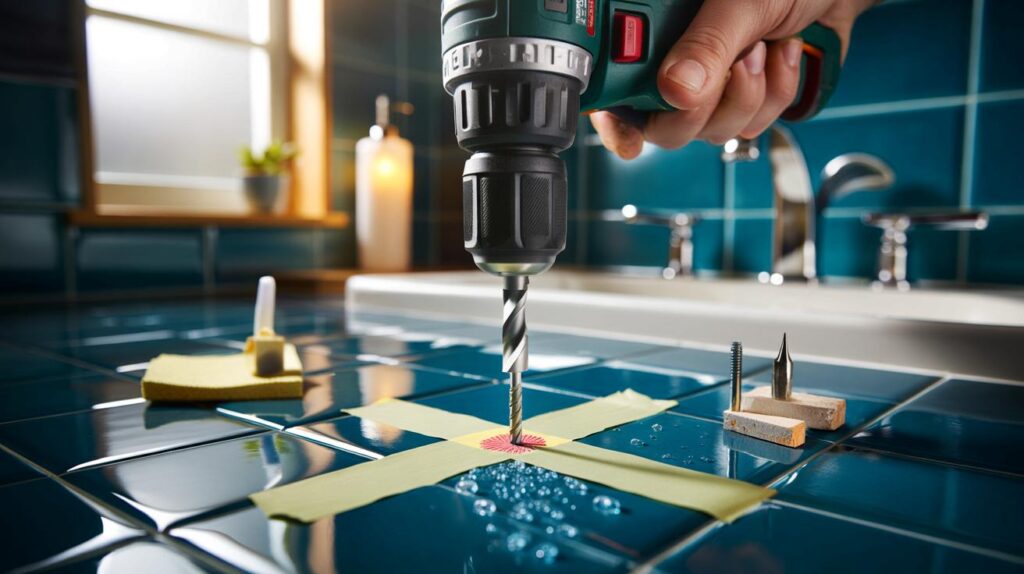
A short strip of tape transforms the first seconds of drilling. It grips the bit. It cushions the first contact. It stops the skate that causes the first chip. You do not need specialist tape for this. A £4 roll of masking tape often works perfectly on bathroom walls.
Tape, mark, dimple
Place two crossing strips of tape where the hole goes. Mark the point with a fine pencil. Create a tiny starter dimple with a centre punch or even the tip of a screw turned by hand. That dimple centres the bit, so you do not wrestle the drill on glossy glaze.
A £4 roll of masking tape acts like a skid brake and shock absorber for the first contact.
- Clean the tile with alcohol so the tape sticks.
- Use a sharp pencil line you can see from a stance you can hold.
- Add a light dimple so the bit stays true under gentle pressure.
Pick the right bit for the job
General masonry bits chew glaze. They push and crush rather than cut. Choose a tile-rated bit that slices the surface. Carbide spear-point bits suit ceramic. Diamond-tipped holesaws or spade bits suit porcelain and glass. Multi-material bits can work if they state tile and glass capability and arrive sharp.
Ceramic, porcelain or glass: match bit to material
| Tile type | Recommended bit | Drill speed | Cooling |
|---|---|---|---|
| Ceramic wall tile | Carbide spear-point | Low, 200–400 rpm | Dampen every 10–15 seconds |
| Porcelain (dense) | Diamond-tipped holesaw or spade | Very low, 150–300 rpm | Continuous water feed if possible |
| Glass mosaic | Diamond-tipped | Low, 200–300 rpm | Continuous water and feather-light pressure |
Bin dull bits. A tired edge grinds and heats. A sharp edge shaves the glaze and carries dust out of the cut.
Speed, torque and cooling: how to set your drill
Disable hammer mode. Use the lowest gear. Begin at minimal trigger pressure. Let the bit cut and clear. Pause and dip the bit in water or squeeze a wet sponge above the hole. Water keeps the bond strong and the edge sharp. Heat shortens bit life and raises chip risk.
No hammer. Low rpm. Keep it wet. Let the bit do the work.
A three-step method that slashes risk
- Prepare: tape the spot, mark a centre, and set a shallow starter angle at roughly ten degrees for the first turn.
- Control: bring the drill upright, lock your elbows, and keep steady, light pressure while cooling the bit regularly.
- Finish: break through the glaze, then advance in short pulses until the substrate shows dust, not just glaze powder.
Use a depth stop, or wrap tape round the bit to the exact depth. This prevents hitting pipes or crumbling the back of the tile. Vacuum dust as you go so the mark stays visible.
Control depth and back out cleanly
When the bit nears the tape marker, ease off the trigger. Let the bit coast to a stop in the hole. Back out while spinning slowly. This avoids spalling on the exit. If you can reach the tile back face, press a scrap of timber behind it for support during the final millimetres.
Smart advice that saves time and money
- Avoid edges and corners. Keep 30–40 mm away from tile edges to reduce crack risk.
- Check for hidden services. A cable and pipe detector avoids costly emergencies.
- Pilot first. Start with a 4–5 mm hole before stepping up to the fixing size.
- Match fixing to wall. Use hollow-wall anchors for plasterboard, and nylon plugs for masonry.
- Seal where needed. Use a dab of silicone in wet zones to block capillary moisture.
- Protect yourself. Wear eye protection and a mask. Tile dust irritates eyes and lungs.
- Practise on an offcut. Two minutes on a spare tile builds confidence and sharpens technique.
A pilot hole, a cooled bit and a measured depth save you from blown glaze and broken fixings.
What a clean hole looks like and how it pays
The rim stays unchipped. The glaze meets the hole with a neat circle. The plug fits snugly without spinning. A hole like that takes minutes and protects a tile that might cost £20–£60 to replace, plus adhesive, grout and time. A few careful steps cut both stress and spend.
When adhesive beats drilling
Some accessories offer adhesive plates that hold strong on glaze. These work for light loads such as toothbrush holders and small hooks. Skip drilling for those. Save holes for rails, shelves and mirrors where anchors spread the load into the wall behind the tile.
Health and durability notes worth keeping
Tile drilling releases fine dust. Silica in dust can harm lungs. A vacuum with a fine filter at the hole controls that risk. Moisture behind tiles can creep through unsealed holes. A small bead of neutral cure silicone under the fixture’s base stops that journey. Stainless screws resist corrosion in damp rooms and keep fixings serviceable for future upgrades.
A quick sizing guide you can trust
Light hooks on ceramic often suit a 6 mm hole with a small nylon plug. Towel rails on porcelain tend to need 8 mm, or a cavity anchor if the wall behind is hollow. Large mirrors call for two to four fixings spaced wide and level. Use a long spirit level and pencil the line before any drilling starts.
Planning around grout and layout
Grout lines seem tempting because they look soft, but they rarely hold anchors well. Drill through full tile areas for strength. If alignment forces you near a joint, move slightly up or down while keeping accessories level. Check twice from eye height because tiny offsets jump out once the room lights reflect off glossy tiles.



This is the first guide that actually calmed my drill nerves—masking tape + tiny dimple = no chips! 🙂 Tried it on two porcelin tiles at low rpm with a wet sponge, perfect holes. Also, “no hammer” should be in neon. Cheers!