
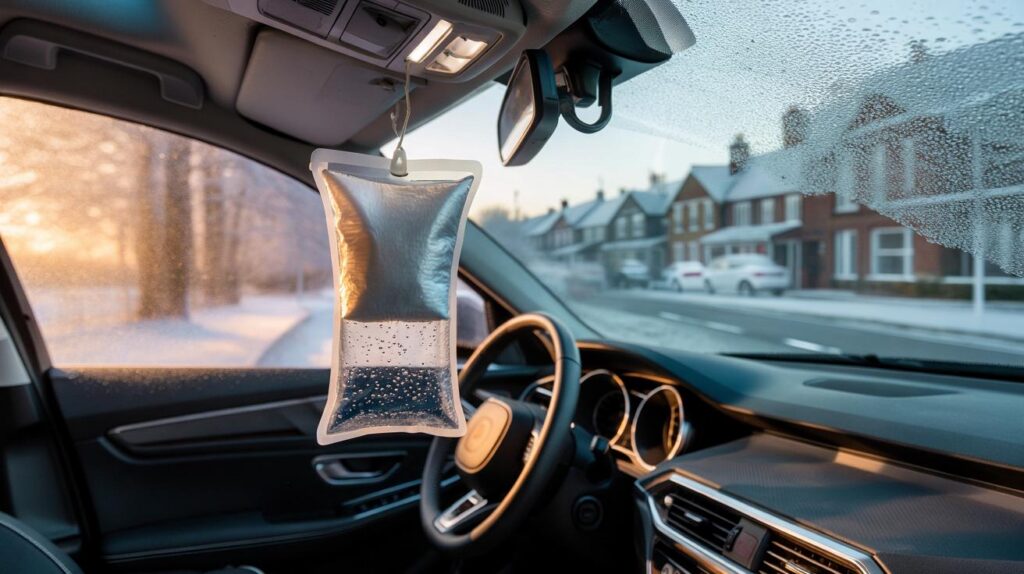
Brittle mornings are back, windscreens are misting, and dashboards feel damp. A tiny, low-cost gadget is suddenly on every driver’s radar.
As early starts turn colder, motorists are hunting for a fast, cheap way to beat window condensation without running heaters for ages. One pocket-sized moisture trap, sold in multipacks and designed to hang neatly in a footwell or from a hook, is drawing praise for cutting fog and that tell-tale musty smell.
The £10 fix motorists are talking about
At the budget end of the market sit hanging dehumidifier pouches that use moisture-absorbing crystals to pull water from the air and collect it as liquid. Shoppers are snapping up packs priced at £6.49 for three or £9.98 for six, which works out to roughly £1.66 each. Many buyers say a couple of pouches inside the cabin make a visible dent in morning mist and damp upholstery.
Prices from £6.49 for a three-pack or £9.98 for six, with each pouch claimed to work for up to 60 days.
The latest versions often include sturdier hangers to cope with the weight once the crystals have drawn in moisture. Ratings are strong too, with thousands of reviews and an average score around 4.6 out of 5, suggesting broad satisfaction among drivers, renters and those fighting mould in small rooms or wardrobes.
How the pouches work
The white crystals inside are typically a salt compound that attracts water vapour. As air circulates, humidity condenses into a reservoir within the bag. Once the crystals dissolve completely, their job is done and the pouch needs replacing. In a car, most people suspend one pouch from a headrest or hook and tuck another near the boot or footwell to keep air moving across both.
Hang, leave space for airflow, and replace when the crystals vanish. Do not rest the pouch directly on seats or trim.
- Open the outer wrap but keep the inner fabric pouch intact.
- Hang it where it won’t touch fabric, electrics or metal surfaces.
- Use two pouches in larger cabins or very damp cars.
- Check weekly; replace when crystals are fully dissolved.
What buyers report
Drivers who park outside overnight say they need less time to clear the screen in the morning. Many also notice fewer water droplets on inside glass and a fresher smell. Some users mention that the effect builds over a few days, which makes sense: once the salt has drawn down the ambient humidity, fogging tends to fall away.
A minority flag leaks if a pouch is damaged, overfilled or knocked. That risk can be managed by hanging the bag upright and keeping it off surfaces. If your car moves heavy loads or pets, consider placing a drip tray beneath or opting for a reusable, sealed design instead.
What about reusable bags?
Not everyone wants disposable pouches. High-capacity reusable car dehumidifier bags are widely available too. A popular 2.1 kg option at roughly £9.95 relies on silica gel and can be dried out on a radiator or in a warm airing cupboard. A compact reusable bag from a major motoring retailer sits near £9.99 and can be recharged similarly. Both cut waste and reduce the risk of spills, though they take up more space and need periodic drying.
| Product type | Typical price | Maintenance | Space needed | Key benefit |
|---|---|---|---|---|
| Hanging disposable pouches (pack of 6) | £9.98 (~£1.66 each) | Replace when crystals dissolve | Low | Cheap, easy to place, immediate setup |
| Hanging disposable pouches (pack of 3) | £6.49 | Replace when crystals dissolve | Low | Good trial size for small cars |
| Reusable car bag (2.1 kg) | ~£9.95 | Dry on radiator or in warm air | Medium | Lower waste, robust casing |
| Compact reusable car bag | ~£9.99 | Recharge periodically | Low to medium | Refill-free running |
The science behind your steamy windscreen
Condensation forms when warm, moist cabin air meets cold glass that sits below the dew point. Winter accelerates the problem: wet floormats from rain, breath from passengers and even the last takeaway bag all add moisture. If your car is damp inside, the heater dries the air slowly while the screen fogs repeatedly.
A dehumidifier pouch or reusable bag lowers the humidity baseline. That means less vapour is available to condense each morning. Pairing a moisture trap with smart ventilation pays off quickly.
Quick wins to cut condensation
- Use the air-con with heat. It dries the air faster than heat alone.
- Turn off air recirculation. Fresh air carries away moisture.
- Clear wet mats and boot liners. Dry them indoors overnight.
- Check door and boot seals for gaps or tears.
- Unblock scuttle drains below the windscreen.
- Replace a clogged cabin pollen filter.
- Keep a squeegee and microfibre cloth in the car for instant demist.
Cost, lifespan and what to expect
Manufacturers often state the pouches can remain effective for up to 60 days, with results varying by temperature and humidity. In a typical UK winter, drivers report a few weeks to two months before replacement. Cold snaps, wet carpets and regular passenger use shorten that lifespan.
Two pouches lasting around 45 days each will see most small cars through a month or more of peak damp at about £3–£4.
Run a quick winter calculation. Assume you deploy two pouches and they last 45 days. Across a four‑month season, you will use roughly six pouches. That is conveniently one six‑pack at £9.98, or about £2.50 per month to keep the cabin drier and the screen quicker to clear.
Safety notes and care
The brine that forms inside disposable pouches can irritate skin and fabrics. Keep out of reach of children and pets. Do not place the pouch directly on leather, upholstery or metal; hang it so it stays upright. If liquid spills, rinse the area with plenty of water and dry thoroughly. Dispose of spent pouches with household waste as instructed on the packaging.
Reusable bags avoid liquid brine but still need care. Recharge them only as directed by the manufacturer. Overheating can damage the bag or reduce performance.
When a moisture trap is not enough
Persistent damp points to a fault that needs fixing. No moisture bag will cure a leaking heater matrix, split door membrane or perished seal. If you notice a sweet smell, oily film on the screen, soaking carpets or rapid misting after short trips, get a technician to inspect the car.
- Look for pooled water under mats after rain.
- Feel along door bottoms for moisture ingress.
- Check the spare wheel well for standing water.
- Inspect roof rails and aerial seals on estates and hatchbacks.
The legal angle
UK law requires a clear view of the road. Driving off with a fogged windscreen risks a fine and points. Allow time to demist, use your heater and air‑con together, and clear all glass before moving. A moisture trap does not replace the scraper and blower; it simply reduces how long they take to do the job.
Faster morning demist, fewer musty smells, and a small outlay: that is why these bags are winning fans.
If you park on a slope or under trees, angle the car to favour drainage and keep leaves away from scuttle grilles. Pair the pouches with rubber mats in winter to stop fabric from storing water. For families, keep spare socks or gym kit sealed in a bag—damp clothes drive humidity up fast.



£2.50 a month to cut fog? Sold.