
At the same time, uncertainty is growing in families: where is the personal limit?
The question arises regularly when reaction time, vision, or medication come into play. And it concerns not only France but all of Europe – including Germany.
No fixed age in French law
The French *Code de la route* does not specify a maximum age for holding a driver’s license. The date of birth does not determine the right to drive. What matters is individual driving fitness. Studies show that older drivers do not necessarily cause more accidents. They often adapt their behavior: driving during the day, choosing familiar routes, and avoiding stressful situations.
No legal maximum age: individual driving ability decides – not the date of birth.
At the same time, headlines about accidents involving elderly drivers are becoming more frequent. This is also related to demographic change: more older people are on the road, more often and for longer than before. The focus is shifting from a general age limit to measurable abilities.
Why age alone says little
Experts emphasize that many older drivers compensate for limitations. They rely on predictable routes, drive in good light, and stick to their routine. Risks arise when several factors come together.
- Longer reaction times and reduced multitasking ability, noticeable in heavy traffic and unfamiliar areas.
- Reduced vision, especially at night, against glare, in rain, or fog.
- Uncertain distance and speed estimation, relevant when merging or overtaking.
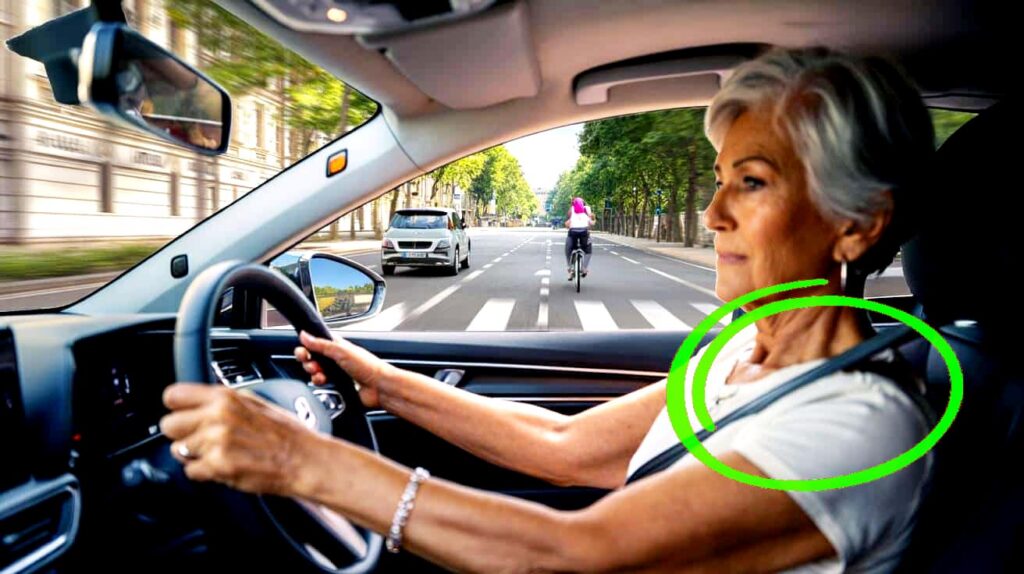
- Limited neck and shoulder mobility, risky during shoulder checks and reversing.
- Faster fatigue on long trips, higher risk during monotonous highway driving.
- Influence of hearing loss, balance, joint flexibility, and visual processing.
Take warning signs seriously: seeing, moving, deciding – three components that require targeted support with age.
What Europe is planning – and what not
At the EU level, an update of the driver’s license directive has been under discussion for some time. More frequent fitness-to-drive checks are being considered, sometimes self-assessments, sometimes medical – especially at older ages. A “senior license” at 70 was debated in France in 2024 but not implemented. For 2025, too, there remains no fixed age limit.
Germany traditionally relies on personal responsibility. For private drivers, there are no mandatory regular medical examinations based solely on age. Mandatory tests apply only in specific sectors, such as commercial passenger transport. The trend is toward practical recommendations rather than blanket bans.
From around 70 to 75, experts recommend: honest self-assessment, medical consultation, and refreshing one’s knowledge.
Germany in focus
In Germany, the driving license remains valid regardless of age. What matters is medical fitness. Those who drive unsafely or attract attention repeatedly risk official driving fitness checks. After accidents, insurers focus on circumstances, not the number on the ID. Regular vision and hearing tests, a medication review, and refresher courses on new traffic rules are sensible.
Practical tips for safe mobility in old age
Those who want to stay mobile can do a lot themselves. Small adjustments can reduce stress and noticeably increase safety.
- Route planning: choose familiar routes, drive in daylight, avoid rush hours, have alternatives ready.
- Speed and distance: drive defensively, maintain distance, avoid overtaking maneuvers.
- Use technology: parking aids, rear-view cameras, emergency braking systems, lane-keeping assist, adaptive cruise control.
- Seat ergonomics: sit higher, adjust mirrors precisely, position the steering wheel to allow proper shoulder checks.
- Break management: plan a stop every 60–90 minutes, don’t forget to drink.
- Check medications: pay attention to warning symbols, discuss side effects with doctor or pharmacist.
- Book training: short courses for seniors refresh traffic knowledge and reaction skills.
| Warning sign | What it may mean | What to do? |
|---|---|---|
| Frequently missing exits | Overwhelmed in complex situations | Simplify routes, use navigation with clear voice guidance |
| Uncertainty when merging | Misjudging distances | Take driver training, change lanes only with ample time |
| Problems at dusk | Limited night vision | Plan trips in daylight, get eyes checked |
| Neck stiffness during shoulder checks | Restricted mobility | Optimize seat and mirrors, consider medical physiotherapy |
When to stop or cut back?
A clear moment is rarely defined by a number. Many people reduce driving gradually: first no night driving, then only familiar routes, later always with a passenger. Those who notice near misses, constant stress while driving, or receive feedback from others should seek an independent driving assessment.
The social side weighs heavily. Being able to drive means participation: visiting friends, getting to doctor’s appointments, doing errands. Alternatives are therefore gaining importance: car sharing with fixed parking spots, on-demand buses, senior-friendly shuttle services, discounted taxi options – many can be combined. The transition works better when planned early.
Short self-test
- Do I feel noticeably tired after 30 minutes of driving?
- Do I brake late or swerve abruptly more often?
- Do I have trouble recognizing signs or pedestrians?
- Do rain, fog, or glare bother me greatly?
- Do I miss turn signals or speed displays?
If you answer “yes” several times, take action: make a doctor’s appointment, get vision and hearing checked, or take a coaching drive on a familiar route. Small corrections often have immediate effects.
Guidance for families
Conversations about driving are sensitive. Better than prohibitions: go through concrete situations together, offer alternatives, help organize rides. A test drive with a neutral instructor gives a more objective impression than family debates around the kitchen table.
Securing mobility means creating options: work on abilities, choose routes wisely, and use new services.
Additional knowledge worth knowing
Definition: *Driving fitness* means the current ability to see, react, decide, and operate the vehicle. The *driver’s license* is the formal authorization. Those temporarily unfit to drive should pause, without losing their license.
Practical example: A 78-year-old woman with an early cataract diagnosis limits driving to mornings, undergoes eye surgery, switches to a car with good all-around visibility and emergency braking assist. Result: less stress, more safety, continued independence.
Those unsure can simulate a test drive with evaluation: familiar route, daylight, then a short checklist on vision, distances, and maneuvers. The combination of self-assessment, professional feedback, and smart vehicle technology helps most – all without a fixed age limit.


