
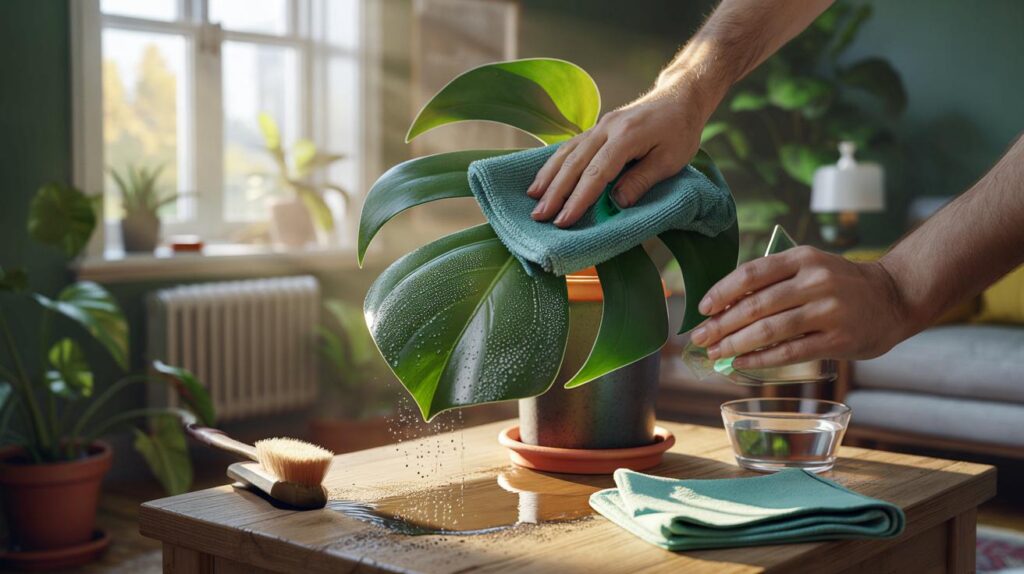
Colder rooms, closed windows and thirsty radiators leave indoor greenery looking tired. Your home might be drying their leaves.
We looked at why foliage loses shine as heating season starts, and the simple move that revives it without bottles or sprays. It costs nothing and fits into a weekly tidy-up.
Why your leaves look dull in autumn
Once the radiators click on and windows stay shut, indoor air dries out and dust hangs longer. Fibres from sofas and rugs drift onto leaves. Low daylight slows growth, so grime sticks instead of being washed away by new foliage. That grey film does more than spoil the look. It shades the leaf surface and interferes with gas exchange through tiny pores called stomata. Over weeks, plants use less light, grow more slowly and become easier targets for pests.
Even a fine dust film can cut light reaching foliage and make plants breathe less efficiently. Clean leaves work harder.
You can reverse that in minutes with one simple move. No shop-bought shine, no oil, no fuss.
The 2-minute microfibre move
What you need
- One clean microfibre cloth, lightly dampened with tepid water (filtered or boiled and cooled if your tap water is hard)
- A second dry cloth for a quick buff
- Optional: a soft artist’s brush for tight spots and delicate leaves
Step by step
- Support the leaf with one hand from beneath. This stops bending and tearing.
- Wipe the top surface from stem to tip using the damp microfibre. Turn the cloth as it picks up dust.
- Clean the underside. That is where mites hide and dust clings.
- Buff lightly with the dry cloth to remove moisture beads and fingerprints.
- Move pot by pot. Replace water if it looks cloudy.
For a light shine, some gardeners dab the cloth with a splash of mineral water. Skip sugary hacks unless you wipe off fully afterwards.
Skip oils and commercial leaf-shine: they block pores, attract grime and can scorch in bright light.
Match the method to the plant
Not every plant wants the same clean-up. Leaf texture and shape decide your approach.
- Broad, smooth leaves (monstera, rubber plant, philodendron): damp microfibre wipe on both sides, then a gentle buff.
- Delicate or patterned leaves (calathea, maranta, ferns): use a soft, dry brush or a barely damp cloth. Avoid pressure on raised veins.
- Hairy leaves (African violet, some peperomia): do not wet. Use a dry brush or a hand blower on cool to lift dust.
- Cacti and succulents: a soft paintbrush or a clean, soft toothbrush. Work between spines; keep water off the crown.
- Climbers (ivy, pothos): pin the vine between two cloths and pull gently along the stem to clean multiple leaves quickly.
Rinse, brush or banana peel?
For heavy grime or weeks of neglect, give plants a lukewarm, low-pressure shower at the sink. Angle the pot so water runs off leaves, not straight into the crown. Let excess drain fully before returning the plant to its spot. This quick rinse also discourages spider mites that dislike moisture.
Yes, the banana peel trick exists. The inside of the peel can buff a glossy leaf, but sugars leave residue. If you try it, follow with a wipe using a clean damp cloth to remove any stickiness. A better low-mess option is mineral water on a microfibre, which evaporates cleanly and avoids limescale marks in hard-water areas.
How often should you clean?
Dust settles fast when the heating runs. A simple schedule keeps foliage clear and photosynthesis steady.
| Plant type | Best method | Frequency (heating season) | Time per plant |
|---|---|---|---|
| Broad-leaved tropicals | Damp microfibre + buff | Every 1–2 weeks | 1–3 minutes |
| Delicate patterned leaves | Soft brush, minimal moisture | Every 2 weeks | 2–4 minutes |
| Cacti and succulents | Dry brush | Monthly | 2–5 minutes |
| Trailing vines | Two-cloth glide | Every 2 weeks | 3–5 minutes |
Real gains for plant health and for you
Clean leaves trap more light, so growth stays steady even as days shorten. Better-lit foliage uses water more efficiently, which reduces leaf yellowing linked to stress. Dust-free surfaces also make it harder for pests such as mites, mealybugs and scale to settle. You spot problems earlier because you handle the plant regularly.
Your home benefits too. Wiping leaves removes indoor dust and allergen particles that otherwise end up on shelves and in lungs. Regular leaf care pairs neatly with vacuuming and keeps rooms fresher without scented sprays.
Small risks and how to avoid them
- Cold shock: use tepid water, not cold, and keep plants away from draughts while drying.
- Limescale spots: in hard-water areas, use filtered water or rainwater on the cloth.
- Water in rosettes: tip bromeliads and similar plants to pour trapped water out after a rinse.
- Scratches: no kitchen paper. Microfibre is soft and lifts dust rather than dragging grit across the surface.
- Residue: avoid honey, olive oil and mayonnaise hacks. They attract dust and can encourage mould.
Make it a habit without adding chores
Fold leaf care into tasks you already do. After you dust shelves, give two plants a quick wipe. Rotate through your collection across the week. If a window is particularly dusty or near a radiator, prioritise those plants. Set a reminder for a monthly shower session for the big specimens and the ones high up that you rarely reach.
Boost results by tweaking the environment. Aim for 40–50% relative humidity in heated rooms. A tray of pebbles with water under the pot keeps moisture around leaves without waterlogging roots. Leave space between plants so air can move and dust cannot settle in dense clumps.
Extra tips that pay off
- Clean stakes and moss poles as well as leaves. Dust there migrates straight back onto foliage.
- Wipe pots and saucers. A tidy container stops soil splashes and improves the overall look.
- Check light after cleaning. Brighter leaves may handle a step closer to the window in winter.
- Handle one leaf you think is “clean”, then check the cloth. The grey streak shows why the routine matters.
This low-cost ritual gives houseplants a clear advantage through shorter days. A damp microfibre, a gentle hand and a few minutes per week restore colour, raise resilience and make rooms feel calmer. Plant care does not need chemicals or gadgets; it needs a habit you can keep.



Tried this on my dusty monstera and rubber plant after the radiators kicked on—wow. The microfibre + quick buff made them look alive again, and I swear they breath better. I used boiled-and-cooled water to dodge limescale and skipped the leaf-shine stuff. Simple, cheap, actually doable weekly.
Do we realy think dust cuts growth that much? Not doubting you, but would love a link to a study on stomata getting blocked. I’ve done the banana peel trick before and it left a sticky film—maybe I wiped it wrong?