
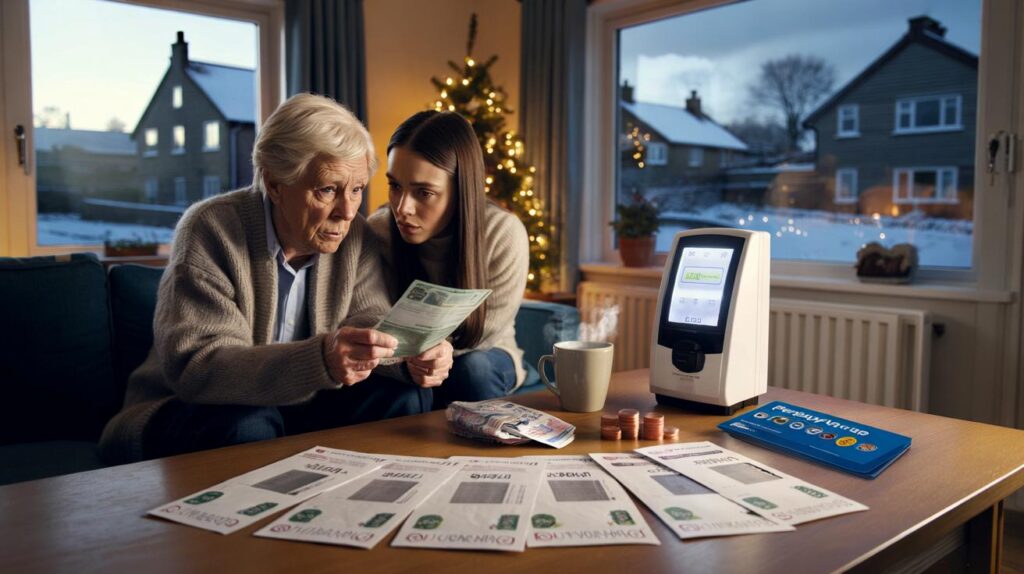
Colder nights sharpen budgets and heighten worry. New support is lining up, but timing, amount and eligibility vary widely.
Several schemes could cushion bills and living costs over the coming months. Some arrive automatically, others need a local application. Read the rules, check your postcode, and act early if you need council help.
What the £1,085 figure includes
The total is not a single payment. It’s a stack of separate schemes that may overlap for eligible households.
- Household Support Fund: £130–£600, set locally by councils
- Warm Home Discount: £150 credit on your electricity account
- Winter Fuel Payment: £200–£300 for pension-age households
- DWP Christmas Bonus: £10, tax-free
- Cold Weather Payments: £25 per week-long cold spell
Households who qualify for all of the above could see support worth up to £1,085 land across winter.
Payment windows differ. Many people will see money before Christmas, though some awards, like the Warm Home Discount or Cold Weather Payments, can arrive into March.
Household Support Fund: local rules decide the cash
Who sets the criteria and how much can you get?
The Household Support Fund runs from April 2025 to March 2026. Central government allocates the pot to local authorities. Councils then decide who gets help, the award size, and whether support arrives as a cash payment, supermarket vouchers, fuel vouchers or direct help with bills.
Amounts vary. Some councils advertise targeted payments around £130. Others can award larger packages, up to £600 in some areas. Funding is finite and schemes can close early if budgets run dry.
Check your council’s guidance and apply promptly if you’re struggling with essentials like food, energy or household bills.
Councils often prioritise households on low incomes, people with disabilities, carers, families receiving Council Tax Reduction, and residents facing a sudden financial shock. Evidence, such as benefit letters or recent bills, is usually required.
Warm Home Discount: £150 off your electricity bill
What to expect and when it shows
The Warm Home Discount is a one-off £150 credit to your electricity account. You don’t receive cash. Most eligible households see the credit applied automatically between November 2025 and 31 March 2026. Energy suppliers use government criteria, so you may need to watch for letters or emails confirming status and asking you to confirm details.
If you use a prepayment meter, suppliers typically add the credit via vouchers or your top-up method. Keep your contact details updated with your supplier to avoid delays.
Winter Fuel Payment: £200–£300 for pension-age households
Eligibility and timing
For winter 2025/26, most people born on or before 21 September 1959 fall within scope. Households with someone aged State Pension age to 79 can receive £200. Where someone aged 80 or over lives in the household, the payment rises to £300.
Letters usually arrive in October or November confirming entitlement and payment dates. Payments typically land in November or December. This support is separate from the Warm Home Discount and does not reduce other benefit entitlements.
DWP Christmas Bonus: a £10 seasonal top-up
Who gets it and how it appears
If you receive a qualifying DWP benefit during the relevant week in December, you should get a £10 Christmas Bonus automatically. Banks show it as “DWP XB.” If it hasn’t arrived by early January, contact the Jobcentre Plus office that manages your claim, or the Pension Service for State Pension customers.
The £10 amount has not changed since its introduction in 1972. Campaigners regularly call for an update to reflect current prices.
Cold Weather Payments: £25 when temperatures plunge
How the trigger works
Between 1 November 2025 and 31 March 2026, a £25 payment is due for each seven-day period when the average temperature in your area is recorded or forecast at 0°C or below. The government uses dedicated weather stations to decide each trigger.
Payments go automatically to people on certain benefits, including Pension Credit, Universal Credit and others that meet specific conditions. You can check if your postcode has triggered a payment using the official checker during the season. If you think a payment is missing, use your Universal Credit journal or contact the relevant helpline.
At-a-glance: amounts, windows and who may qualify
| Scheme | Amount | When paid | How to get it |
|---|---|---|---|
| Household Support Fund | £130–£600 (local variation) | April 2025–March 2026, often before Christmas if approved | Apply via your local council; awards depend on local criteria |
| Warm Home Discount | £150 bill credit | Nov 2025–31 Mar 2026 | Usually automatic if you meet criteria; some households may need to confirm details |
| Winter Fuel Payment | £200–£300 | Typically Nov–Dec 2025 | Automatic for most pension-age households; watch for a letter in Oct/Nov |
| DWP Christmas Bonus | £10 | Early Dec 2025 | Automatic if you get a qualifying benefit in the relevant week |
| Cold Weather Payments | £25 per 7-day cold spell | 1 Nov 2025–31 Mar 2026 | Automatic for qualifying benefits; triggered by local temperatures |
Will you get the full £1,085?
Few households receive every payment. The total depends on your age, benefits, energy supplier participation and the number of cold spells in your area. A pensioner on Pension Credit could, for example, receive: Winter Fuel Payment (£300), Warm Home Discount (£150), Christmas Bonus (£10), at least one Cold Weather Payment (£25), plus a council award via the Household Support Fund (£130–£600). That could range from £615 to £1,085 across winter.
Families on Universal Credit might not qualify for a Winter Fuel Payment but could still see a combination of Warm Home Discount, Cold Weather Payments and a Household Support Fund award. Each scheme has separate rules, so you should check them individually rather than assume automatic entitlement.
How to boost your chances and avoid delays
Practical steps this week
- Update your address and contact details with your energy supplier and the DWP.
- Check your council’s Household Support Fund page for opening dates, documents required and whether you need an appointment.
- Keep recent bills, benefit letters and bank statements handy to speed up applications.
- Set alerts to check the Cold Weather Payment postcode tool during cold snaps.
- Log in to your Universal Credit journal to track automatic payments and messages.
Genuine DWP payments don’t require fees or upfront bank transfers. Be wary of texts or calls asking for your card details.
Extra help and ways to stretch support
Couple these payments with practical savings. Ask your council or housing provider about energy efficiency vouchers or small home fixes such as draught-proofing and loft insulation checks. Many suppliers run hardship funds; eligibility often includes evidence of arrears and a budget plan.
Build a simple winter budget by mapping likely payment dates against your biggest outgoings. For example, use the Winter Fuel Payment to clear a chunk of your energy balance, ringfence the £150 Warm Home Discount for December or January usage, and keep any Household Support Fund voucher for food or essentials during school holidays.
If you care for someone, or have a disability or long-term health condition, ask your council whether the Household Support Fund has specific strands for carers and disabled residents. Some areas prioritise these groups or offer higher awards, especially where medical equipment raises electricity use.
Finally, if your area’s Household Support Fund closes early, check community hubs and advice centres for supermarket voucher schemes, fuel bank referrals and debt advice. Combining local support with national payments can keep the heat on and the fridge stocked through the coldest weeks.



If I switched suppliers in November, will the Warm Home Discount still apply automatically, or do I risk falling between systems? Haven’t had the confirmation letter yet—should I call my old or new provider to avoid delays?