
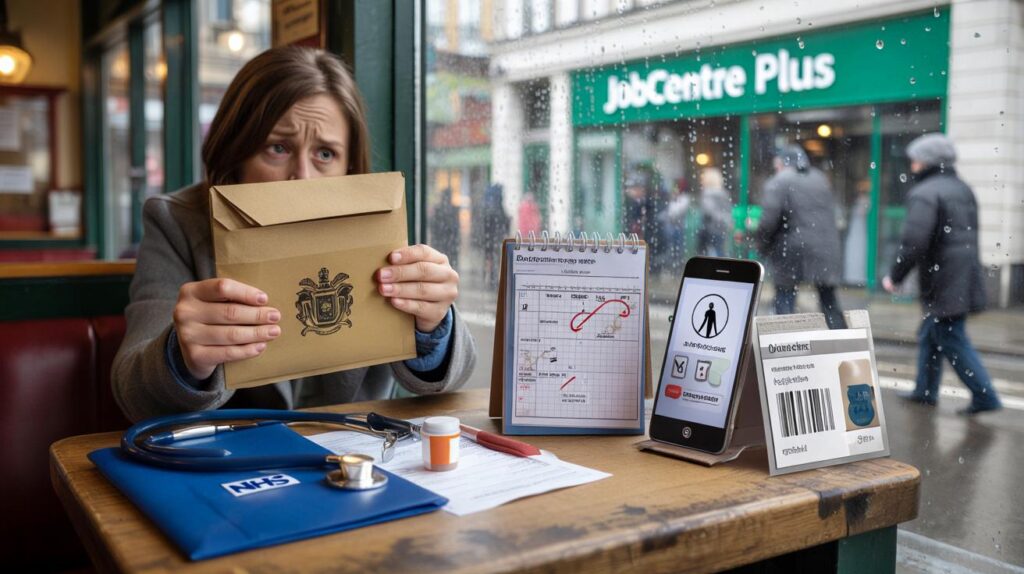
Across the UK, people who rely on Personal Independence Payment are hearing the same whisper at GP surgeries, on buses, in WhatsApp groups: the rules are changing, and it might hit hard. The DWP says it’s about fairness and accuracy as claims soar. Claimants hear something else — more hurdles, more checks, more anxiety.
The letter landed on a Wednesday, that familiar brown envelope like a tap on the shoulder. Inside, a request for fresh evidence, a new assessment slot, and a line about “upcoming changes to the way we make decisions.” In the café next to the Jobcentre, a woman quietly folded one of those letters into tiny squares and tucked it under her phone case, as if keeping it close would make it safer. Everyone kept glancing at the door, as if the rules themselves might walk in. The barista refilled mugs no one drank from. Then the rules changed.
DWP’s new PIP crackdown: the three big changes
The first shift is **more medical evidence up front**. The DWP has signalled that fewer awards will rest on self-reported difficulties alone, and more on GP notes, consultant letters, and shared NHS data. That means your claim — and your review — will need clearer clinical backing linked directly to the PIP activities, not just diagnoses. It’s a culture switch: less “tell us how you manage” and more “show us what your records say.” For many, that demands time, appointments, and energy they don’t have.
Listen to Jamie, 34, a warehouse picker with Crohn’s and chronic fatigue. His last PIP review was by phone, fifteen minutes tops, no follow-up. This spring he was asked for a medication history, a flare-up diary, and a letter confirming side effects from his gastro team. PIP claims have surged into the millions, especially among people with mental health conditions, and the Department is under pressure to cut error and fraud. In practice, the burden now shifts onto claimants to pull together a paper trail that fits the descriptors.
The second change is **shorter awards and more frequent reviews** for many conditions, especially where symptoms fluctuate. Light-touch awards still exist, but the direction of travel is towards check-ins, digital updates, and “prove-it-again” cycles. For someone with relapsing conditions, that can mean reliving the worst days more often. The stated aim is accuracy; the lived effect is churn. Reviews will matter again, in a way they haven’t since pandemic-era backlogs forged a gentler rhythm. Prepare for decisions that expire sooner than you expect.
The third — and most controversial — move is a push towards a **“support-first” model**, where some claimants might receive equipment, grants or vouchers rather than unrestricted cash. This comes from a consultation that ran through 2024, with ministers floating options like tailored support for specific needs instead of blanket payments. Nothing is set in stone, but trials are in the air. For people who use PIP to cover energy costs, food, taxis on bad days, the thought of ring-fenced items feels tight. Money bends around real life; a voucher rarely does.
How to adapt: steps to protect your award
Start with a simple, forensic habit: map each symptom to each PIP activity using the legal test — safely, to an acceptable standard, repeatedly, and within a reasonable time. Keep a two-week diary that includes timings, pain levels, recovery time, and what went wrong. Ask your GP or specialist for a letter that speaks to function, not just diagnosis: “cannot prepare a simple meal without help due to hand tremor and fatigue; risk of cuts and burns; takes 90 minutes to complete.” One page of that beats five pages of “medical history.”
At assessment, answer the question that was asked, not the one you wish they’d asked. Be specific about bad days and the pattern, not just averages. Don’t downplay because it feels more British to soldier on. We’ve all had that moment where we say “I’m fine” and mean “I can’t get off the sofa.” If phone calls drain you, ask for a face-to-face or a home visit. And if you need your carer there, say so. Let’s be honest: nobody really does that every day.
Common errors trip people up. Claim forms written like a diary rather than against descriptors. Evidence that’s too old or too general. GPs who write “manages well” because they mean “keeps going,” and a decision-maker reads “no substantial difficulty.” One welfare adviser told me:
“The golden thread is risk. If you’re not mentioning risk — falls, medication errors, meltdowns, incontinence — your case is half-built.”
Here’s a quick checklist to place on your fridge:
- Match each difficulty to a descriptor and point score — then add real-life examples.
- Ask clinicians to include frequency, recovery time, and risks — not just labels.
- If you’re refused, request a Mandatory Reconsideration within one month, then appeal. Tribunals overturn a lot of decisions.
What to watch in 2025 — and what it means for you
Some things are still in flux. The “support-first” idea — swapping some cash for equipment or vouchers — came from a consultation that drew fierce responses, and we’ll see the outcome as ministers set out the next phase. Data-sharing with the NHS is being talked up, which could speed decisions for some and complicate them for others whose records don’t reflect daily reality. Reviews are likely to be more common, especially for conditions marked “fluctuating,” and claimants should expect calls or digital check-ins even between formal end dates. The takeaway is simple, if not easy: your story needs to be documented, not just told. That’s unfair for people too ill to chase letters, yet it’s the ground we’re standing on. Share your experience, swap examples that worked, and keep your evidence living and current. Rules change, but solidarity travels faster.
| Key points | Details | Interest for reader |
|---|---|---|
| More medical evidence up front | Greater weight on GP/consultant notes tied to PIP activities; less on self-report alone | Know what documents to collect now to avoid delays or lower awards |
| Shorter awards, more reviews | Expectation of more frequent reassessments and digital check-ins for fluctuating conditions | Plan time and energy for reviews; keep a rolling diary to reuse |
| Shift towards “support-first” options | Potential pilots of vouchers/equipment in place of some cash payments | Understand what could change in how support is delivered — and how to respond |
FAQ :
- What are the three big PIP changes?The DWP is moving towards more medical evidence at claim and review, shorter awards with more frequent reassessments, and exploring “support-first” options like equipment or vouchers for some needs.
- Are vouchers replacing PIP cash now?No. The idea surfaced in a 2024 consultation. Any switch would likely start with pilots and specific groups, and it isn’t law today.
- Will everyone be reassessed under the new approach?Many will face more frequent reviews, especially where symptoms fluctuate. If you have a longer award, you could still see interim check-ins.
- How can I strengthen my claim quickly?Link symptoms to descriptors using the “safely, acceptable standard, repeatedly, reasonable time” test. Get a short clinical letter that describes function and risk, not just diagnosis.
- What if my award drops or I’m refused?Request a Mandatory Reconsideration within one month. If that fails, appeal to a tribunal — success rates are high, and back payments can be substantial.



Genuinely helpful breakdown. The distinction between diagnosis vs function-based evidence is spot on. I’ve booked a GP call to ask for a letter that mentions risk and timings — never thought to phrase it that way. Wish DWP comms were this clear; would save so many reassesments.
If awards get shorter, will the Mandatory Reconsideration clock still be one month? Feels like they want churn, not accuracy. Also, how do we challenge GP notes that say “manages well” when that means “barely coping” in real life?