
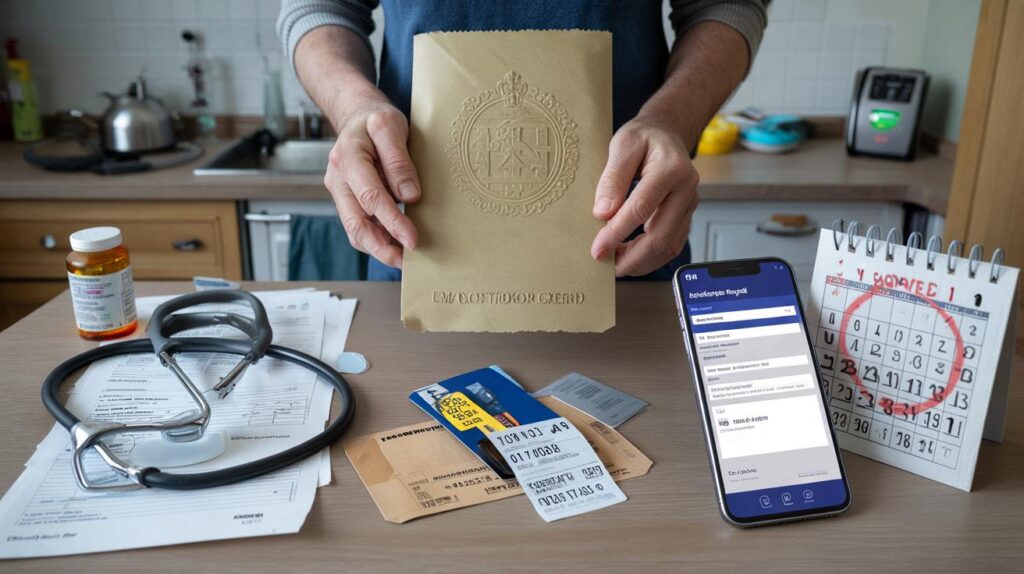
The letters have started landing on kitchen tables again: new wording, firmer deadlines, different questions. People who rely on PIP are wondering what will change, and when. The DWP says it wants to modernise and cut error; claimants hear “crackdown” and think: Will I still qualify? What about my rent, my carer, the taxi to physio?
I met a man in a grey hoodie outside a Jobcentre in Leeds who had folded his PIP award letter so many times the paper felt like cloth. He wasn’t angry. Just tired. “I can do Tuesdays,” he said about assessments, “but not mornings. Pain’s worse then.” We watched buses hiss by and he asked the question echoing up and down the country: if the rules shift, do I fall through?
Inside the waiting room, a woman scrolled a Facebook group about PIP updates. Every ping felt like a new version of the truth. *You could taste the anxiety in the air.* It wasn’t hysteria. It was the quiet maths of bus fares, electricity top-ups, and who can step in if the award is delayed.
Policies are drafted in offices with aircon and good coffee. Life happens in small kitchens with damp corners. Somewhere between those two rooms sits the reality of this “modernisation”. A single line in a consultation can change a monthly budget. And sometimes, it’s the small print that bites.
DWP’s new PIP crackdown: the three big changes
The first shift is evidence-first. Think fewer awards without medical proof, more emphasis on what a GP, consultant, or therapist can write down, not just what you can describe. Digital claims are being rolled out, and with them comes triage: routing straightforward cases quicker, and pushing others to deeper checks. **Expect more weight on “functional impact” shown in black-and-white rather than just over the phone.** For many, that means gathering records sooner and tying everyday costs to your condition with a clearer thread.
The second change is about the shape of support. The DWP has floated moving some help away from monthly cash awards and towards specific grants, vouchers, equipment or services. A travel pass here. A one-off home adaptation there. **That could feel safer for the Treasury and riskier for you if your needs ebb and flow.** We’ve all had that moment when a boiler dies, a medication changes, or a lift breaks and the “extra costs” don’t look textbook any more. Flexibility matters in a messy week.
The third change sits in the assessment model. There’s a push to align assessments across benefits and to give longer, “light-touch” awards for conditions that won’t improve, while tightening reviews for fluctuating or less clearly evidenced claims. There’s also talk of recutting descriptors so they mirror real-world costs more tightly, especially around mental health. **Translation: the bar may rise where the DWP believes costs aren’t obvious or ongoing.** This is still moving through consultation territory, but every sign points to a system that prizes documented, repeatable evidence over narrative alone.
How to get ready without burning out
Start a seven-day costs diary now, even if your renewal is months away. Two lines per day is enough. What did the condition stop you doing? What did it make you spend? Write the bus fare to therapy, the extra heating on flare-up nights, the slow cooker you bought to make cooking doable. Then pair each cost with a simple why: “can’t stand for long,” “fatigue after 11am,” “noise triggers panic.” This is the bridge the DWP is asking you to build: from condition to functional impact to real money.
Next, line up third-party evidence one step earlier than feels natural. Ask your GP for a short letter that names functional limits: distance walked, stairs managed, time on task before pain or anxiety spikes. If you see a physio, OT, counsellor or support worker, ask them to write two sentences in plain English that match the PIP activities. Let’s be honest: nobody keeps a perfect paper trail. So pick two voices who know you well and can be specific. Two strong letters beat five vague ones.
When you fill the form, write as you live on your worst days, not on your bravest. That’s not pessimism; it’s accuracy.
“If the DWP wants evidence-first,” a welfare adviser told me, “give them evidence that reads like a day in your shoes, not a medical textbook.”
Use the new digital claim if it saves you energy; post a copy if you prefer paper. Keep screenshots. And keep it human – the reader is, too.
- Costs diary: 7 days, two lines a day
- Two letters: GP plus one other professional
- Link every cost to a PIP activity
- Save copies: photos, scans, email confirmations
- Phone note of every call: date, name, summary
What this means, beyond the headlines
This “crackdown” is framed as cutting waste and modernising. For millions, it lands as a nudge to be more forensic about daily life, and that’s draining. It can also be clarifying. If the system is moving toward proof, clarity and targeted support, the people who will navigate it best are those who can show their costs clearly and early. Not perform need, prove it. That shouldn’t require perfect admin or perfect health. It requires small, repeatable habits that don’t swallow your week.
| Key points | Details | Interest for reader |
|---|---|---|
| Evidence-first claims | Greater emphasis on medical records, GP/therapist letters, and functional impact shown in writing | Know what to gather now to protect your award later |
| Shift from cash to in-kind support | Consultation explores grants, vouchers, equipment and services in place of some monthly payments | Spot where flexibility may shrink and plan for spiky costs |
| New assessment rhythm | Longer “light-touch” awards for long-term conditions; tighter, more targeted reviews elsewhere | Time your evidence and tell the story of worst days, not rare good ones |
FAQ :
- Are these PIP changes already law?Not yet. They have been consulted on and would need legislation and system changes before rolling out.
- Will mental health claims be hit hardest?The DWP has signalled a closer link to demonstrable extra costs, which may raise the bar where evidence is thin. Good records help.
- Can I still get a paper form?Yes. A digital service is expanding, but paper and phone routes remain available.
- Do I need a letter from every clinician?No. Two focused pieces of evidence that name functional limits are usually stronger than a bundle of generic letters.
- When could changes start?Government responses are expected after the consultation stage, with any rollout likely phased over 2025–26 at the earliest.



Is this law yet or still just consultation? When should we actually start gathering evidence?