
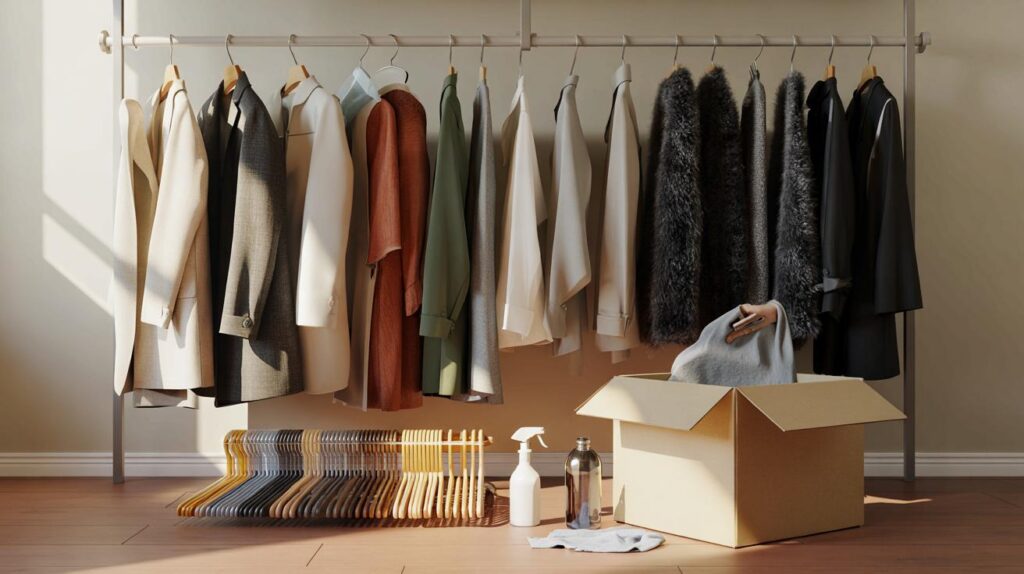
Our wardrobes swallow space and time because of one tiny thing nobody thinks about: the hanger. New plastic arrives with every purchase, yet used hangers pile up behind counters, in charity basements, and inside dusty laundry cupboards. The fix is humble, cheap, and already out there.
The first time I noticed the chaos wasn’t the heap of clothes but the tangle of hangers — twisted wire, glossy plastic, fancy velvet ones with lint clinging like breadcrumbs. It looked like a junk drawer on a rail. I took a deep breath, pulled everything down, and stared at the bones of it all: those little frames that decide what gets seen and what gets forgotten.
At a charity shop round the corner, a crate of second-hand hangers sat by the till with a handwritten sign: 10p each. My hands went in like it was a lucky dip. Suddenly, the idea of organising sustainably didn’t feel preachy or expensive. It felt normal. It felt a bit joyful.
I’d been keeping the cracked plastic ones out of guilt. A volunteer quietly said, “Take as many as you need, love.” The simplest systems often hide in plain sight. The answer was literally hanging there.
Why second-hand hangers change the way your wardrobe behaves
Uniform hangers act like rails for your eye. When they match, your brain spends less energy decoding shapes and more time choosing what to wear. That tiny reduction in visual noise means less rummaging and fewer outfit dramas at 8 a.m.
There’s another side to it. Retailers give out countless hangers that don’t make it home, or go straight to the bin after one short journey. Charity shops and community groups often end up with boxes of them. Pulling those hangers back into use cuts waste without asking you to buy another thing.
Second-hand hangers create a practical constraint that helps you edit. If you keep only the number of hangers that fits your rail comfortably, you create a built-in limit. That limit nudges you towards a calmer, more sustainable wardrobe because every new item has to “earn” a hanger spot.
Once you pick a hanger style — two at most — the rest flows. Choose a sturdy set for coats and blazers, and a slimmer style for shirts and dresses. If you like a colour cue, group by light and dark hangers so your brain maps the sections at a glance.
Wash and reset day is quicker when every hanger has a job. Wet wool? Use a wide shoulder shape to avoid bumps. Delicates? Clip ones with padding from a thrift bin. A small tweak to hanger choice prevents stretched necklines and mystery creases that ruin the mood five minutes before you leave the flat.
Thinking in hangers simplifies decisions. One-in, one-out becomes tangible: no spare hanger, no new buy. It’s gentle, not punitive, and it keeps you honest about what you actually wear. The rail gets calmer. You get calmer. That’s the whole point.
Step-by-step: organise your wardrobe with thrifted hangers
Start with a quick harvest. Source 20–40 second-hand hangers from a charity shop, Facebook Marketplace, a local dry cleaner, or a community group. Sort them on the floor: heavy-duty, slimline, clips. Snap or recycle the cracked ones and keep two styles you trust in your hands.
Do a fast edit measured by hangers, not guilt. Put your weekday heroes on the rail first, then seasonal pieces you actually reach for. Let the leftover clothes sit on the bed for a minute and ask a simple question: when did this last see daylight? If the hanger count still fits, you’re done.
Now build a rhythm: shirts left to right by sleeve length, trousers folded once to a consistent drop, knits hanging only if the shoulders are wide enough. Consistency — not perfection — is what saves your mornings.
Common bumps happen. Wire hangers can dent shoulders, velvet can grip too hard, wood can be too chunky in small spaces. Swap types rather than wrestle your clothes. Let’s be honest: nobody re-hangs sweaters neatly after a long day.
We’ve all had that moment when the rail groans and we pretend it’s fine. Loosen the space by five centimetres, then stop. If something falls off its hanger every week, that’s the garment telling you it wants a different shape — or the drawer.
Source with a light touch and say yes to variety, then curate the keepers for your rail. If you clean them first, they’ll feel new without being new.
“We get bags of hangers donated with clothes,” says Saira, who manages a London charity shop. “The fastest way to help us and yourself is to take a bundle home. You’ll declutter your wardrobe and our back room in one go.”
- Where to find: charity shops, community swap groups, dry cleaners, hotel lost-and-found clearance, Facebook or Nextdoor listings.
- Quick clean: warm soapy water with a splash of vinegar, towel-dry, then air for an hour.
- Keep: wide-shoulder wood for coats; slimline flocked for slippery fabrics; clip hangers with rubber pads for skirts.
- Skip: cracked plastic, rusty wire, brittle sun-faded acrylic that snaps under weight.
The small system that keeps working on sleepy Mondays
Give each hanger a category and let that guide your week. Monday hangers for easy wins, midweek for layers, weekend for colour. When you plan outfits, hang them at the front the night before and let future-you say thanks in the morning rush.
Try a “hanger timeout” box. Each season, move unworn pieces — plus their hangers — into the box for two months. If nothing leaves the box, sell, donate, or swap them. It’s gentle accountability that doesn’t feel like punishment.
If you share a space, give each person a different hanger style or colour. No more “Who took my shirt?” debates, fewer lost hours. Your rail becomes a tidy map, and your head follows that clarity without a big speech about minimalism.
| Key points | Details | Interest for reader |
|---|---|---|
| Use second-hand hangers as a system | Choose two types, set a hanger limit, and let that cap guide purchases | Less clutter, easier choices, free sustainability win |
| Match the hanger to the fabric | Wide shoulders for weight, slim grips for silks, clips with padding for skirts | Clothes last longer, fewer ironing battles |
| Keep a “timeout” box | Rotate unworn items with their hangers each season for two months | Low-stress declutter that respects real life |
FAQ :
- Are second-hand hangers clean enough?Yes. A quick wash with warm soapy water and a vinegar rinse refreshes them fast.
- Which hangers should I avoid?Skip cracked plastic, flimsy wire for heavy coats, and anything with sharp edges that snag.
- How many hangers do I need?As many as fit your rail with two fingers of space between garments. If it’s tight, reduce by 10%.
- Do velvet hangers damage clothes?No, but they can leave lint on wool. Use wood for knits and velvet for slippery pieces.
- Can I recycle old plastic hangers?Some councils accept them at recycling centres; many charity shops will take usable ones for rehoming.



Loved the idea that hangers are the “bones” of the wardrobe. Setting a strict hanger limit finally made one-in, one-out tangible for me, and mornings calmer. It’s simple, not preachy, and honestly feels like a tiny systems upgrade. Definitely stealing the light/dark hanger cue for quick sorting.